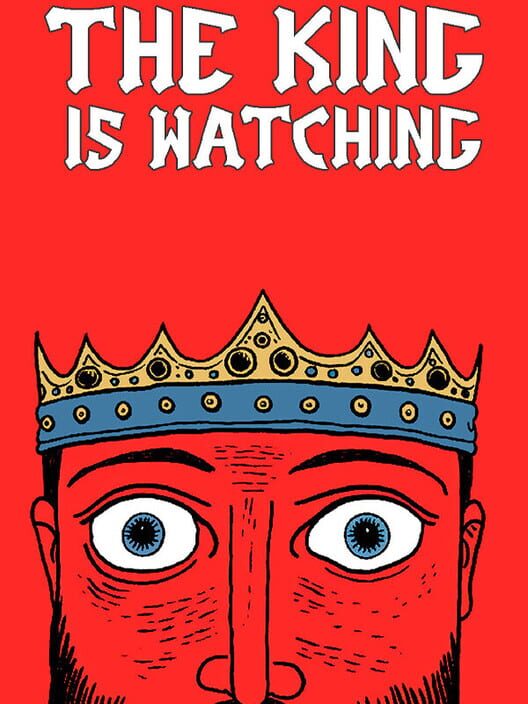
The King is Watching had its PC reviews months ago, and a console release is putting it back in front of people who missed it. Metacritic's calendar lists it for PlayStation, Xbox and Switch on July 29, 2026, with an 80 Metascore on the PC record. OpenCritic shows the same picture: warm, but not unanimous. The scores we found run from 6.5/10 to 9/10, a real spread for a compact roguelite city builder.
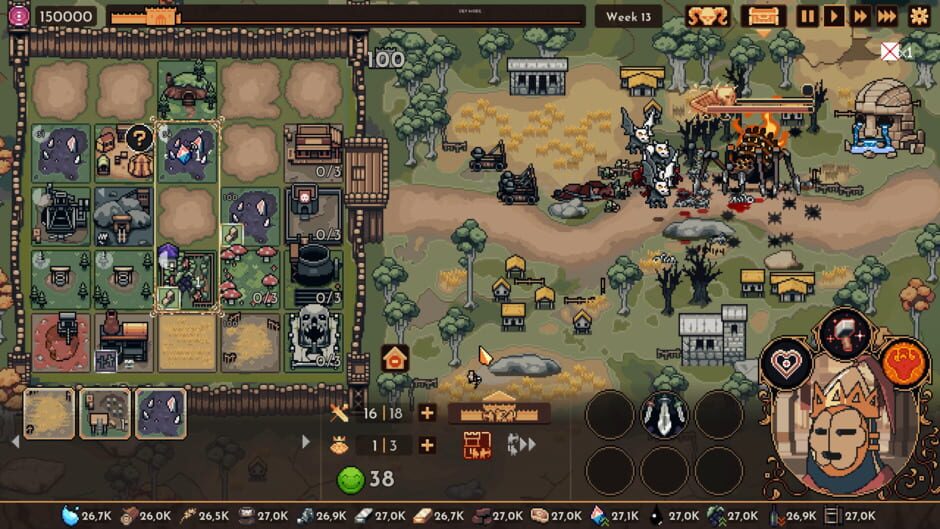
It's a roguelite kingdom builder by Hypnohead and tinyBuild with one rule: your buildings only work while the king is looking at them. Farms, mines, barracks, workshops and resource chains all depend on a movable area of the king's gaze. Watch the wheat and it grows; look away to train soldiers and the food stalls. It sounds like a management joke. Reviewers mostly found it plays like a tense puzzle about attention.
The King is Watching review scores
Metacritic has it at 80 from 10 critics, 80% positive and 20% mixed:
- Try Hard Guides: 100
- DualShockers: 9/10 (via OpenCritic)
- The Games Machine: 85
- GameSpace: 8.3/10 (via OpenCritic)
- Movies Games and Tech: 80
- Checkpoint Gaming: 75
- Gameliner: 70
- Gamers' Temple: 65
Critics who love it say the gaze mechanic lifts it above the pile of roguelites and city builders. The cooler ones share the same worries: repetition, grind, meta-progression, balance, and whether one good hook can carry run after run.
Try Hard Guides calls it "a smart, surprisingly deep blend of roguelike systems and city-building mechanics" that screenshots undersell. Resource nodes run out, buildings consume and convert goods, and every choice of where to look can cost you later. The game makes attention feel scarce.
The Games Machine, reviewing in Italian, says it combines city building, strategy and resource management into "a seamless and incredibly satisfying gameplay loop." Nothing works unless you're watching it, so the usual city-builder comfort of a machine humming in the background while you expand is gone. You're always choosing what to neglect.
GameSpace sees a loop about losing well: "This game is not about winning. It is about understanding why you lost." A bad run is evidence: you overfed the economy and underbuilt the army, watched the barracks too late, chased upgrades when you needed wood. It called it one of the year's more addictive roguelite strategy games, while noting randomness and balance problems.
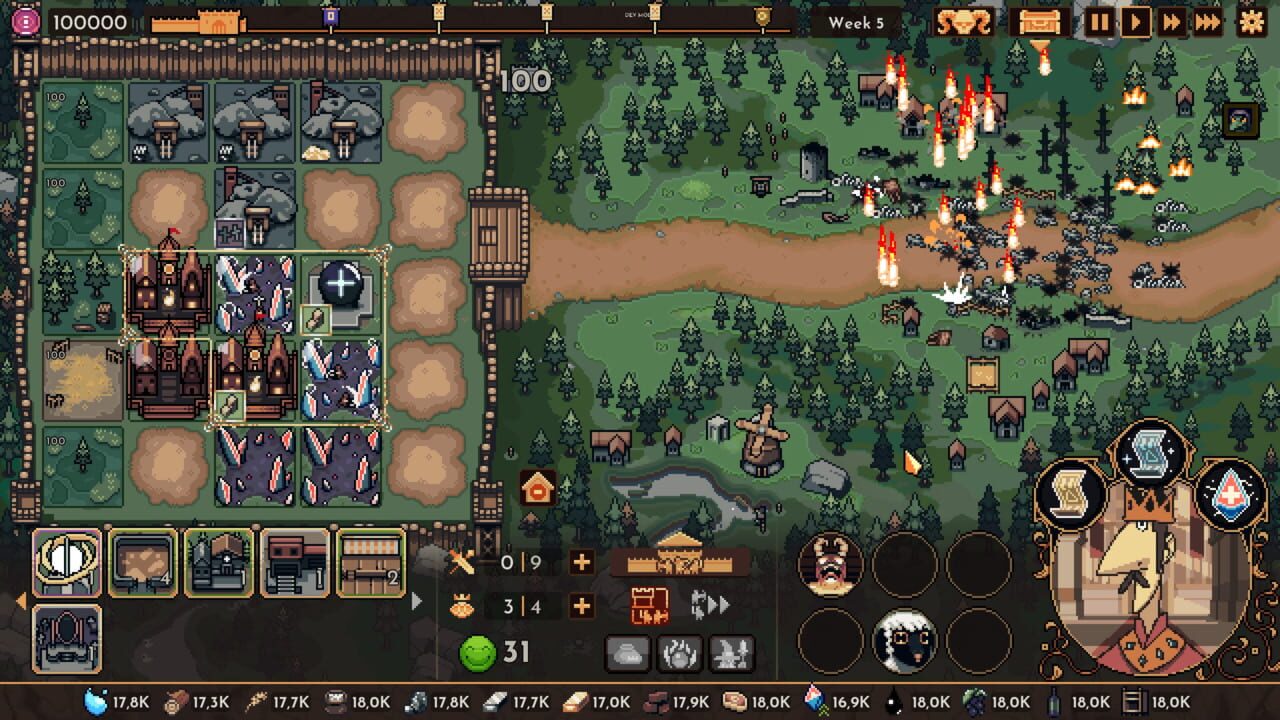
Why the gaze mechanic works
Most city builders reward long-term planning, and most tower defence games reward clean placement and damage maths. This adds a stranger pressure: you can't run the whole kingdom at once. You aren't all-seeing; you're a tired little spotlight. A farm is a promise you have to keep looking at, and a barracks is dead weight unless it's under your gaze at the right moment. Reviewers keep pointing to that shift from familiar grid to prioritization problem.
Checkpoint Gaming gave 7.5/10, calling the gaze "a simple and clean hook" and praising the setting and range of kings, then adding the caveat: in a year full of strong roguelikes, it can feel a bit samey and may not be enough to pull players away from the competition. A clever system still needs enough variety around it.
Movies Games and Tech gave 80, describing a mash-up of roguelike, deckbuilding, RTS and town management with a "unique and fun gameplay system" built on constantly moving your gaze. Not every piece is equal, but the central idea carries a lot.
Where critics push back
Almost everyone agrees the idea is good. The pushback is about endurance.
Gameliner gave 70, saying the line-of-sight system forces micromanagement and gives the game its identity, but pointing to limited maps and events. Its biggest issue was the lack of save-and-quit, which an update was expected to fix. If a run demands close attention, players need the game to respect their time when life interrupts.
Gamers' Temple gave 65, enjoying the early hours of learning tile placement, synergies and troop unlocks but finding the loop becomes a grind: "Most people will probably enjoy the game at first, but the amount of time spent grinding and losing will quickly cause them to lose interest." Learning why you lost motivates some players; for others it's just another wall.
The 80 feels honest. It's praised for a good idea it commits to, not as a flawless hidden classic. The criticism is about how often that idea refreshes itself.
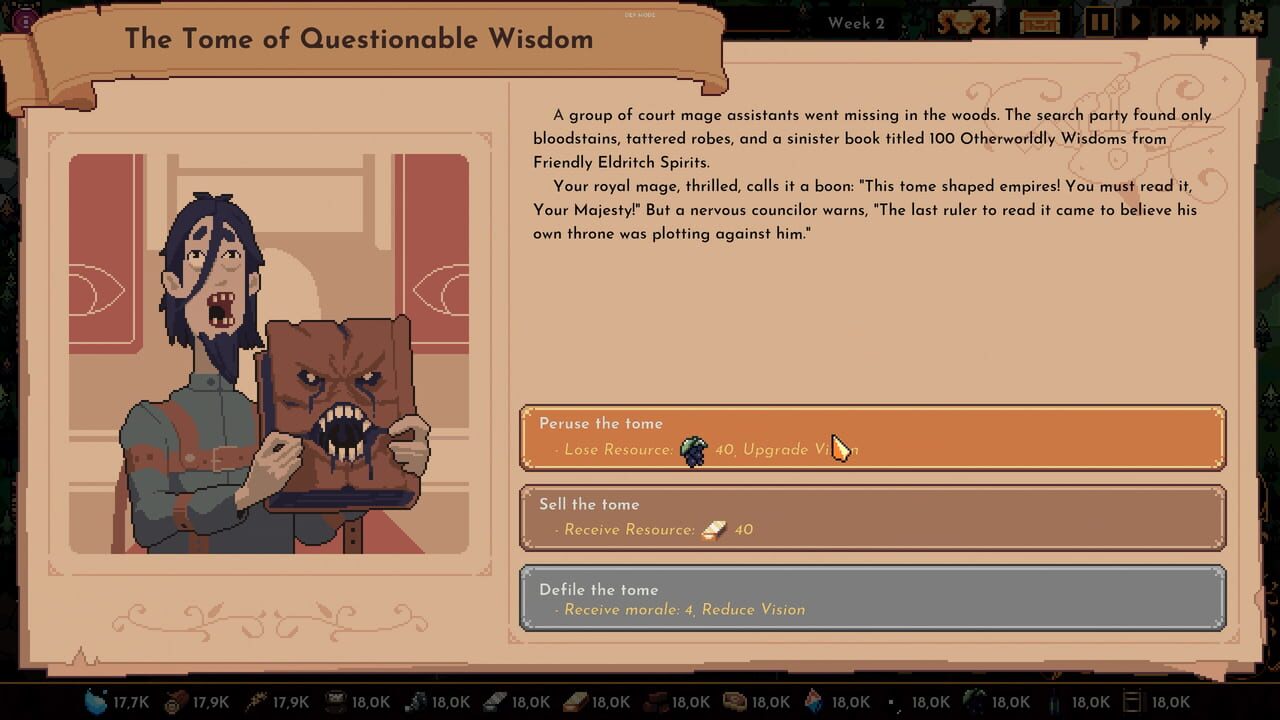
Why it's worth a look on console
A new console slot gives it another chance to find the right players, in a late-July week where bigger names take most of the attention. Halo: Campaign Evolved sits around 81 to 82 across the aggregators. Dispatch is at 87 on Metacritic for Xbox, with PC Gamer and IGN describing it as a Telltale-style superhero workplace story that works. Those are easier headlines. The King is Watching has the more unusual reviews: a high enough average to matter, a wide enough range to be worth reading, and a mechanic reviewers can explain without falling back on genre jargon.
Should you play The King is Watching?
Do you want a strategy game about managing attention, or one that lets you sit back while the machine runs? If the first sounds satisfying, critics say there's something here. If the second, trust the lower scores.
A 100 says it clicked hard for someone; a 65 says the grind can wear thin; the 80 says both are true. If you like compact roguelite systems and don't mind losing while you learn, it's one of the smarter sleepers around. If you need variety every run, wait for console impressions to see whether the new release sharpens the rough parts or just puts the same small kingdom on a bigger stage.