
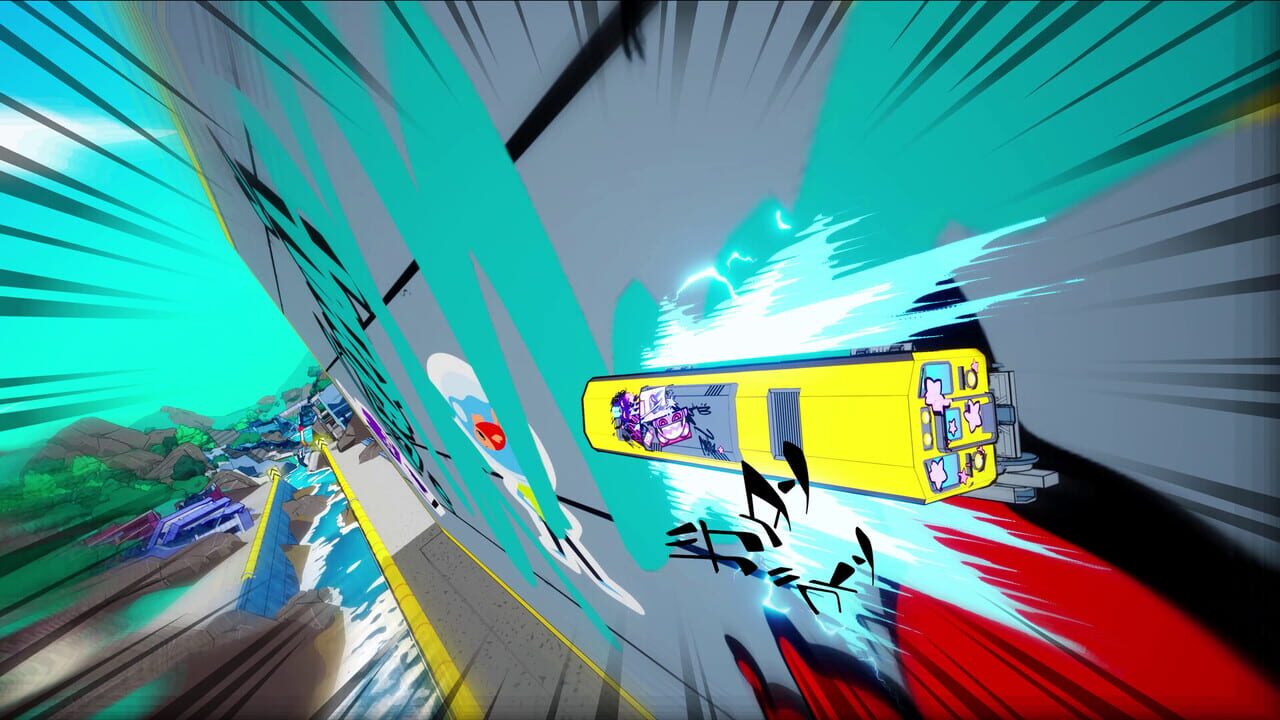
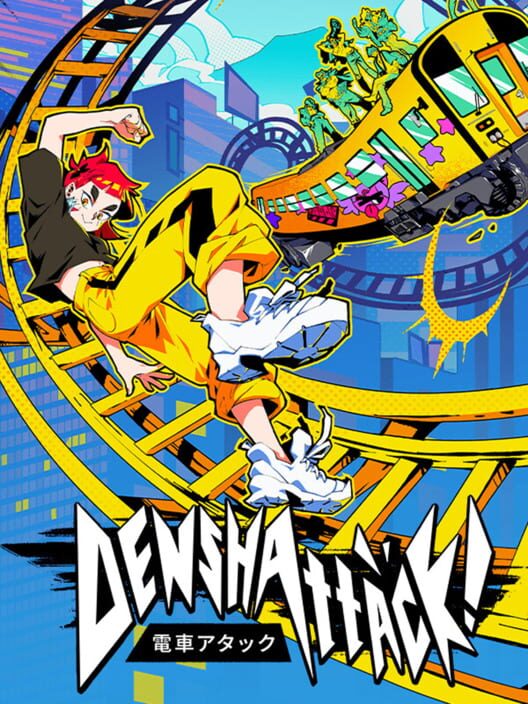
Denshattack! has the sort of pitch that sounds fake until you see it moving: Tony Hawk-style trick chains, Jet Set Radio colour, anti-corporate anime energy, and a train doing kickflips across a future Japan. That is either charming nonsense or a warning sign. According to critics, it is mostly the former.
The useful part is that the praise is not flat. OpenCritic has Denshattack! at an 87 Top Critic Average with 96% of critics recommending it, across 116 listed critic reviews. That sounds like a clean win. Then PC Gamer sits off to the side with a 63/100, calling it inconsistent and underused. That spread is why the game is more interesting than a simple "surprise indie hit" headline. Critics seem to agree that Undercoders made something with real feel, momentum, and identity. They disagree on whether the game around that feel knows when to stop talking.
Denshattack! was developed by Undercoders and published by Fireshine Games and Boltray Games. Eurogamer lists it as available on PC, PlayStation 5, Xbox Series X/S, and Nintendo Switch 2, with the review played on PS5 Pro. OpenCritic lists the release date as June 15, 2026, while IGN and Eurogamer's reviews went live on July 15. That late critic wave is probably part of why the game still feels like it is arriving by word of mouth rather than marching in through the front door.
For Perthro readers, this is exactly the sort of game that benefits from a saved note. Not because everyone needs to play it immediately. Because "train skateboarding game with real critical heat, but one major outlet bounced off the themes" is the kind of thought that disappears fast if you do not write it down somewhere.
Denshattack! review scores: high average, one loud warning
The headline number is strong. OpenCritic's 87 average and 96% recommendation rate put Denshattack! near the top of the 2026 critic conversation, at least among the games listed on the site. The visible review spread I checked runs from Eurogamer's 5/5 and IGN's 9/10 down to PC Gamer's 63/100. In between, OpenCritic lists Game Informer at 8.5/10, Hardcore Gamer at 4.5/5, Nintendo Life at 8/10, and DualShockers at 9/10.
That is not a normal lukewarm consensus with a few excited outliers. It is a mostly excited consensus with one clear objection: the game is great at being a kinetic arcade toy, but not every critic thinks its story and themes deserve the same confidence.
IGN's Will Borger is fully in. His review says, "Hitting the track and chaining tricks together in Denshattack is a joy," and calls the campaign "excellent" because it keeps introducing new ideas without running out of steam. He frames the premise with the right level of disbelief: a game where Tony Hawk and Jet Set Radio fuse, except the skateboard is a train and the opponent is a dystopian megacorp. The review's score, 9/10, makes sense in that context. IGN responds to Denshattack! as a game that understands the pleasure of doing a ridiculous thing very well.
Eurogamer's Dom Peppiatt is even warmer. The review calls Denshattack! "irreverent, unpredictable, funny, and unputdownable," then lands on a phrase that may be the cleanest pull quote attached to the game: "anti-capitalist, pop-punk optimism distilled." Eurogamer does not score every review numerically in the same way older sites do, but OpenCritic records it as a 5/5. More importantly, the text makes clear what Eurogamer values: commitment. Denshattack! is silly, but the review argues that it is not careless. It is serious about how good nonsense has to feel.
Then there is PC Gamer. Kerry Brunskill's 63/100 is the useful counterweight because it does not dismiss the game as broken or dull. OpenCritic's excerpt says Denshattack! is "an inconsistent spectacle that fails to make good use of its chosen themes." That line changes the conversation. If IGN and Eurogamer are focused on the feel of chaining tricks, PC Gamer is asking whether the game earns the story it keeps wrapping around those tricks.
Why critics keep talking about feel
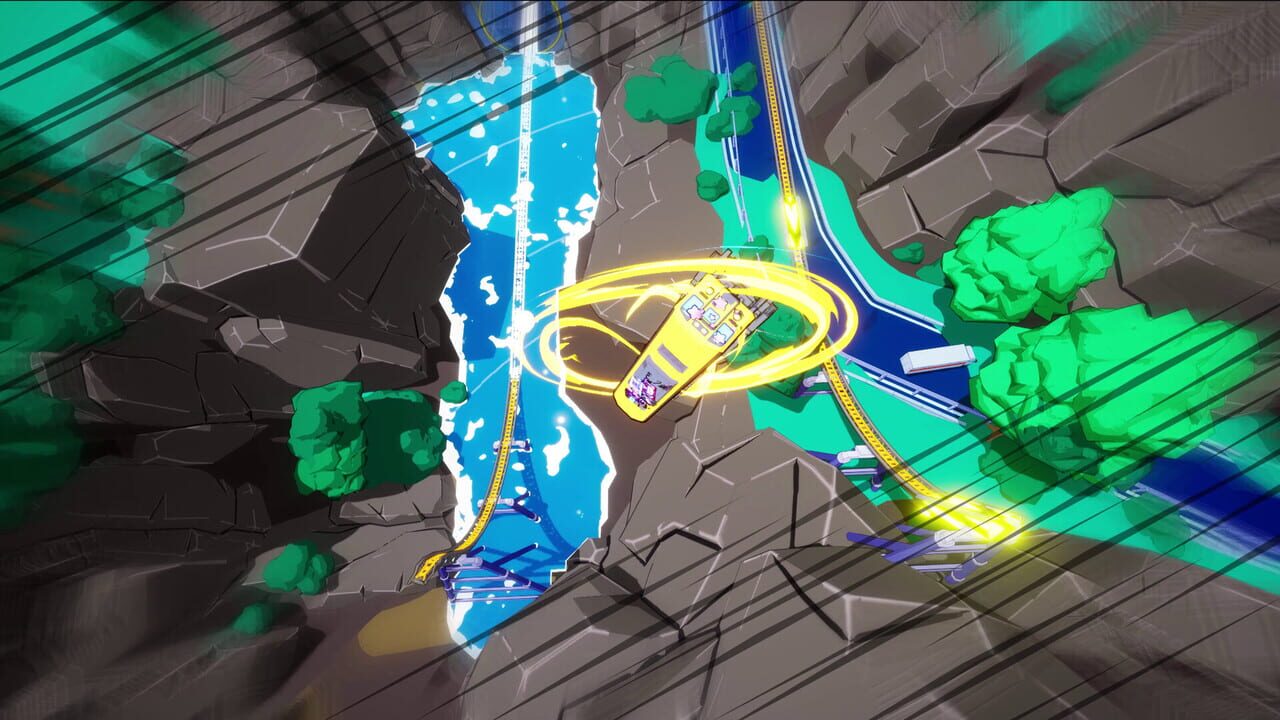
Every positive Denshattack! review comes back to the same thing: it feels good to move.
That sounds obvious, but arcade games live or die there. A premise can buy a trailer click. It cannot carry a ten-hour campaign if the inputs are mushy or the score system is thin. Denshattack! appears to avoid that trap by treating train tricks with absurd sincerity. IGN describes a control system where basic moves are easy to begin with, while complex tricks push toward fighting-game-style inputs. Eurogamer talks about the first few hours as a real learning curve, even for someone with deep OlliOlli and Tony Hawk muscle memory. The reward is that strange moment when the game clicks and your fingers start reading the track before your brain catches up.
That is probably why the Jet Set Radio comparisons only go so far. The art, music, and punk energy invite them. The actual structure, according to Eurogamer, sits closer to OlliOlli World: a mostly forward-moving campaign, a steep tutorial curve, repeated attempts, and the old "one more go" brainworm. The train joke gets people in the door. The mechanical density keeps critics there.
OpenCritic's excerpt from Hardcore Gamer makes the same point in simpler terms: Denshattack! is a trick-based game from the Tony Hawk school of design, except literally on rails. Nintendo Life's excerpt is also helpful because it praises the gameplay loop while warning that the surrounding material can bloat the experience. That is where the positive reviews and PC Gamer's lower score almost meet. The core hook works. The disagreement is about how much stuff should sit around it.
The story is either flavour or friction
The plot setup, at least as IGN describes it, is wonderfully direct. Emi delivers ramen by train in a future Japan damaged by climate change. A corporation called Miraido controls the high-speed VACTRAIN between domed cities. Emi gets pulled into Denshattack!, an underground scene where train drivers compete through tricks and races. It is sports anime, climate sci-fi, anti-monopoly cartoon, and trick-score arcade game piled onto one track.
That pile-up is the appeal for some critics. IGN calls Emi likeable and compares her to Goku: positive, naturally talented, and always pushing herself. Eurogamer praises the game's humour for being light-hearted without turning its characters into easy targets. The review notes that even a character described as "a bit of a furry" is simply allowed to exist, not treated as a punchline. That matters more than it sounds. A lot of games chase wackiness by laughing at their own world. Denshattack!, at least in the warmer reviews, seems to believe in its weirdness.
PC Gamer's objection, through the OpenCritic excerpt, suggests the opposite risk. If the game chooses anti-capitalist themes, dystopian cities, rival crews, and a maximalist campaign, then spectacle alone may not be enough. A critic can love the sound and motion of a game while still feeling that its big ideas are mostly wallpaper. That does not make the lower score wrong. It makes it useful. It tells you what kind of player might bounce.
If you are mostly here for routes, rankings, combo mastery, and impossible little set pieces, the consensus says Denshattack! is strong. If you need the fiction to carry equal weight with the trick system, the 63/100 is the review to read before buying.
What the reviews agree on
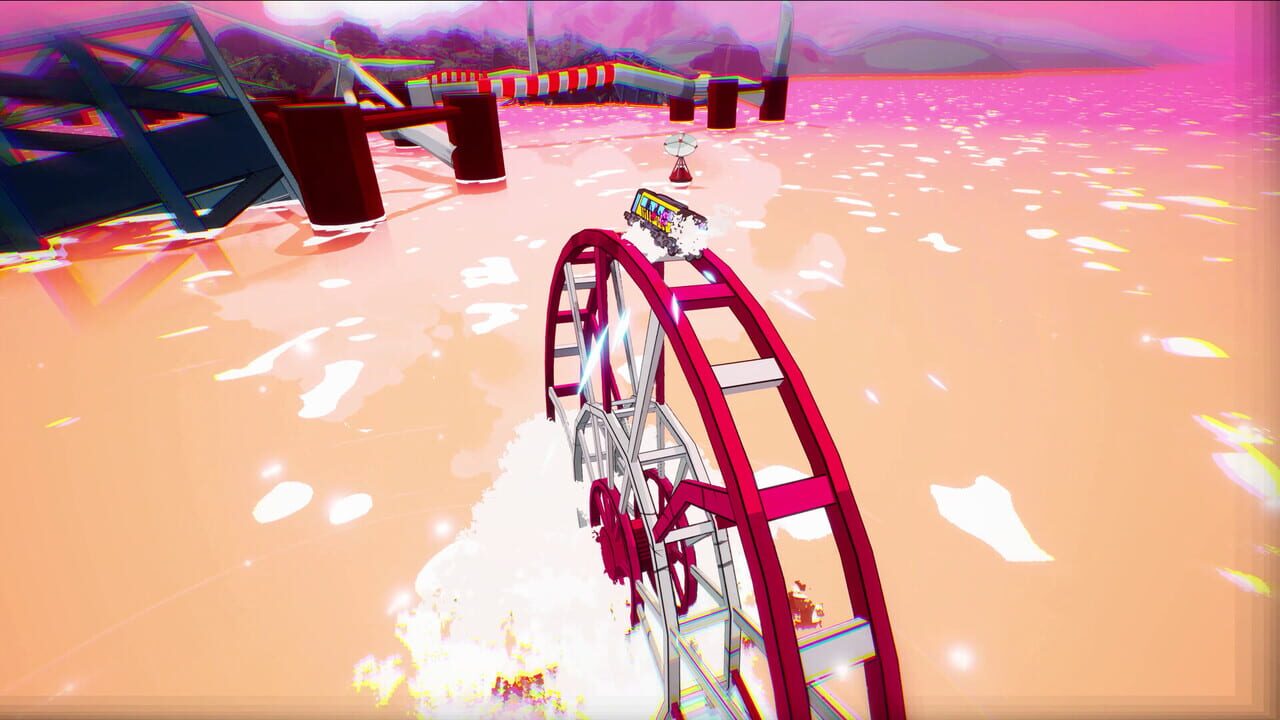
The critic agreement is stronger than the score spread makes it look. Denshattack! has a strong identity. Its core movement works. Its levels keep escalating. It is funny without sounding embarrassed by itself. It takes a deeply stupid idea and treats it with enough craft that the stupidity becomes part of the charm.
The criticism is also consistent. The early learning curve can be steep. The campaign may carry more story and surrounding fluff than the arcade hook needs. Some players will want a purer score-attack game. Others will love that the whole thing has rival gangs, absurd vendors, future Japan, megacorporate villains, and a ramen train driver trying to become the best.
That is a good kind of split. Not a red flag, exactly. More like a taste warning.
I keep coming back to Nintendo Life's OpenCritic excerpt, which says the premise sounds ridiculous on paper but "works very well," then adds that Denshattack! might have shone brighter if the developers had leaned further into its arcade inspirations. That is probably the fairest buyer note. The thing critics love most is the thing some of them wanted more cleanly isolated.
Why Denshattack! matters
There is a small sadness in watching games like this fight for attention. Not because Denshattack! is obscure in the purest sense. An 87 OpenCritic average, an IGN video review, and a big Eurogamer write-up are not nothing. But the release calendar is cruel. July has already been crowded with remakes, DLC, indies, and odd little review waves. A game can be one of the best-reviewed things of the month and still feel like something people almost noticed.
That is why Denshattack! is a useful Perthro game. It is searchable, yes, but it is also memorable in the way backlogs often are not. The note practically writes itself: "critics loved the train tricks, PC Gamer warned the themes are thin, probably play when I want arcade flow and noise." That is enough. You do not need to turn every review into a purchasing decision. Sometimes a review is just a better memory of why a game caught your eye.
My read from the critic spread is simple: Denshattack! looks like a real sleeper hit for players who miss stylish arcade games with too much personality. The floor is not invisible, though. The lower reviews are not complaining that the train cannot skate. They are asking whether everything around the skating gets in its own way.
Honestly, that makes me more interested. Perfect consensus can flatten a game. Denshattack! has rough edges in the exact places that make it sound alive. If you try it, save a note after the first hour. Not a verdict. Just a sentence. Something like: "the train game is actually doing the thing." Future you will know what that means.