
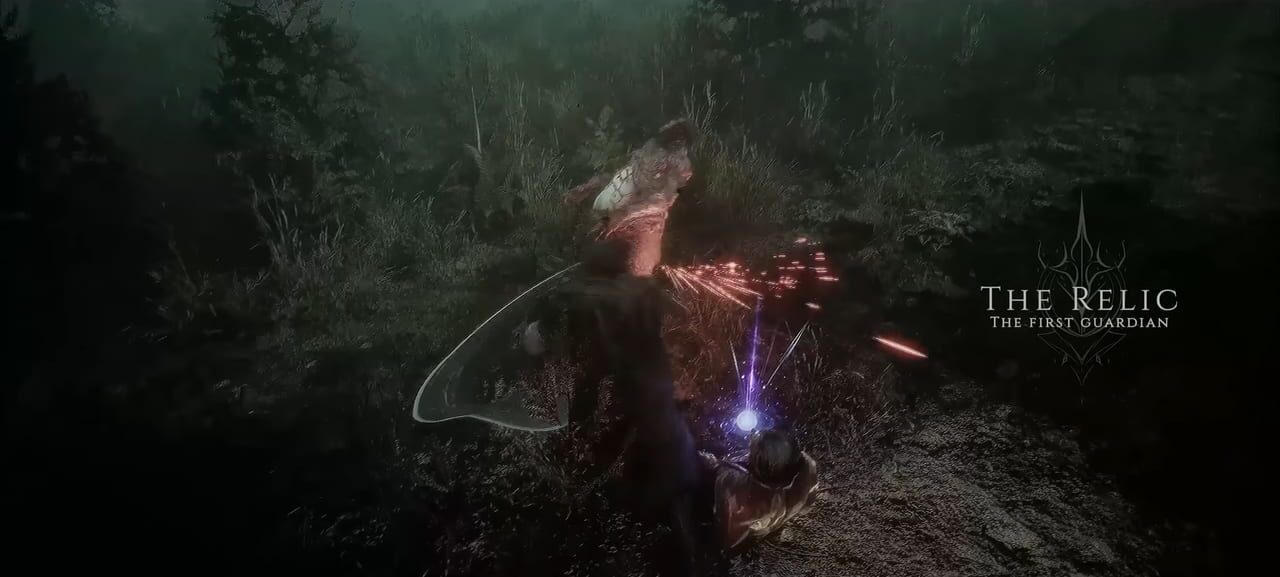
The Relic: First Guardian arrives today with the sort of premise that still makes me want to clear a weekend: a Korean dark fantasy action RPG, a broken world, no traditional character levels, five weapon styles, lots of bosses, and a developer trying to make something big without sanding off every strange edge.
That is the hopeful version. The critic consensus is rougher.
As of July 31, Metacritic lists The Relic: First Guardian at 54 on PlayStation 5, based on eight critic reviews. The spread is the real story: Gamesurf and GamingBolt sit at 70, PlayStation Universe at 65, IGN Italia at 60, Gameliner at 40, RPG Fan at 45, and CGMagazine and GamingTrend at 30. IGN's own review lands even colder at 4 out of 10, calling it a game with potential that gets buried under bugs, muddy presentation, and basic design problems.
So this is not a simple "bad game reviewed badly" situation. It is messier than that. Several critics found a real action RPG inside the wreckage. They liked the combat, the melancholy world, the side stories, and the ambition. Then almost every one of them ran into the same wall: technical problems, uneven bosses, unclear systems, and a world that can feel bigger than it is interesting.
For Perthro, this is exactly the sort of release that belongs in a journal, not just a scorecard. A 54 does not tell you whether you are the kind of player who can forgive a rough action RPG because one late-night dungeon clicks. It does not tell you whether the broken bits will annoy you or become part of the texture. The reviews help, though, if you read them as warnings instead of verdicts.
The Relic: First Guardian review scores are split, but not randomly
The first useful thing to know is that the high and low reviews are not talking about entirely different games. They are often praising and criticizing the same parts, just with different tolerance levels.
Gamesurf gave The Relic: First Guardian a 70 and still sounded exhausted by it. The review calls it "an undeniably ambitious title" with "excellent environmental design, dynamic and intuitive gameplay, and an equipment management system that integrates seamlessly with the lore." That is the generous read. The same review also says the game tries "to do too much and doing it poorly," criticizes ultra-aggressive enemies, and says its many bosses can become flawed damage sponges. Its closing thought is the sharpest summary of the whole reception: for once, "perhaps, less should have been done."
GamingBolt also gave it a 70, but in a shorter and more forgiving line: "The Relic: First Guardian may never escape its technical shortcomings, but its melancholy world is well worth saving." That is the version of the game most likely to appeal to players who go hunting for flawed cult objects. Not polished. Not safe. Worth the trouble if the mood gets under your skin.
PlayStation Universe sits in the middle with a 65. Its pull quote is probably the most balanced: "There are things about The Relic: First Guardian that I absolutely loved. The game's exploration also leaves something for you to find, and the game's combat is satisfying and rewarding. It's just a shame I had to suffer through major bugs that kept me from progressing or finishing quests." That review makes the bargain plain. If you can handle major bugs, there may be a game here. If you cannot, wait.
IGN Italia gave it a 60 and described it as "a game of stark contrasts," where developer passion crashes into severe technical shortcomings. It criticized "anachronistic PS3-era graphics" and early framerate drops, but also pointed to a "magnetic exploration loop," surprisingly deep RPG progression, and a large roster of bosses. Again, same pattern: the bones are good enough that some critics kept leaning forward, even when the game kept pushing them back.
Then the bottom falls out.
Gameliner gave The Relic: First Guardian a 40, saying it has promising ideas on paper, including Korean mythology, fast combat, and a variety of Brutals, but that few of them stand out in practice. The review points to fragmented storytelling, uninspired voice acting, and combat depth that does not match the trailers. CGMagazine gave it a 30 and wrote that "between rough gameplay feel and mechanics, The Relic: First Guardian doesn't present itself with a bang, but with a wimper." GamingTrend, also at 30, is blunter: "The Relic: First Guardian is one of the worst games to come out in 2026. With so many other titles worth your time and money, this one is an easy skip."
That is a 40-point review range, from 30 to 70, around a Metascore of 54. For a new action RPG launching into a year already full of backlog pressure, that matters. It means the question is less "is it good?" and more "how much friction are you willing to carry for an idea you like?"
What IGN found in The Relic: First Guardian
IGN's review is worth separating from the aggregator pile because it spends a lot of time on the shape of the frustration. Its score is 4 out of 10, but the text is not just a pile-on. The review says The Relic looks, from a distance, like the kind of B-list action game that could punch above its weight. Up close, the reviewer found something much rougher: "shoddy and broken throughout, barely propped up by its engaging combat."
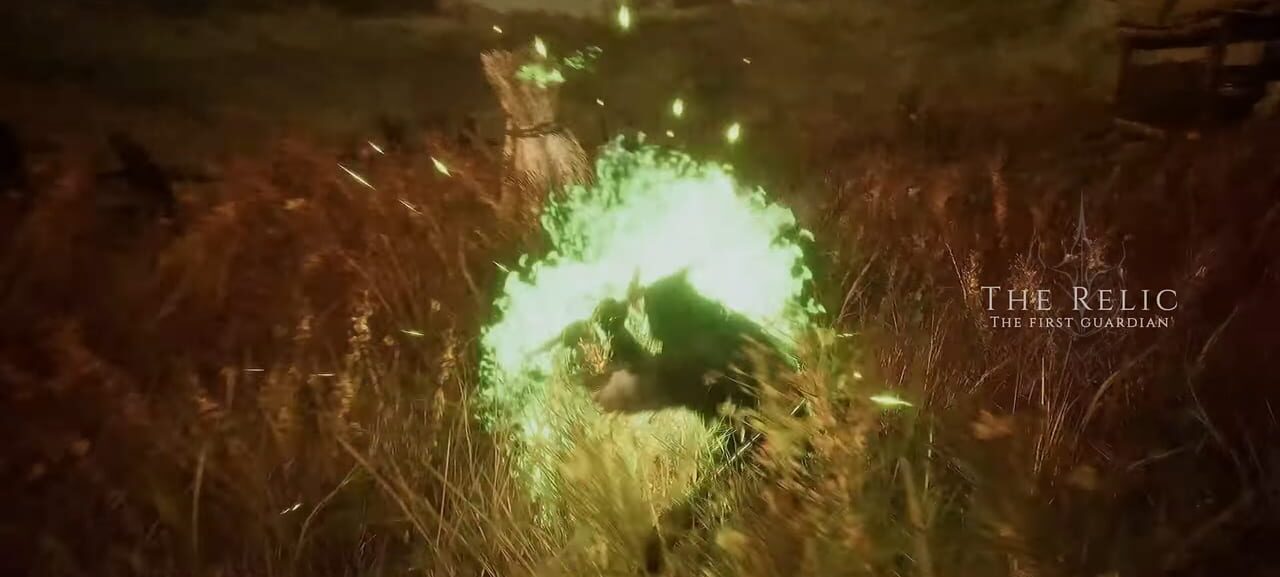
The criticism starts with presentation. IGN describes bland character models, fuzzy low-detail faces, oppressive color filters, and areas that blur together. That might sound cosmetic, but in an action RPG, readability is not decoration. If the world is asking you to explore ruins, caves, forests, and burning villages, visual clarity becomes part of the design. IGN says some filters make paths harder to read, while caves darken the edges of the screen enough to test peripheral vision.
Still, the review does find life in the world. It says exploration can be "occasionally intriguing" when a cave mouth or tower pulls you away from the main path. It also gives real credit to side stories based on Korean folklore. One example follows a grieving woman into the forest and ends with her becoming a monster. Another sends the player up a mountain through scraps of notes about a wife and daughter waiting for someone who never comes home, ending on a quiet plateau filled with pinwheels. Those are the parts that explain why the kinder reviews exist. There is atmosphere here. There are ideas.
The problem is what surrounds them. IGN says The Relic relies too often on notes and deduction-style environmental storytelling, sometimes with a boss fight awkwardly wedged in at the end. It also points to loot markers scattered everywhere, systems that do not explain themselves clearly, and technical failures that go beyond normal jank. The verdict says the game has "the bones of something that could have grown to be a notable action game," especially because of its energetic combat, but that the whole experience is "fundamentally broken in too many inexcusable ways."
That phrase is hard to get around. A charmingly rough game can survive bad textures. It can survive uneven voice acting. It can even survive some familiar structure if the combat and exploration hold. It has a much harder time surviving progression blockers, broken quests, poor checkpoint behavior, and systems that ask for trust before earning it.
Why The Relic: First Guardian still has a hook
The odd thing is that The Relic: First Guardian may end up more interesting to talk about than a cleaner 7 out of 10 game. Not better. More interesting.
It is developed by Project Cloud Games and published by Perp Games. Metacritic lists the initial release date as July 31, 2026, with platforms including PlayStation 5, PC, Xbox Series X, and Nintendo Switch 2. Gematsu describes it as an action RPG about restoring Arsiltus after the destruction of the great relic, with no traditional character levels. Instead, the player grows through runes, items, crafting, weapons, and bosses. On paper, that is a strong identity. It gives the game a reason to exist beyond being another Soulslike with a gloomy sky.
The review split suggests that identity is visible, even through the problems. Critics who liked it did not pretend it was polished. They simply found enough in the exploration loop, combat, equipment systems, or sad fantasy mood to stay invested. Critics who disliked it did not miss the ambition. They just did not think ambition excused the state of the game.
That is useful if you are deciding whether to play it now. If you want a clean, responsive action RPG with careful boss design and stable performance, the reviews are basically waving you away. If you love troubled games with strong moods, strange folklore, and visible developer fingerprints, The Relic might be worth tracking, especially after patches. Not necessarily buying today. Tracking.
And that is where a gaming journal earns its keep. A store wishlist can remind you that The Relic exists. A review score can warn you that it launched rough. But a note to yourself can say the more honest thing: "wait for patches, check whether the quest blockers are fixed, then decide if the folklore and combat are enough."
The quiet lesson from The Relic: First Guardian's reviews
The Relic: First Guardian is a reminder that ambition cuts both ways. Reviewers are often more patient with a flawed game when they can see what it wanted to be. They are less patient when the basics get in the way of that vision. That is what happened here.
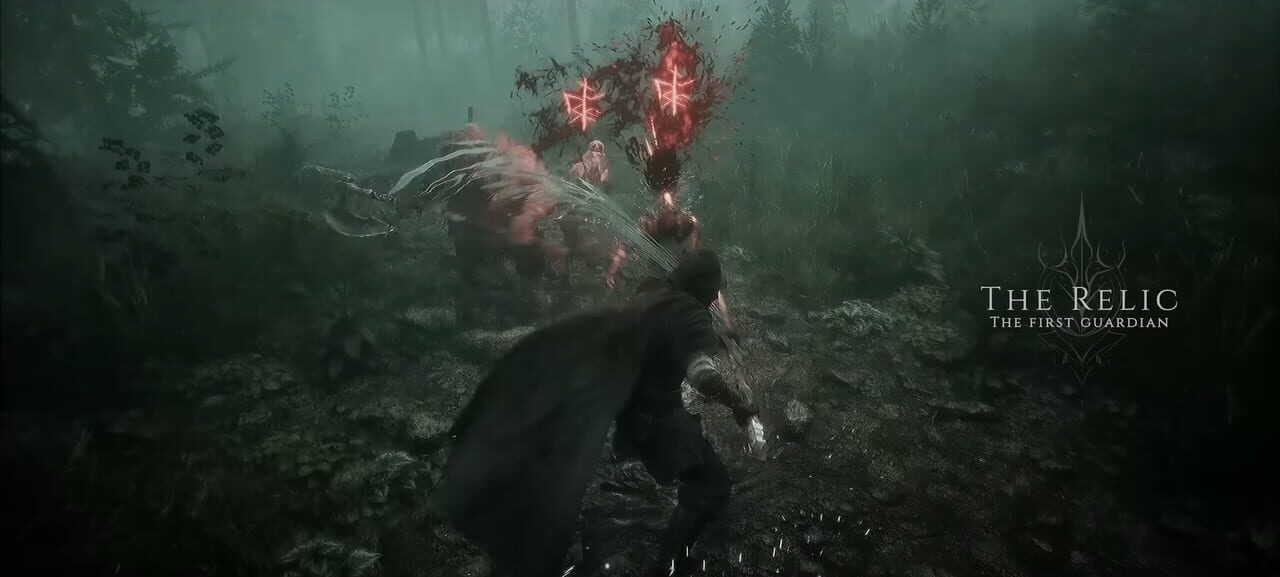
The generous reviews see a melancholy action RPG with satisfying combat and a world worth saving. The harsher reviews see a technically unstable, under-explained, uneven game that asks too much of the player. Both can be true. That is why the score lands in the middle while the language around it swings so hard.
For now, The Relic: First Guardian looks like a wait-and-watch game. Put it in the backlog if the premise speaks to you. Add a note beside it: strong atmosphere, Korean folklore, mixed combat praise, serious bug warnings, Metacritic 54, review range 30 to 70. Then come back after the first few patches and see what changed.
That is calmer than getting pulled into a launch-week argument. It is probably more useful, too.