
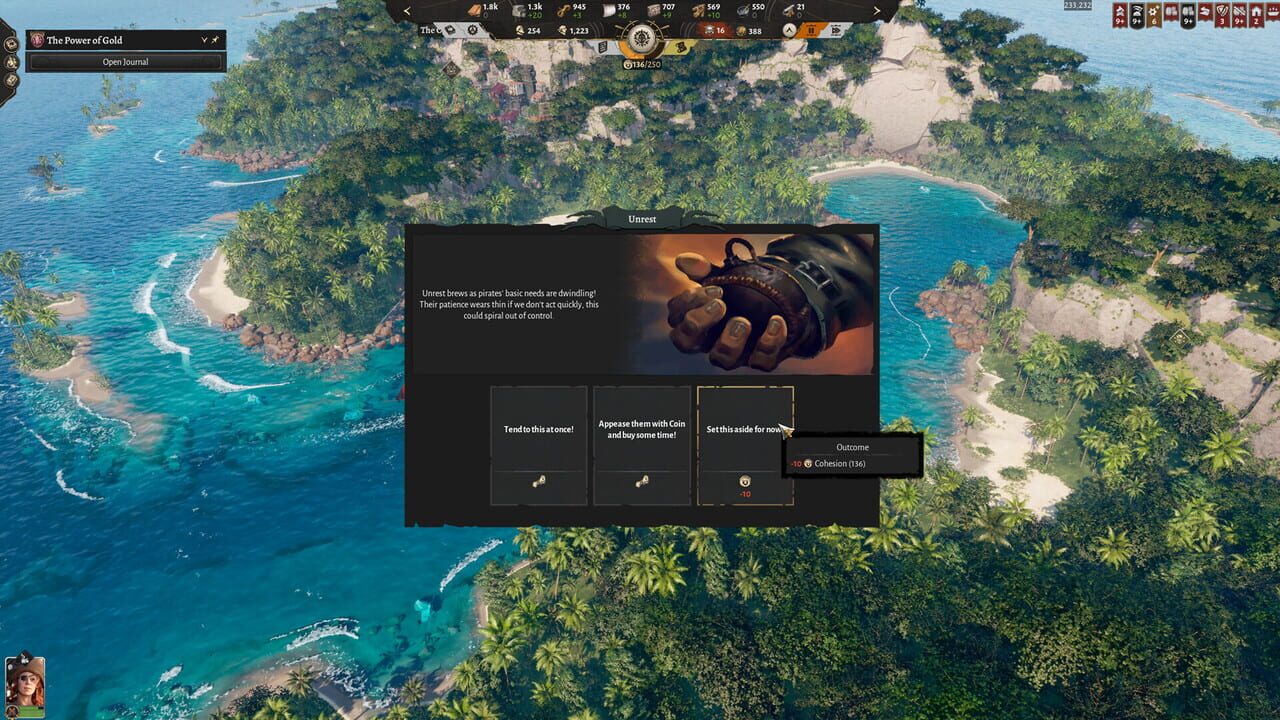
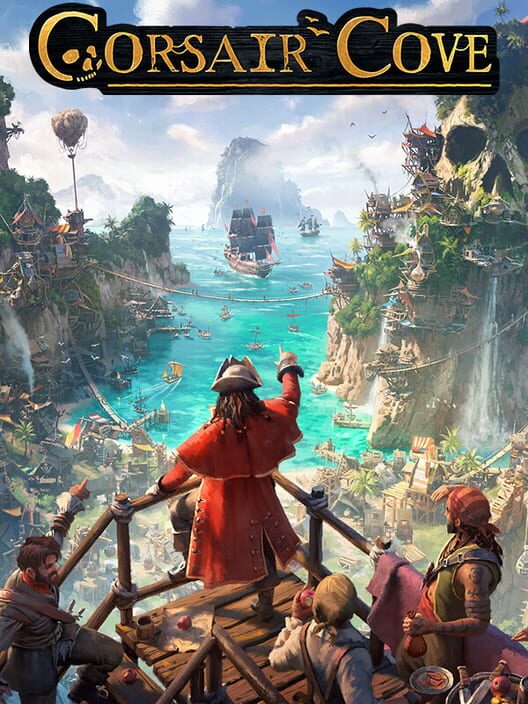
Corsair Cove arrived at an oddly good time. August is usually the point where the release calendar starts to stretch again, but the first weekend is still quiet enough that a pirate city builder can breathe. That matters. A game like this does not compete by being loud. It competes by making the player stare at a cliff face and think, very seriously, about where the rum is going to come from.
Limbic Entertainment's new strategy game, published by Hooded Horse, launched on July 31, 2026 for PC and PC Game Pass. The pitch is clean: build a pirate haven on steep islands, manage production chains across cliffs and rope bridges, send ships out to raid and explore, and keep enough food, drink, tools, weapons, and crew morale flowing to keep the black flag up. The current critic picture is also clean at first glance. Metacritic lists Corsair Cove at 79 on PC, based on 13 critic reviews, with a 60 to 90 score spread. That is a healthy result for a mid-sized strategy game, but the range is the useful part. Reviewers broadly like the same things. They also keep bumping into the same limits.
This is not a case where one critic saw an entirely different game. It is more interesting than that. The consensus says Corsair Cove has charm, a strong building hook, and enough logistical texture to keep city-builder fans busy. The reservations land around repetition, naval encounters, optimization, and whether the game's simpler systems will satisfy people who live deep inside the genre.
Corsair Cove review scores: the critic range so far
Metacritic's 79 average puts Corsair Cove in the "Generally Favorable" bracket. The high end comes from SECTOR.sk at 90, which calls it "one of the most successful pirate-themed games" and one of the better recent strategy games. Destructoid sits close behind at 85. PC Gamer gives it 82. CGMagazine lands at 80. The more cautious side starts around Try Hard Guides at 70 and bottoms out, in the visible Metacritic list, with Gameliner at 60.
That spread tells the story better than the average. The reviewers who love Corsair Cove are responding to a specific fantasy: a messy, vertical pirate settlement that looks alive before it becomes efficient. The reviewers who cool on it are not rejecting the fantasy. They are asking whether the mechanics underneath it keep changing enough after the first few hours.
PC Gamer's Fraser Brown is probably the cleanest read on why the game works when it works. His verdict calls Corsair Cove "a vibrant, playful city builder with compelling logistical conundrums," and the review gives it 82. Brown spends time on the feel of the island itself: the skull-shaped mountain, the cliffs, the rope bridges, the tavern life, the tiny bits of animation that make the pirates feel less like resource nodes and more like a community of fools who happen to need stew and booze on schedule.
Destructoid's Rachel Samples is even warmer. Her 8.5 out of 10 review calls Corsair Cove "a charming pirate-themed city-builder" with "gorgeous environmental design and lively worldbuilding." She also names the main catch: repetitive naval encounters. That pairing comes up again and again. The settlement sings. The sea, at least for some critics, starts to loop.
CGMagazine's David Walters gives Corsair Cove an 8 out of 10 and frames it as a strong fit for city-building and strategy players. The review leans into the way the game combines supply chains, camp growth, and ship missions. It also warns that Corsair Cove is not quite a walk in the park, even if some critics found parts of the combat too light. That tension is worth holding onto. A game can be approachable in one layer and still ask for patience in another.
Why the vertical building hook matters
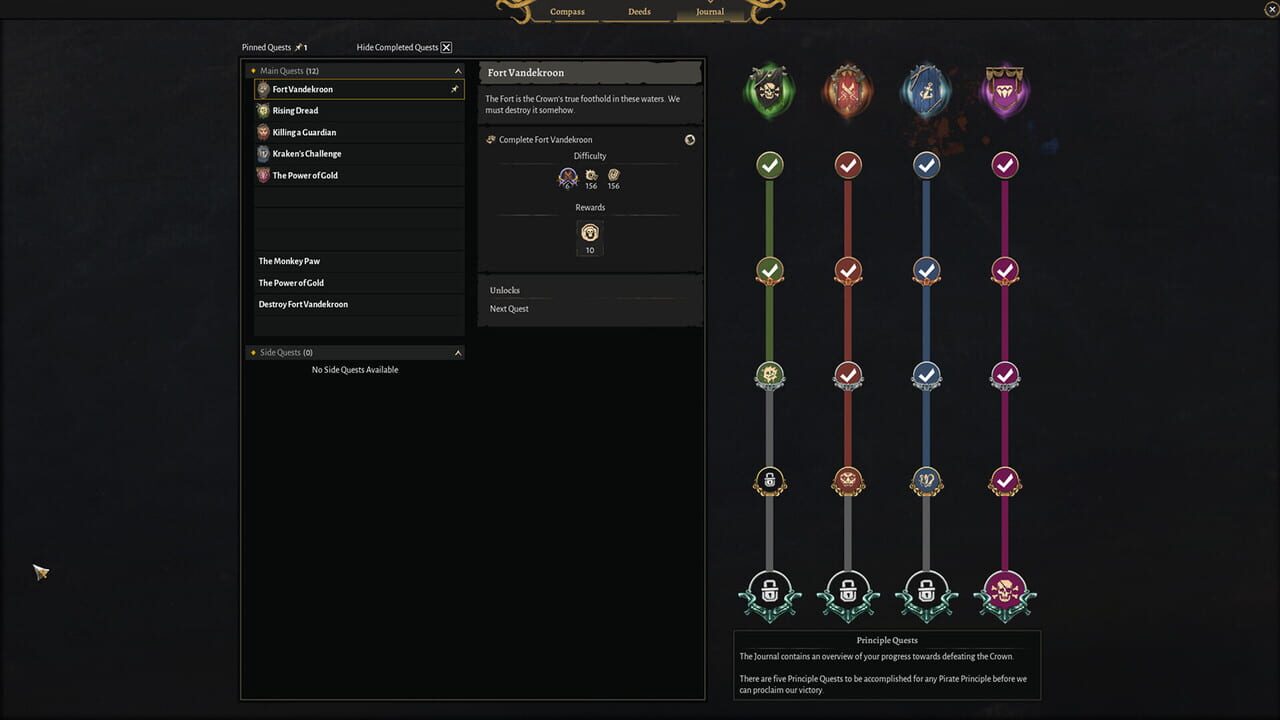
The best idea in Corsair Cove is not that it has pirates. Pirate games have existed forever. The better idea is that pirate architecture should feel dangerous and slightly improvised. The island is not a flat grid waiting to be solved. It is a lumpy, cliff-heavy thing, and the game asks you to build through height instead of simply expanding across a map.
That changes the mood of the genre. A normal city builder often becomes a question of zoning and throughput. Corsair Cove still has those concerns, but the physical shape of the settlement makes the whole thing feel a little more handmade. Bridges matter. Vertical routes matter. A building is not just a number in a production chain; it is a place hanging off a wall, connected to other places by thin paths that look like somebody probably should have checked them twice.
This is where critics seem most aligned. Destructoid praises the environmental design and the way the haven feels alive. PC Gamer points to the joy of simply looking at the thing, soaking in the colour and the little pirate details. Metacritic's excerpt from PC Games says the city-building impresses especially through vertical construction, even if the adventure component wastes some potential.
That last clause is the hinge. The island is the star. The problem is that Corsair Cove also wants the sea to matter.
Where critics start to push back
The mixed notes focus less on the core fantasy and more on how long the supporting systems can carry it. Try Hard Guides' Erik Hodges gives the game a 70 and says it is a good city-builder for players who enjoy watching their town take shape, helped by the pirate theme and cliffside construction. His concern is that the systems can feel "understimulating" for veteran city-builder players, especially the simplified ship combat and exploration.
Gameliner's 60 is the clearest low-end warning in the Metacritic set. Its summary says Corsair Cove captures the pirate setting through settlement building and exploration, but progression is slowed by waiting and mandatory deeds. It also calls the turn-based combat repetitive. That does not make the whole game collapse, but it does suggest the design is stronger at place-making than at pressure.
Forbes' Barry Collins lands in a similar middle, though with a more positive tilt. His review describes Corsair Cove as filling a long-neglected pirate strategy niche and praises the shift from base management into off-island missions. But he also notes that ship combat, built around cards and dice rolls, can feel chance-dependent. Again, the criticism is not that the sea should be removed. It is that the sea does not always feel as sturdy as the cliffs.
This is the useful buyer's note. If you come to Corsair Cove for the settlement, the current critic consensus is strong. If you come for naval combat, raids, and a crunchy campaign layer, the reviews suggest you should temper that expectation.
The pirate fantasy is doing real work
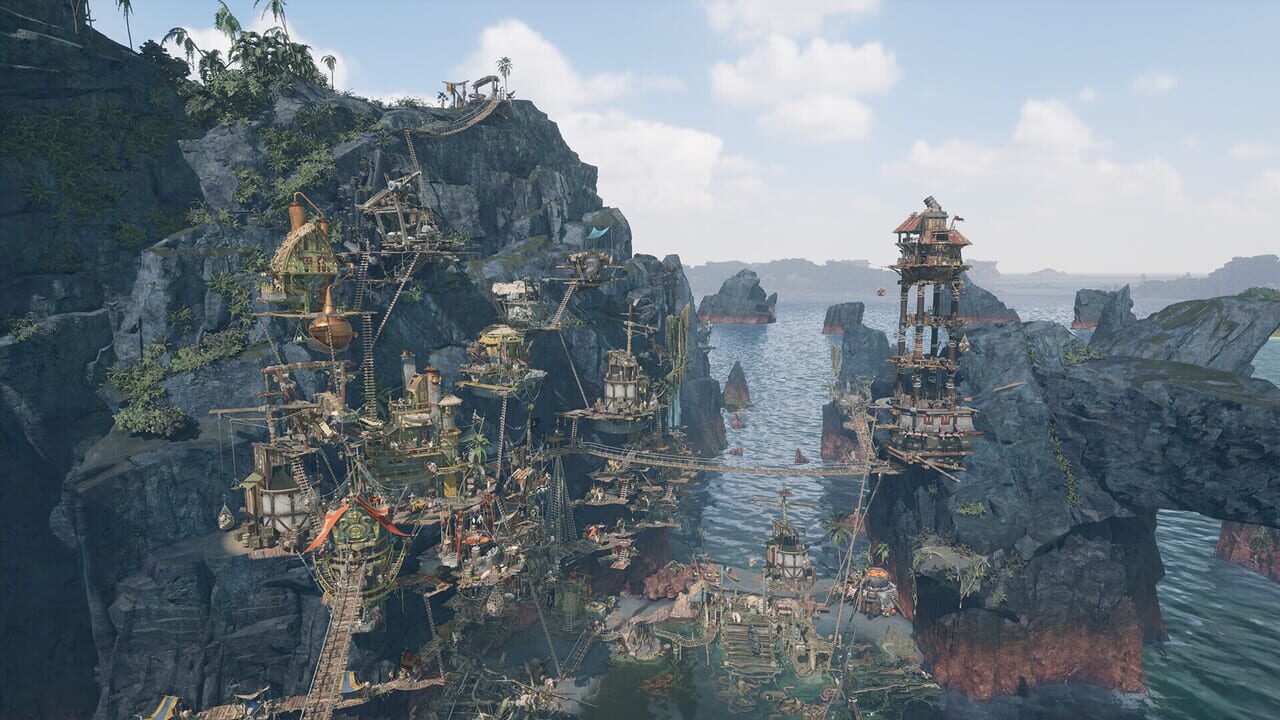
There is a reason critics keep talking about charm. Charm can be a lazy word, but here it points to something specific. Corsair Cove uses pirate fiction as a production-chain language. Food, drink, cabins, ships, captains, raids, hunters, krakens, taverns, pigs, rope bridges. The theme does not sit on top of the systems. It makes the systems easier to read and more pleasant to care about.
That is not nothing. A lot of strategy games are mechanically sound but emotionally dry. You learn them, respect them, and then forget most of the hours you spent inside them. Corsair Cove seems to be leaving critics with images: a town wrapped around cliffs, pirates dancing, a pig spun around on a tavern table, ships leaving the haven because the colony cannot make everything itself.
For a smaller strategy release, that kind of memory is valuable. It gives people a reason to talk about the game without reducing it to a spreadsheet. It also helps explain why the average sits near 80 even though several reviews point to repetition. The game has enough identity to survive its rougher edges.
What the Corsair Cove reviews agree on
The agreement is fairly clear. Corsair Cove is best when it is a city builder first. Critics like the vertical construction, the island layouts, the colourful art direction, and the way the pirate setting gives ordinary logistics a bit of character. They also agree that the naval and adventure layer is less consistent. Some reviewers treat it as a welcome break from settlement management. Others see it as too simple, too random, or too repetitive.
That does not make Corsair Cove a narrow recommendation. It makes it a specific one. If your favourite part of a strategy game is the moment when a small camp becomes a weird little machine, this looks like a good weekend sink. If you mainly want a pirate tactics game, the score range is warning you to read carefully before buying.
The PC Game Pass angle helps, too. A 79 average with a 60 to 90 spread is exactly the sort of game that benefits from easy sampling. It might become somebody's quiet obsession. It might also be the thing they bounce off after realizing the ship layer is not what they hoped.
Why this one is worth watching
Corsair Cove is not the biggest release of the week, and that is part of why it is interesting. It is a mid-sized strategy game with a strong hook, a clear identity, and enough critic support to deserve attention beyond the usual genre audience. The reviews do not read like hype. They read like people finding a game that knows what it is good at, then disagreeing about whether that is enough.
That is the kind of reception I like tracking. Clean masterpieces are easy. Total disasters are easy. The useful middle is where a game has a real audience, real shortcomings, and a score that needs context. Corsair Cove's context is simple: critics like the haven more than the high seas, but they like the haven quite a lot.
For Perthro players keeping a backlog or wishlist, this is a good one to tag with a note rather than a simple yes or no. Something like: pirate city builder, strong atmosphere, check later if naval repetition gets patched. That is a calmer way to treat a release week. Not every game needs to be bought on day one. Some just need to be remembered properly.