

Monday is a useful day for review roundups because the weekend has had time to do its quiet work. Scores settle. Smaller outlets catch up. The first wave of noise gives way to a more useful question: what did critics actually agree on?
This week, the answer is not a single giant release. The more interesting shape is three smaller games that arrived around July 29 and July 30, each with enough critic response to tell us something: Kusan: City of Wolves, Blue Reflection Quartet, and Case Solved: The London Files. None of these have the same audience, which is part of the point. One is a violent top-down action game chasing the Hotline Miami nerve. One is a four-part JRPG collection trying to make a tangled series easier to enter. One is a cozy logic mystery that critics seem to like precisely because it does not hurry them.
OpenCritic has all three live with enough review coverage to read a pattern rather than a single opinion. Kusan is sitting around 79 from 15 reviews, with a 93% critics recommend figure on its page. Blue Reflection Quartet is lower and stranger, around 75.5 from 15 reviews, with praise for value and atmosphere but visible frustration with uneven pieces of the package. Case Solved: The London Files is the smallest of the three, around 75 from OpenCritic's current listing, and the reviews lean warmer than that number might suggest.
The spread is the useful bit. These are not games to throw into one ranked list and forget. They ask for different patience.
Kusan: City of Wolves review scores point to a stylish, punishing action game
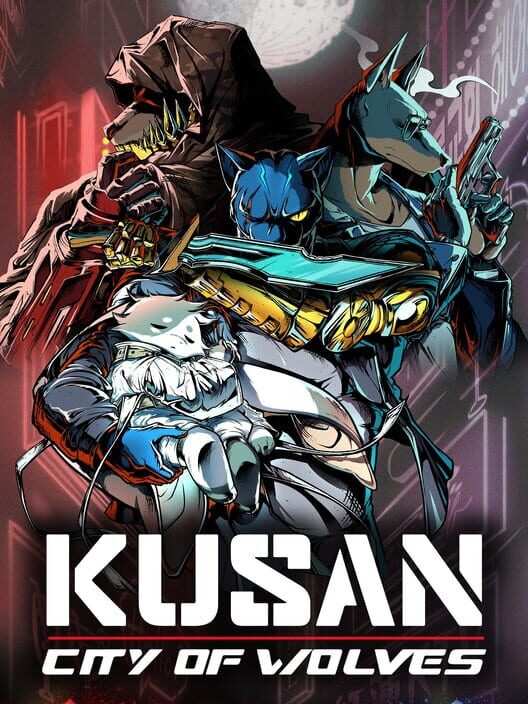
Kusan: City of Wolves comes from CIRCLEfromDOT, with PQube publishing. It released July 30 on PC, PlayStation 5, Xbox Series X/S, Nintendo Switch, and Nintendo Switch 2. OpenCritic lists it at roughly 79, and the scores on the review page run from SECTOR.sk's 6.5 / 10 to Gamer Social Club's 9 / 10. That is a clean signal: critics mostly like it, but the things they like are sharp enough to cut some players.
The comparisons are not subtle. Several reviews reach for Hotline Miami almost immediately. That can be lazy shorthand, but here it seems to describe the actual texture: quick deaths, violent rooms, route memorization, and a style-first presentation that wants every fight to feel like a little neon panic attack.
Push Square gave Kusan a 7 / 10 and called it "a fun top-down action game that likes to challenge you," while noting issues with controls and narrative. PPE.pl went higher at 8.5 / 10, calling it "spectacular, brutal and challenging" and saying its dark world and story pleasantly surprised them. Gamer Social Club was the most enthusiastic of the sampled English-language reviews, giving it 9 / 10 and describing it as "a stunning neon world" with excellent animation and a gritty graphic novel style.
The dissent is just as useful. SECTOR.sk's 6.5 / 10 review says the cyberpunk animal-world massacre can be frustrating because of permadeath. That complaint does not contradict the praise. It explains the audience. Kusan appears to be the kind of game where failure is not an accident in the design. It is the design, or at least a large part of it.
What reviewers agree on: the combat has bite, the presentation has personality, and the game understands the pleasure of clearing a room cleanly after several messy attempts. What they disagree on is whether the repetition and punishment feel bracing or thin. If you hear "Hotline Miami meets John Wick," which INVEN used in its review, and your shoulders relax rather than tense up, this is probably for you. If permadeath makes you feel like the game is wasting your evening, the lower scores are the ones to trust.

Blue Reflection Quartet reviews are warmer on the idea than the whole package
Blue Reflection Quartet is from Gust and Koei Tecmo, and it launched July 30 for Nintendo Switch 2, Nintendo Switch, PlayStation 5, and PC. OpenCritic has it around 75.5. That number feels about right after reading the review spread, but it also hides the real split. Critics do not seem confused about what Blue Reflection is good at. They are divided on whether this collection is the best way to experience it.
The basic pitch is attractive: a four-part collection that brings together pieces of Gust's magical girl JRPG series, including the full games and more condensed story material. For an underplayed series, that sounds like a gift. For a reviewer trying to judge the collection as a single product, it becomes trickier.
PlayStation LifeStyle gave Blue Reflection Quartet an 8 / 10 and called it "a fantastic way to jump into Gust's underrated JRPG series." RPG Site landed at 7 / 10, saying it offers "tremendous value and a great way to start the series," while adding that some parts of the collection leave a lot to be desired. COGconnected scored it 70 / 100 and liked the shoujo story, visuals, and emotional music, but found the gameplay simple and derivative.
The sharper criticism comes from the reviews that focus on the uneven formats. Shacknews gave it 7 / 10 and said the collection is "not entirely successful," especially when it asks players to trudge through Ray's recap slideshow approach. Nintendo World Report was colder at 6 / 10, saying Ray and Sun soured the experience because they were included in compromised forms. Niche Gamer's 6.5 / 10 review framed it as a light, character-focused visual novel experience that is not easy to recommend to most RPG fans.
Then there are the reviewers who still fall for the thing. Digitally Downloaded argues that the altered stories do not compromise the series' central thesis, describing the games as "ethereally beautiful magical girl JRPGs" with a wholesome message. Cubed3 gave it 8 / 10, calling it a four-in-one deal with three strong games and one poor one dragging the set down.
That is the consensus in miniature. Blue Reflection Quartet sounds valuable, pretty, earnest, and uneven. If you already care about the series, a 75-ish aggregate may underrate the convenience of having the pieces together. If you are coming in cold, the critical warnings matter. You may not be buying four equal games. You may be buying two strong anchors, one compromised bridge, and a lot of mood.
Case Solved: The London Files reviews like the calm more than the complexity
Case Solved: The London Files is the quiet one here. Developed and published by Interactive Dreams, it released July 29 on PC. OpenCritic's current listing puts it around 75, though the individual reviews I checked have a warmer tone than a mid-70s score can imply. This is a small puzzle mystery, not a prestige detective epic, and critics seem happiest when judging it on that scale.
The repeated word is relaxing, which is not always what people want from a mystery game. Here, it seems deliberate. Gamer Social Club gave it 8 / 10 and said it "really got my brain moving," praising the absence of timers or pressure and calling it a relaxing set of puzzles with smooth jazz and hand-drawn art. Pure Dead Gaming also scored it 8 / 10, calling it fun, engaging, and possible to finish in an afternoon, with post-game puzzles for players who want more.
LadiesGamers.com was especially positive, giving it a "Mind-blown" verdict and describing it as a welcome addition to the cozy detective genre. Their review says the cases and clue gathering are not especially challenging, but the closed logic puzzles become satisfying later on. MKAU Gaming gave it 8.5 / 10 on August 3 and said the game succeeds because it understands "what makes solving mysteries satisfying," especially the freedom to think without time pressure.
That last detail matters. A lot of puzzle games create tension by adding clocks, fail states, or stressful deduction sequences. Case Solved seems to go the other way. It trusts the grid, the clues, and the small pleasure of narrowing possibilities until the answer clicks. That means the criticism is built into the praise. If you want a detective game with messy interviews, branching suspicion, and hard narrative consequence, this may feel slight. If you want a neat afternoon of logic work with style, the reviews are politely waving you in.
The review range suggests a modest game that knows what it is. That is not faint praise. Some weeks, the most useful recommendation is not "drop everything." It is "save this for the right evening."
What to take from this critic roundup
Kusan: City of Wolves is the loudest recommendation here, and probably the safest SEO headline because it has the clearest hook: stylish top-down violence, strong scores, and a visible split around difficulty. Blue Reflection Quartet is the most interesting critical read because its flaws are structural rather than careless. The package itself is the debate. Case Solved: The London Files is the easiest to underestimate, which is usually how cozy puzzle games end up finding their people slowly.
If I were sorting these into a weekend, Kusan is the Friday night game, Blue Reflection Quartet is the long-term curiosity, and Case Solved is the Sunday afternoon palate cleanser. That is not a ranking. It is a reminder that review scores are better as weather than verdicts. They tell you what the air feels like around a game. You still have to decide whether you want to step outside.
For Perthro players keeping a journal, this is exactly the kind of week that benefits from writing things down. Not because every new release needs to become homework. Because small impressions vanish fast: the room you finally cleared in Kusan, the track that softened you in Blue Reflection, the logic puzzle in Case Solved that made you feel briefly clever. Those are the bits worth saving.