Blood Dungeon came out August 25 with a simple pitch: take a bullet-heaven game's automatic attacks and escalating crowds and put the player inside a proper 2D platformer. That one change divides the reviews more than you'd expect.
Messhof's game holds a 77 Metascore from six PC reviews, and OpenCritic was tracking 80 from nine. Scored reviews run from PC Gamer's 66 to Loot Level Chill's 85, with SteamDeckHQ, Game Informer and Console Creatures all at 80. It's a small sample, but the argument is already clear. Critics agree movement gives Blood Dungeon an identity. They also agree random upgrades, uneven balance and a small set of arenas can flatten it over longer sessions. The disagreement is whether constant motion rescues an overused formula or just makes it livelier.
Review snapshot
| Detail | Blood Dungeon |
|---|---|
| Developer and publisher | Messhof |
| Released | August 25, 2026 |
| Platforms | PC, PS5, Xbox Series X/S, Switch and Switch 2 |
| Metacritic | 77 from 6 PC reviews |
| Scored review range | 66-85 |
| OpenCritic | 80 from 9 reviews |
What works: platforming
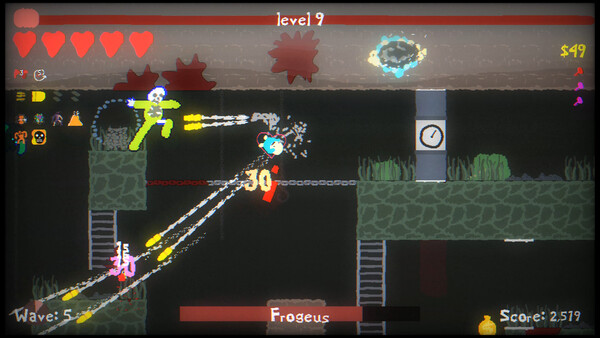
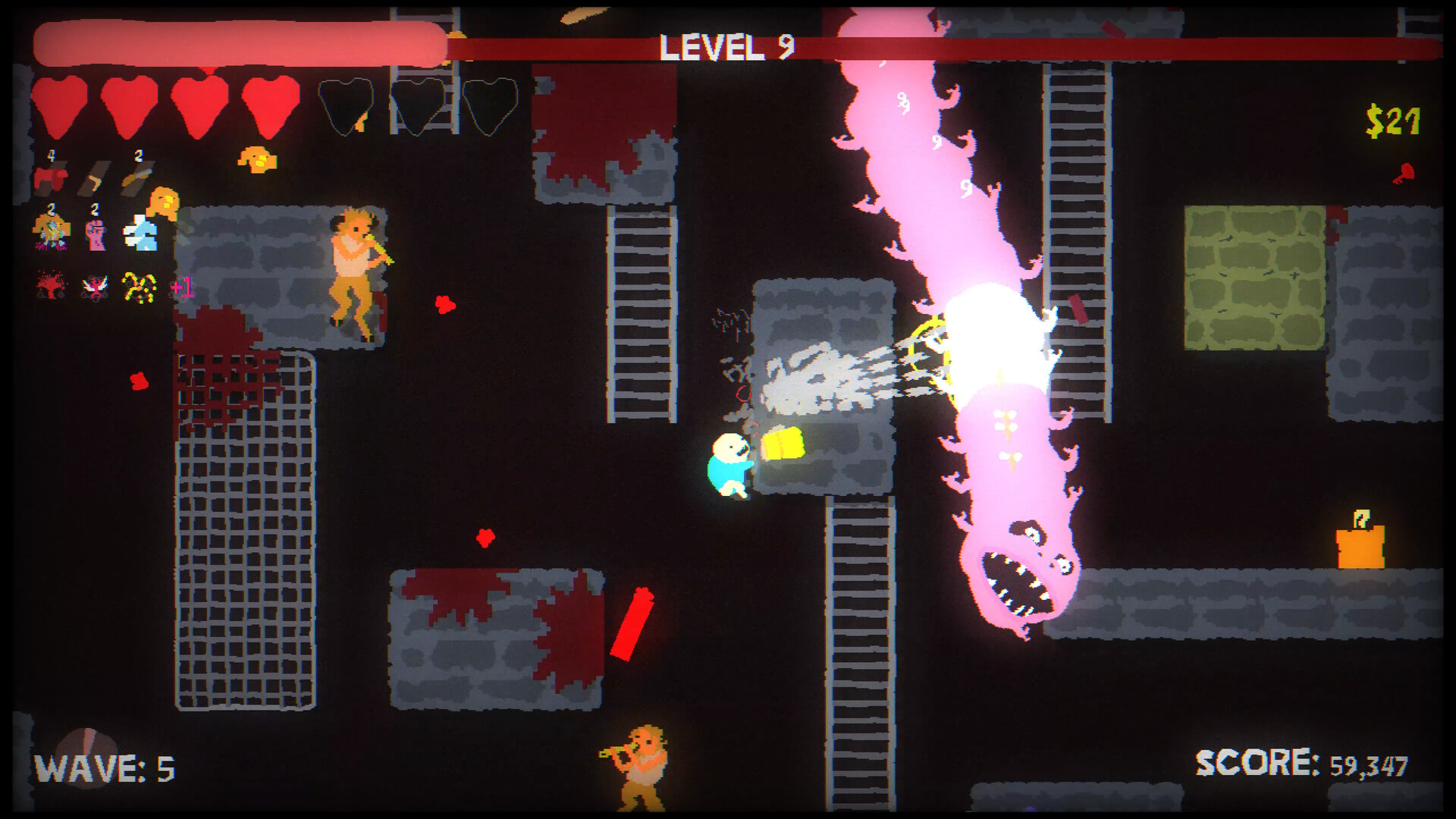
Most survivor-likes have you steer through an open field while attacks fire automatically. Blood Dungeon keeps the automatic weapons and turns navigation into platforming. You run, jump, climb, swim and cling to surfaces while enemies come from several directions, across arenas with ladders, chains, water and hazards. A safe-looking route can become a trap once the screen fills.
Positioning stops being a gentle orbit around a crowd. You read the room, judge whether a wall offers an escape and decide when climbing is safer than dropping into the chaos below. It demands hands-on control even after your build starts deleting enemies on its own.
Kyle Hilliard at Game Informer (8/10): "You can't ever put the controller down in Blood Dungeon." He says it "effectively establishes its own identity" through its art and platforming. Passivity is a common complaint about the genre, since strong builds can eventually play themselves. Here, terrain and enemy pressure keep demanding input.
Loot Level Chill (85) calls it "a frantic platformer twist on that familiar Survivors formula." SteamDeckHQ (80) praises "fast-paced action and tons of charm." Automatic shooting frees your attention for traversal, so skill goes into route choice, dodging and recovery. It feels like a platformer built around crowd control rather than a survivor-like with a jump button added late.
What the lower scores question: everything else
Shaun Prescott at PC Gamer (66) says Messhof applies "design smarts to an exhausted modern genre," with results that are "surprisingly conservative but enjoyable." A clever change to movement doesn't automatically bring a clever progression system.
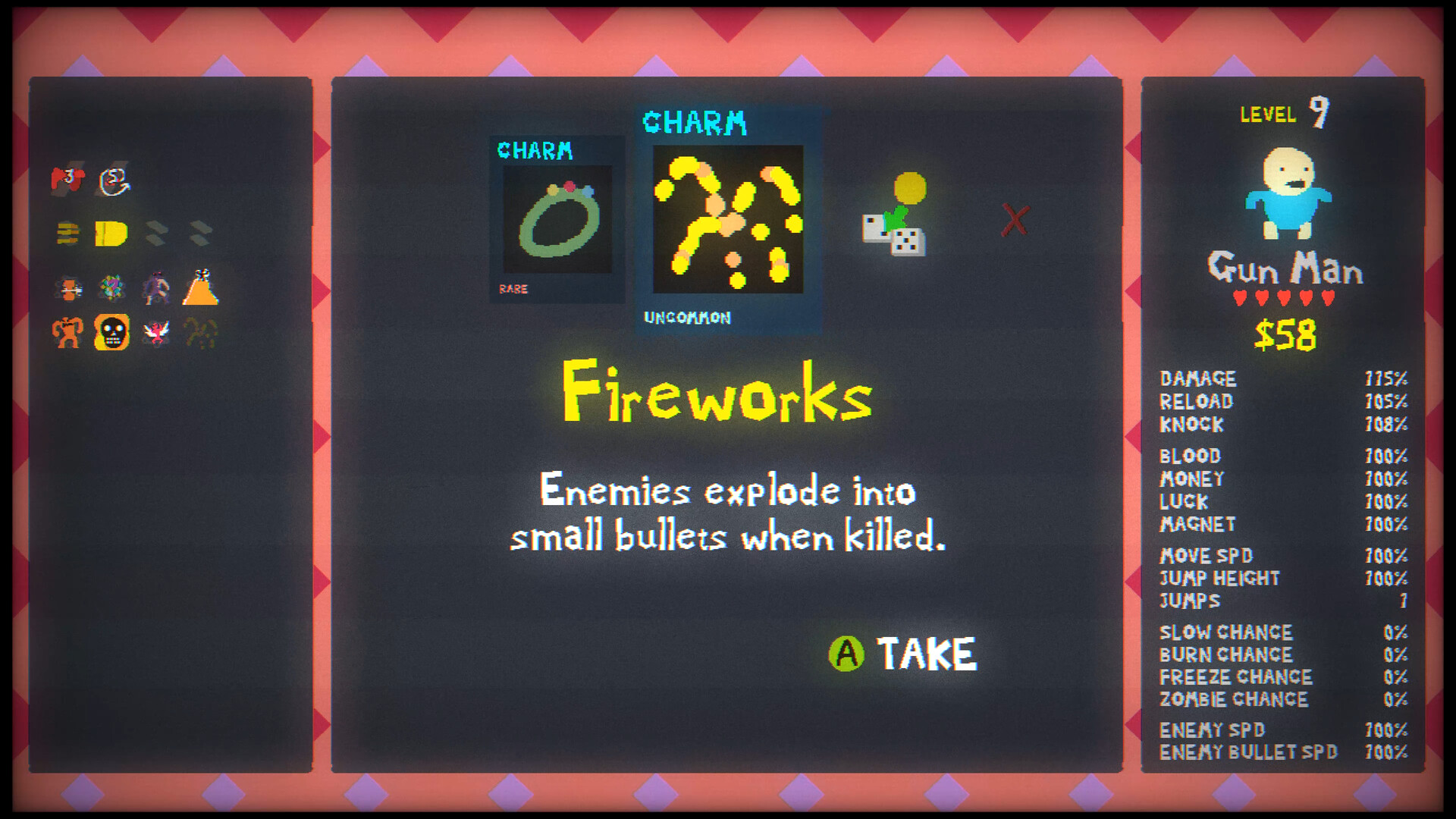
Runs still follow the familiar rhythm of collecting resources, levelling up and picking random upgrades, with permanent improvements between attempts and characters who vary in movement and starting weapons. It's readable and immediate, but some choices don't matter enough. SteamDeckHQ warns "not all of the upgrades feel impactful," and Game Informer points to balance annoyances.
Randomness is part of the fun until it overrules your decisions. Good choices can build a ridiculous weapon engine; dull ones can leave a run underpowered before your execution matters much. Movement gives skilled players more room to survive bad luck, but it can't make every upgrade interesting.
The other complaint is scale. Messhof lists six arenas, nine characters and more than 100 weapons and upgrades, but big item counts don't guarantee distinct runs. Polygon's unscored review found "a lot of toys to experiment with" but "not too much depth," saying it can feel like "a quick prototype for a bigger idea," and called the underwater arena a dud. In a game built for repetition and high-score chasing, an irritating arena or interchangeable upgrades get repeated by design.
The art
Blood Dungeon looks like a grubby notebook margin turned into an arcade machine: crude, elastic, deliberately ridiculous characters, enemies bursting into cartoon blood, and a drum-and-bass soundtrack instead of gloomy dungeon ambience.
Console Creatures (80) calls the visuals and characters "insane" and the result "a whole lot of fun." SteamDeckHQ says the crude drawings suit the frantic loop. Giovanni Colantonio at Polygon says the intended audience is anyone who reads the title and thinks "haha, hell yeah." Messhof isn't hiding the tone: it's an abrasive, knowingly stupid spectacle, with optional controls for cartoon blood and nudity. If its ugly little creatures, violent slapstick and pounding music appeal, you'll forgive repetition longer.
The style is practical too. When builds cover much of the screen, simple shapes and exaggerated animation help characters stand out. There's a clear hand behind it, which is rarer than technical gloss.
Why the high-70s average hides a split
Nobody in the scored sample calls it a failure. The split comes after competence. The enthusiastic reviews reward physical engagement: traversal is active, expressive and dangerous, and survival is earned through movement. That's worth an 8 or 8.5 when the genre's usual weakness is passivity.
The cooler reviews want the innovation to go further. Once movement is solved, familiar random upgrades and permanent stat growth take over, six arenas feel small for a game asking for repeated runs, and some choices are plainly better than others.
Both are true: it's inventive in its controls and conservative in its structure. The 66 isn't describing a broken game; it's a reviewer who enjoyed the execution and wasn't convinced by the framework around it.
Should you play Blood Dungeon?
It suits players who like survivor-likes but want more control over each run, and platformer fans who don't mind automatic weapons and incremental unlocks. Movement stays relevant after a build gets strong, and leaderboards give the repetition a purpose.
Lower your expectations if you want deep buildcraft; critics didn't find every upgrade meaningful. If you need a long run of dramatically different areas, the small scope may show quickly. And if the art looks unpleasant rather than funny, hours of blood splatter won't change your mind.
If moving well is what you miss in survivor-likes, it may feel better than its average. If build depth and variety are what draw you, read the lower reviews twice.