
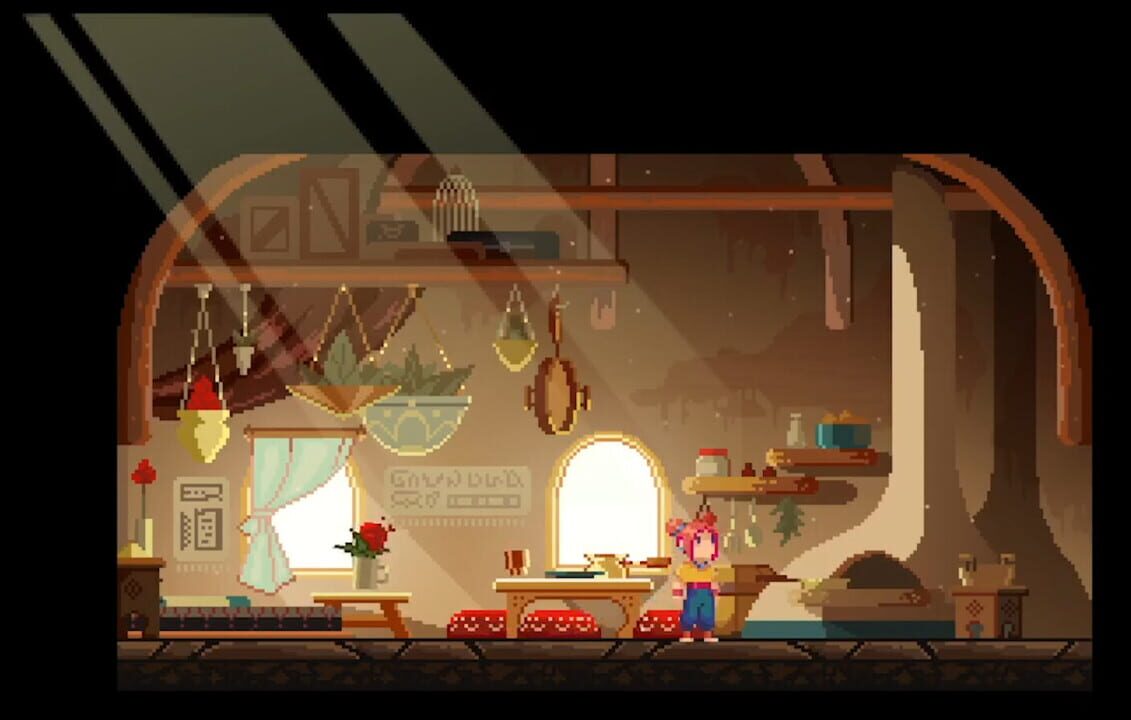
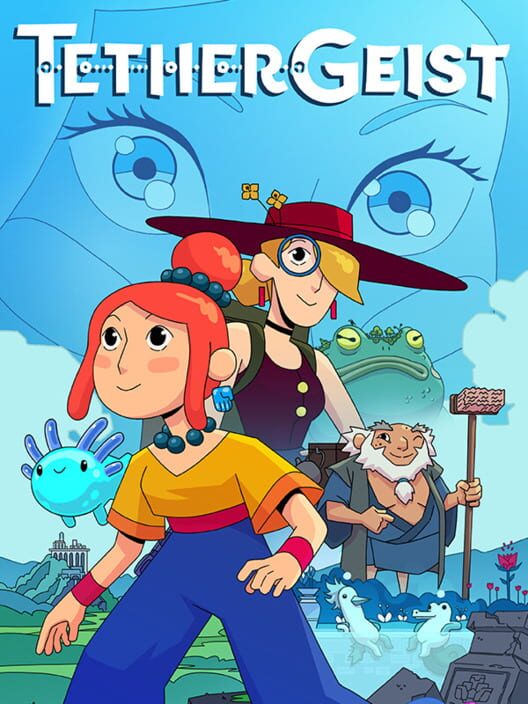
If you follow game reviews by calendar gravity alone, TetherGeist is easy to miss. It is a small precision platformer from O and Co. Games and Out of Space Games, released on Nintendo Switch, Switch 2, and PC in late May. It does not have the noise of a platform holder showcase behind it. It does not arrive with the anxious weight of a 60-hour open world. It has a young shaman named Mae, an axolotl-like spirit companion, and a movement hook that critics keep measuring against Celeste, which is both useful and a little unfair.
Useful because it tells you roughly where the conversation starts. This is a hard 2D platformer about repeated failure, instant recovery, and the strange comfort of a screen that looks impossible until your hands learn it. Unfair because the better reviews are not treating TetherGeist as a copy. They are treating it as a game that understands why Celeste worked, then builds its own body around one central idea: Mae can send her spirit only a short distance away from herself, then snap to it. That limitation becomes the verb.
OpenCritic currently has TetherGeist at 87.5, with 10 reviews counted, a median score of 82.5, and 100 percent of listed critics recommending it. That is the kind of number that usually belongs to a much louder indie release. The individual scores I found cluster from 80 to 95. Nintendo Life gave it 8/10. TechRaptor scored it 8.5/10. NintendoWorldReport gave it 9/10. Loot Level Chill went higher at 9.5/10. So Many Games and VDGMS both landed in the enthusiastic-but-not-blind camp.
That spread matters. Nobody I read is calling TetherGeist frictionless. The praise is sharp, but so are the caveats. The consensus is that its platforming is unusually strong. The disagreement is about how much the story, bugs, and occasional difficulty spikes hold it back.
TetherGeist review scores in brief
The cleanest read on TetherGeist is this: critics think the movement is the reason to play it. Nintendo Life calls it a "great precision platformer" and says the tether mechanic "tests your reflexes and brains in equal measure." The same review still notes that a "flat narrative and some small visual bugs somewhat muddy the waters," which is about as neat a summary as you can ask for.
TechRaptor frames it as a narrative-focused precision platformer, and its 8.5/10 review is careful about the difficulty. Robert Scarpinito writes that TetherGeist is "challenging yet rewarding," but also says that "some rooms" can feel "almost insurmountable at first." The review's final verdict is still positive: "While at times a little too difficult, its core journey is worth experiencing."
NintendoWorldReport is warmer. J.P. Corbran gives it a 9 and says the game "largely lives up" to the Celeste comparison. The useful part of that review is the distinction between imitation and inheritance. TetherGeist has the mountain, the self-discovery story, the pixel-art readability, and the short-room structure. But Corbran argues it adds "some really good ideas of its own" rather than leaning entirely on borrowed shape.
Loot Level Chill is the outlier in the best way. Its 9.5/10 review says TetherGeist is "the best precision platformer I've played since Celeste," with "seriously unique movement mechanics and perfect controls." That is a big claim. It also helps explain why this small game is worth writing about now, before the larger June release calendar eats the conversation.
Why critics keep bringing up Celeste
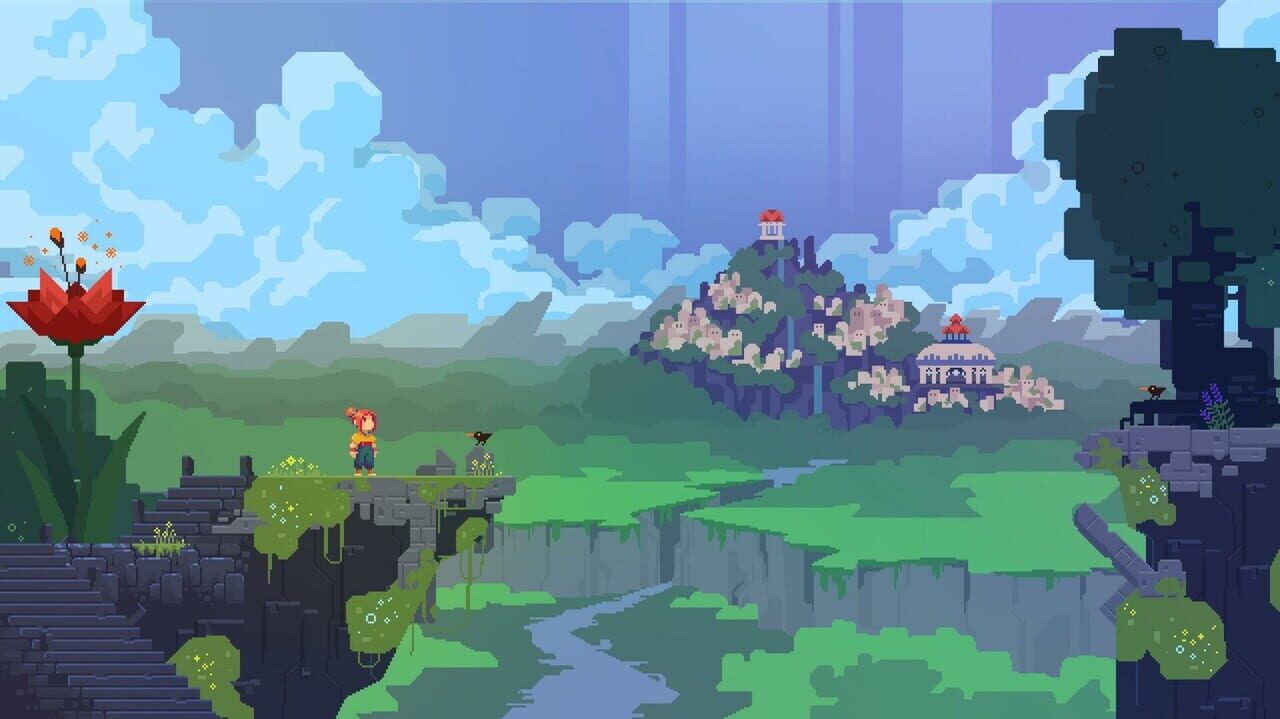
The Celeste comparison is everywhere because TetherGeist seems to invite it. Mae is on a mountain journey. The game is built around tight rooms, frequent deaths, and the little rush of finally solving a route that looked cruel ten attempts earlier. Reviewers also keep pointing to the emotional framing. Mae is not simply a blank avatar who jumps well. She is a young shaman whose spirit remains tethered to her body in a society where spiritual projection is treated as normal.
That premise gives the mechanics a reason to exist. Mae's limitation is not just lore pasted over a dash button. In TechRaptor's reading, it becomes a story about disability and exclusion, with the platforming puzzles expressing what Mae can and cannot do in the world. VDGMS makes a similar point, saying the game keeps its focus on "character growth, navigating societal pressures and proving" herself rather than combat.
I like that critics are talking about the mechanic this way. Precision platformers can become sterile when the story only pauses the actual game. Here, the reviews suggest the opposite. The tether is the story's metaphor and the player's main tool. You split, aim, snap back, miss, restart, adjust. The game seems to care about the feeling of being limited without being helpless.
That said, the writing itself is where the agreement starts to crack. So Many Games is probably the clearest dissenting voice. It calls the platforming "as good as Celeste" in terms of movement, level design, responsiveness, and feel, then says the dialogue is not on the same level. The site still calls TetherGeist "a landmark addition to the genre," but the praise comes with a small bruise: the story idea works better than the telling of it.
The best praise is about control
Across the reviews, the word that keeps coming back is control. Not vibes. Not content. Control. That is what you want to hear about a game like this.
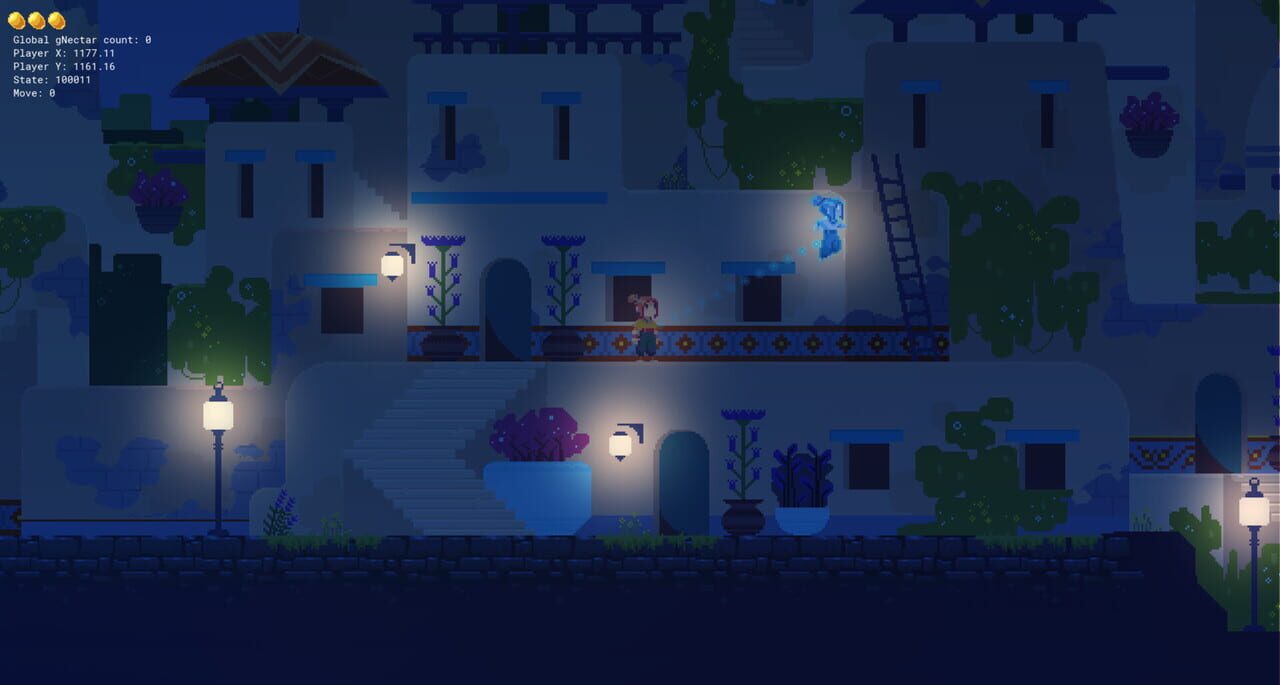
Nintendo Life says the game starts from a simple tether idea and keeps finding new ways to stretch it. The review describes different tether types that change how Mae moves, including one that lets her fire an orb and teleport to it, and another that gives her a burst of speed. TechRaptor also points to seven kinds of Azae, each granting a different traversal ability. That gradual introduction seems to be doing important work. Reviewers are not describing a game that dumps a full move set on you and walks away. They are describing a game that teaches, complicates, and then trusts you.
NintendoWorldReport says it felt like every time one ability clicked, the game added something new to keep things fresh. VDGMS says TetherGeist has only three basic controls: move, jump, and split. The depth comes from the level design, not from a controller map full of verbs. That is a good sign. Hard platformers work best when failure feels like information instead of punishment.
The complaints fit inside that same frame. NintendoWorldReport says a few precision demands can veer toward unfair, though frequent checkpoints keep frustration low. TechRaptor mentions rooms that feel nearly impossible on first contact. Nintendo Life points to small visual bugs. None of those are nothing. They are also not the kind of criticism that breaks the core recommendation. If you hate retry-heavy platformers, this probably does not convert you. If you like them, the rough edges sound survivable.
Why this sleeper matters
There is a specific kind of indie release that depends on word of mouth moving before the calendar moves on. TetherGeist looks like one of those. It has strong critic scores, a clear identity, and a search-friendly comparison to Celeste, but it is still small enough that many players will only hear about it through a stray review, a YouTube recommendation, or a friend saying, quietly, "you should try this."
That is part of why review aggregation is useful here. A single 9.5 can make a game sound overpraised. A single 8 can make it sound merely solid. Taken together, the TetherGeist reviews tell a more interesting story. Critics are not all using the same language, but they are circling the same conclusion: the movement is special, the level design is confident, and the game earns most of its Celeste comparisons without fully matching Celeste's emotional writing.
For Perthro players who use the app like a journal rather than a scoreboard, this is exactly the sort of game worth logging carefully. Not because an 87.5 average tells you what to feel, but because the reviews point to a specific question you may want to answer for yourself: does the tether mechanic make failure feel expressive? That is the hinge. If the answer is yes, TetherGeist may be more than a good platformer. It may be one of those compact games that leaves a weirdly precise memory of where you were when a room finally clicked.
Should you play TetherGeist?
If you want a forgiving adventure with light platforming, probably not. TetherGeist sounds demanding, sometimes sharply so. Critics repeatedly mention challenge, difficulty spikes, and the shadow of Celeste, which is not a casual comparison. This is a game about getting better one mistake at a time.
If you like precision platformers, the answer is much easier. The review range is strong, the recommendation rate is unusually clean, and the best criticism is specific rather than fatal. Nintendo Life's 8/10, TechRaptor's 8.5/10, NintendoWorldReport's 9/10, and Loot Level Chill's 9.5/10 all point in the same direction: TetherGeist is a small game with unusually good hands.
The thing I keep coming back to is that the praise does not sound inflated. It sounds relieved. Reviewers expected another Celeste-like, then found a game with its own movement grammar. That is rare. Not every room sounds perfect. Not every line lands. But if the tether feels as good as critics say it does, TetherGeist deserves a place on the June shortlist before the louder games bury it.