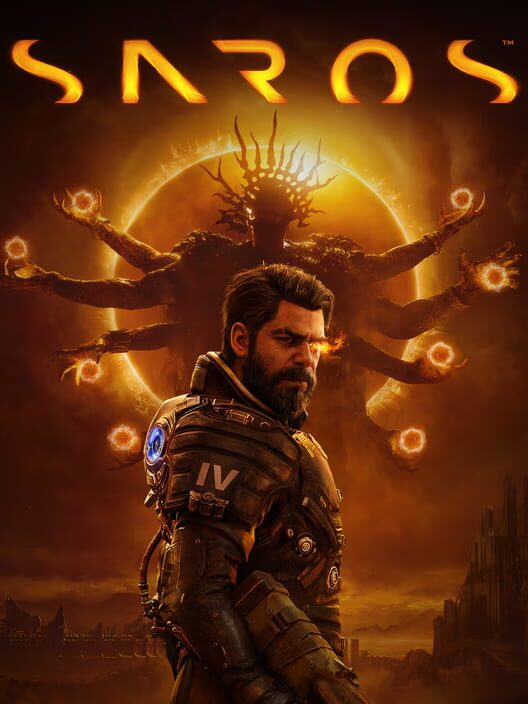
The quick summary of Saros is that Housemarque made another fast, hostile, beautiful roguelite shooter, and most reviews reach for the Returnal comparison because it fits. The scores say a bit more than that. OpenCritic has Saros at 87 (Mighty) across 142 reviews, and Metacritic has 87 from 137. Underneath those averages, the reviews run from Game Informer's 92.5 down to Giant Bomb's 3/5. Nearly everyone agrees about the combat. What they disagree on is the story and the 20-hour structure around it.
Saros review scores
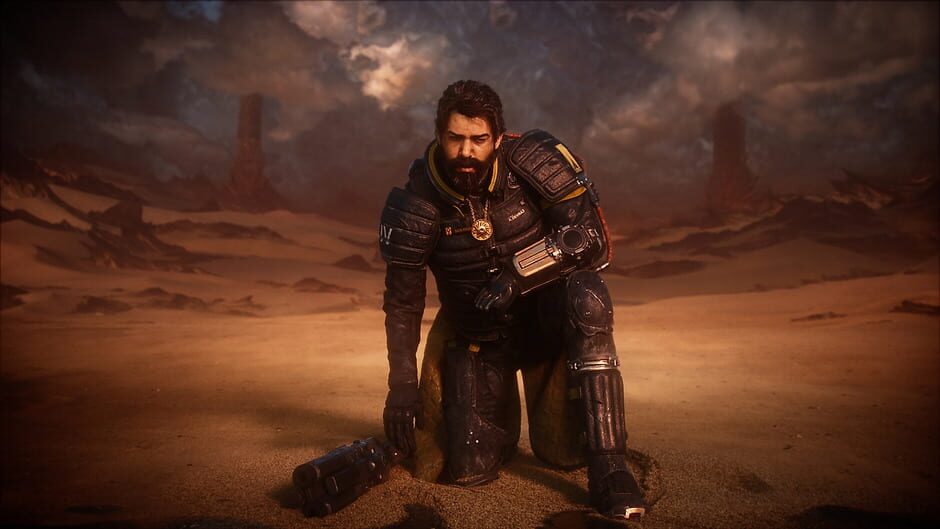
Saros launched April 30, 2026 on PlayStation 5, developed by Housemarque and published by PlayStation Studios. Arjun Devraj (Rahul Kohli) searches the planet Carcosa under a hostile eclipse, with a corporation leaning on him and cosmic horror closing in.
OpenCritic's 87 average, 90 median and roughly 92% recommendation rate make it one of 2026's major action games. The individual reviews:
- Game Informer, 92.5: the action is "dangerous, joyful, and demanding of your attention in a way few games can compete."
- GameSpot, 9/10: it "flips Housemarque's roguelite formula on its head and improves upon its spiritual predecessor in every conceivable way."
- Tom's Guide, 4.5/5: "relentless, exciting and demanding."
- Eurogamer, 4/5.
- IGN, 7/10: great combat, but the more ambitious story leaves some threads "unsatisfyingly hanging."
- Giant Bomb, 3/5: looks and plays well, but stretches "10 hours worth of fun across 20 hours."
The lower reviews aren't outliers to wave away. They describe the same strengths as the high ones and still come away less satisfied.
What critics agree on: the combat
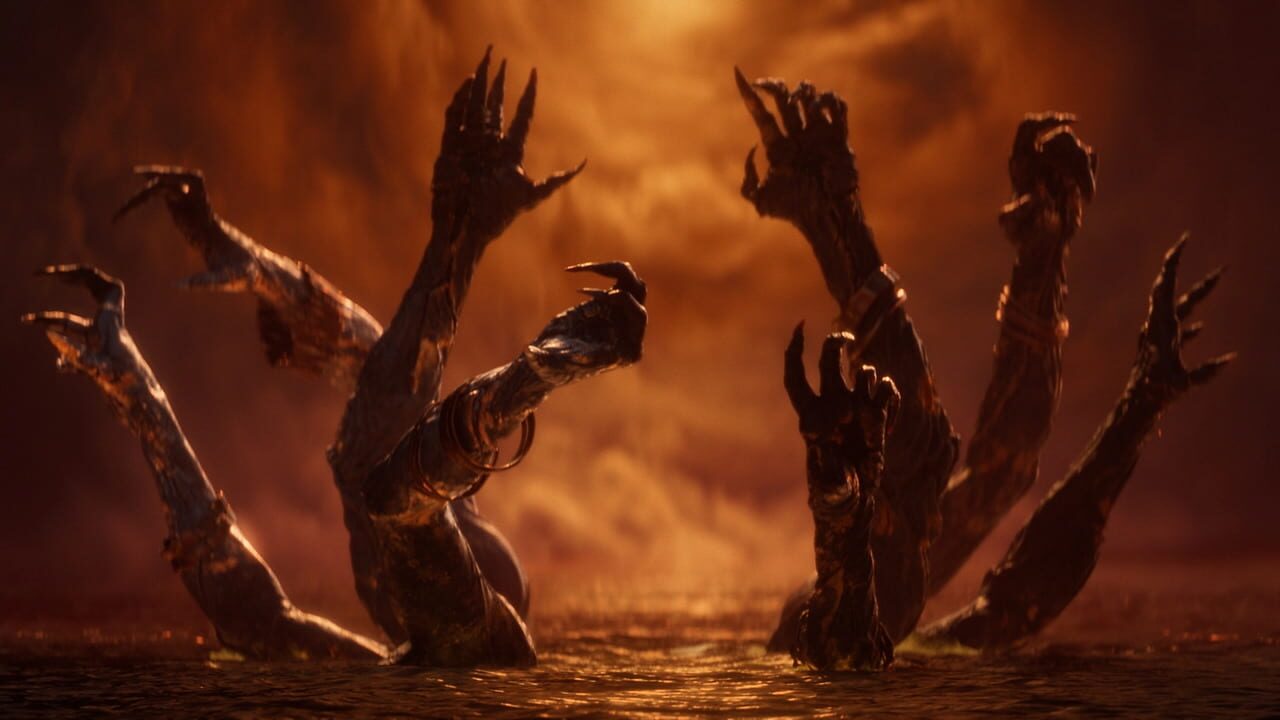
Across every review, the combat is the anchor. Eurogamer opened with: "You know an action game has the magic when you come out of a sequence thinking 'How the hell did I survive that?'" It went on to call Saros "one of the best to ever do it" if dodging absurd numbers of projectiles at speed is your thing.
IGN, even at 7/10, called the gunplay fluid, the movement deft and the combat "tough-as-nails" in a way that's worth getting good at. Its complaints are about repetition and story, not the shooting.
Tom's Guide called it a "marvellous follow-up to Returnal" that keeps the best of Housemarque's last PS5 game while smoothing some edges, especially with permanent upgrades. Returnal's full reset was thrilling but could feel cold; in Saros, a failed run leaves something behind. Game Informer said moving, shooting, improving, winning and even losing are "an unequivocal joy." In a roguelite, how losing feels decides whether you start another run.
The praise gets specific: a shield that absorbs or parries projectiles, energy management for heavier attacks, permanent upgrades, big boss fights, and Housemarque's knack for making a screen full of bullets readable enough to survive on instinct. If you liked Returnal for how it turned panic into focus, reviewers say that feel is intact.
Where Saros reviews split: story, length and repetition
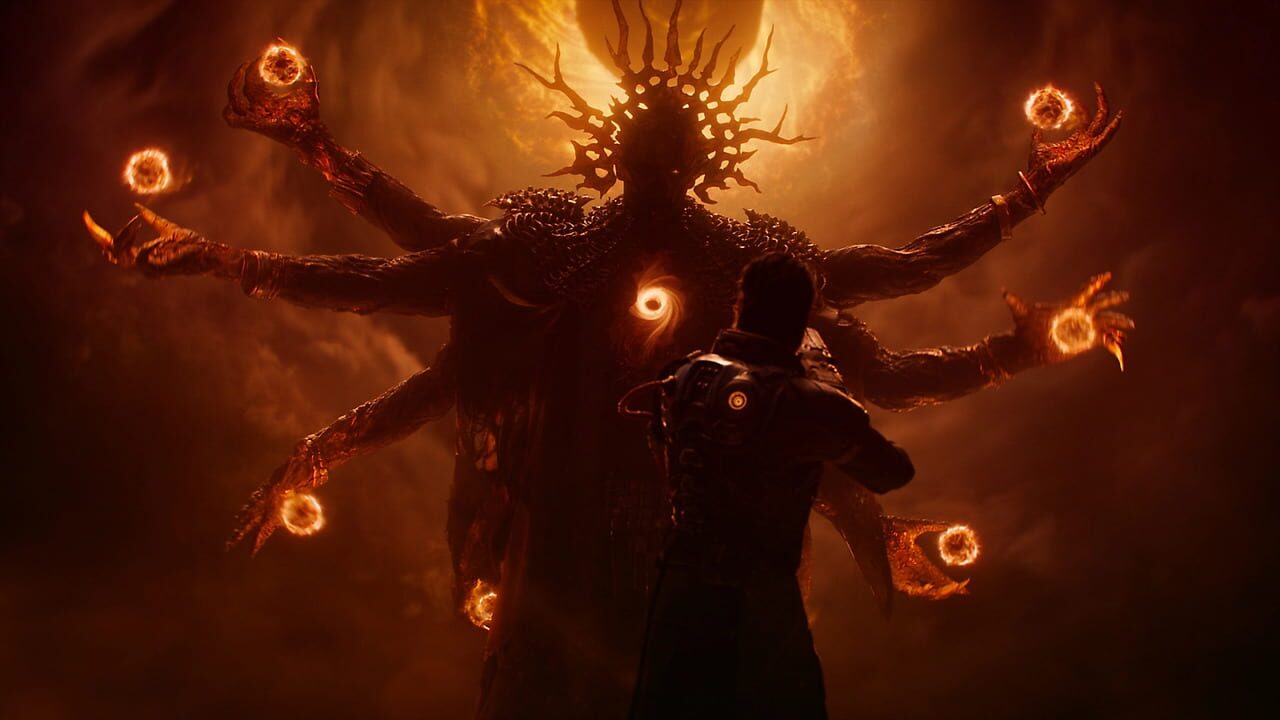
Saros is more story-driven than an arena shooter. It pulls in Carcosa and The King in Yellow, corporate extraction, lost expeditions, eclipse-induced psychosis and Arjun's own trauma. Not everyone thinks it holds all that together.
IGN says Saros is "trying to be more thematically ambitious," raising good questions about Soltari's real purpose, Arjun's repeated returns and what's actually happening on Carcosa, but some threads don't pay off. Eurogamer, despite the higher score, said the narrative "often feels at odds with the kind of experience it wants to be." The action moves so fast that the story struggles to keep up.
Giant Bomb was harsher. It praised Kohli's performance and the combat feel, but found the subject matter familiar: space explorers, corporate greed, cosmic horror, people losing themselves in the unknown. Its bigger issue was structure. Around 70 runs in, the reviewer had been ready to stop well before the end because encounters had started to play out alike. That's a question of whether there's enough variety for the length, not of difficulty.
Game Informer admits the story can be opaque and the supporting cast disposable, but it came away fascinated by Carcosa and keen to keep playing after the credits. The same unanswered questions left one reviewer curious and the other tired.
Which players will love Saros
The 87 tells you Saros is very good. The spread tells you who'll love it. If you're coming for action, the consensus is solid: a top-tier bullet-hell shooter built on speed, pattern reading and your hands solving a fight before your head catches up. If you want a story that ties up neatly, the reviews are more cautious. If long run-based games tend to wear you down, take Giant Bomb's review seriously even though most critics were warmer.
For someone who wants the next great Housemarque combat loop, Saros is a 9. For someone who needs the fiction and structure to land as hard as the shooting, it's closer to a 7. Your own view may shift over 20 hours, depending on whether Carcosa keeps pulling you in or the runs start to blur.
Should you play Saros?
If you have a PS5 and like demanding action games, Saros belongs on your shortlist. The question is when to play it.
Play it now if Returnal's combat is what sold you on Housemarque. Wait if Returnal's repetition wore you down, or if you need a sci-fi story to resolve its ideas cleanly. Either way, it's probably better in shorter sessions than crammed into one weekend.