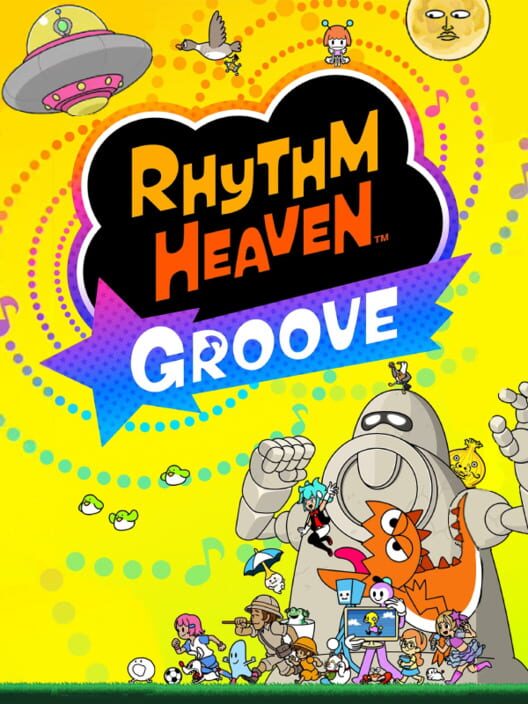
July opens with two Nintendo games at different stages. Rhythm Heaven Groove has full reviews ahead of its July 2 launch, and they're mostly glowing. Splatoon Raiders launches July 23 and so far only has hands-on previews from after the June 30 Direct. Those previews are warmer than expected: instead of "single-player Splatoon," they describe roguelite runs, buildcrafting and persistent progression.
Rhythm Heaven Groove review scores
Rhythm Heaven Groove launches July 2, 2026 on Nintendo Switch. GamesRadar lists TNX and Nintendo EPD as developers, with Nintendo publishing. In Europe it's Rhythm Paradise Groove, which is worth knowing if you're searching for scores.
- IGN9/10
- Nintendo Life8/10
- GamesRadar4/5
- Eurogamerunscored, firmly positive
Everyone agrees the core rhythm games still work. The questions are about docked play, feedback and Beatspell, an RPG-style side mode reviewers can't agree on.
IGN calls it "a superb sequel" that "hits all the right notes," praising a campaign of about eight hours, the remix stages, the co-op games, and real challenge hidden under small jokes and bright animation. Its main complaint is Beatspell, which "starts novel but quickly becomes tedious."
Nintendo Life calls it "a surprise and a delight" and a low-key farewell for the original Switch. Its most practical warning: docked play can add enough audio lag to feel wrong, even after calibration. Handheld or tabletop mode gave the best experience. For a rhythm game, that matters if you mostly play on a TV.
GamesRadar had the opposite reaction to Beatspell, calling it "a quiet revelation" and one of its favourite surprises of the year. It also notes performance feedback can feel vague, which matters when a game asks you to improve by tiny margins.
Eurogamer says the game gets you "inside the music" and makes you pay attention. That's what the others say more plainly: the best parts aren't about following a note highway but learning a sound and trusting it when the visuals get weird.
Critics agree the music is strong, the minigames are strange in the right way, the remixes are the highlight, and the series still knows how to teach a rhythm and then shake your confidence just enough. Whether Beatspell is a clever bonus or an underbaked detour depends on the reviewer. The thing to watch after launch is TV latency, once players with different screens and speakers report their own experiences.

Splatoon Raiders previews: a roguelite, not just a campaign
Splatoon Raiders launches July 23, 2026 on Nintendo Switch 2. The previews are unusually specific about structure, which is encouraging, since short demos often produce vague impressions.
Nintendo Life's hands-on ends on careful hope: "If the stages themselves can keep on innovating," the formula may have found its "true single-player potential." Splatoon has always had solo content, but its identity is multiplayer turf wars and weapon rhythm. Raiders is testing whether the movement and ink systems can carry a full solo game without feeling like a long tutorial.
IGN offers the clearest hook: "Turns out, Splatoon Raiders is kind of a roguelite with persistent progression." That means repeated runs, stacking upgrades and a reason to return beyond finishing the story. It points to Shiver's Showstopper, a giant rocket-powered shark, as the kind of toy on offer. On the surface the loop is still Splatoon: blast Salmonids, collect things, repeat. The hope is that build variety keeps it from going flat.
Polygon, quoted in Nintendo Life's roundup, looks at the bigger picture. Raiders may be less intimidating for players overwhelmed by Splatoon 3, and its buildcrafting could have a "game-changing impact" on Splatoon 4. If it works, it may be a testing ground for progression outside ranked play.
Game File compares it to Ratchet & Clank, and insists that's a compliment: playful third-person action, gadgets, spectacle and readable combat spaces, not multiplayer with bots. Vooks is more modest, calling it "a good change of scenery" and a way to enjoy the world without going online. That may be the whole appeal for people who love Splatoon's style but not its competitive queue. CGMagazine praises the improved Switch 2 visuals, down to the backgrounds, the ship and the exploration bot.
The words that keep coming up are roguelite, persistent progression, buildcrafting, less intimidating and solo potential, which suggests Nintendo isn't just stretching a campaign around the multiplayer moves. The thing to watch is variety. If stages keep changing and builds really alter how you play, the previews are right. If it becomes a prettier version of clearing Salmonids for resources, the excitement will cool quickly.
Before launch
Rhythm Heaven Groove has the clearer buying signal. Four outlets agree it's joyful, precise and funny, built around careful listening. The 8-to-9 range isn't a warning, just a note that Beatspell and docked latency are quirks.
Splatoon Raiders needs full reviews before anyone can say whether its systems hold up. At best, it's not a replacement for multiplayer Splatoon but an easier way into that world, with enough progression to stand on its own. Once the reviews landed, we wrote a full Splatoon Raiders review roundup.