
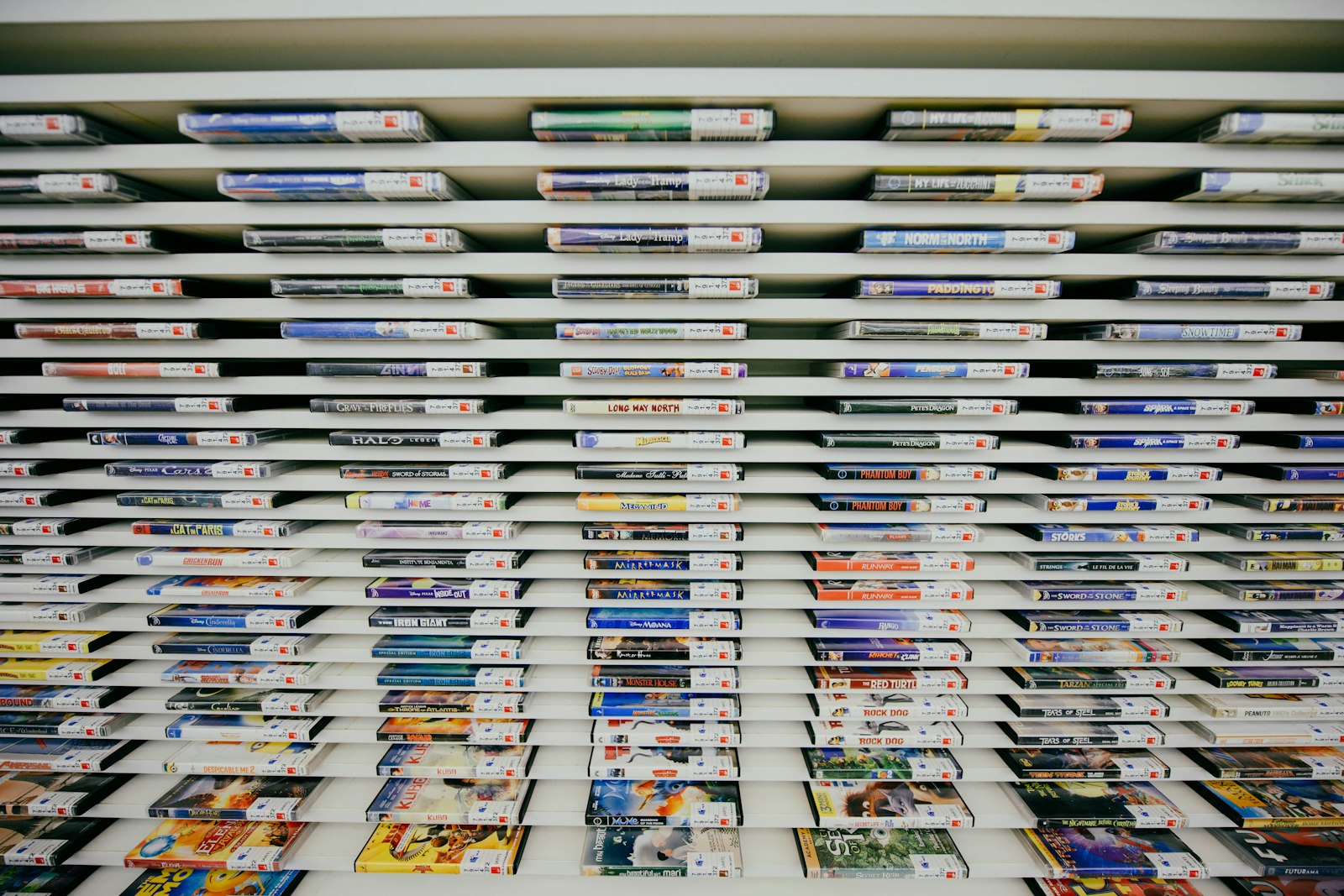
A video about game discs hit my feed this week with the kind of title that sounds like a panic alarm: "What The Hell Is Going On With Video Game DISCS?" It landed on July 2 from gameranx and pulled a big audience fast. A day earlier, GameCross ran with the even blunter version: physical games are dead. The wording is loud, but the feeling underneath it is familiar. People are trying to work out what a game collection means when the thing you own is less often a box on a shelf and more often a license, a launcher entry, a subscription tab, or a memory of something you meant to finish.
I do not think the answer is to get sentimental about plastic for its own sake. Discs have their own annoyances. Cases crack. Codes expire. Patches do half the work now. Some "physical" releases are basically permission slips for a download. Still, the argument keeps coming back because the shelf did something useful. It gave your games a shape. You could see the year you had, the phases you went through, the games you abandoned, the one you kept meaning to lend to a friend.
Digital libraries are better at access. They are worse at memory.
The shelf used to do quiet work
A shelf is not smart, but it is honest. It does not need an algorithm to remind you that you own three tactical RPGs you have not started. It does not care whether a publisher is running a weekend promotion. It just sits there, quietly accusing you or comforting you, depending on the day.
That physical presence changed how we related to games. You saw the spine every time you walked past it. You remembered the birthday you got it, the store you bought it from, the friend who would not stop talking about it. Sometimes the object mattered less than the trail of context stuck to it.
Digital libraries strip a lot of that away. Steam can hold thousands of games, and on paper that is a miracle. PlayStation and Xbox accounts can keep years of purchases reachable from one login. Subscription services can make a new release feel frictionless. But once everything becomes a tile in a grid, the personal texture gets thinner. The game you bought on a whim, the one you played for one winter, the one you bounced off after two hours, the one you meant to return to after a patch, they all flatten into the same rectangle.
This is not a moral failure. It is a design problem. Most platform libraries were built to launch software, sell software, or prove entitlement. They were not built to help you remember your life with games.
Do a small inventory before the library gets bigger
July is a good month to notice this because the industry keeps handing us more. The Steam Summer Sale is live. IGN's upcoming games calendar has another thick page of July releases. YouTube is full of "best new games to play this month" videos, from gameranx to Force Gaming to smaller indie channels. Some of that is useful. Some of it is noise. All of it pushes in the same direction: add more.
Before you add more, it helps to know what is already there.
Not in the spreadsheet sense, unless you love spreadsheets. I mean a real inventory, one that keeps the human part attached. Open your main library and pick ten games you see all the time but never think about properly. For each one, write a sentence. Not a review. Not a verdict. Just the truth.
- Why did you get this?
- What state is it in now?
- What would make you go back?
That is enough. "Bought it because the art looked lonely. Played one hour. Need a quiet Sunday." Or: "Friend recommended it after I finished Disco Elysium. Haven't started. Save for autumn." The point is not to optimize your backlog. The point is to make the library legible again.
The worst version of a digital collection is a pile of obligations. The better version is a map of old intentions. Some intentions are still alive. Some can be let go without ceremony.
Split ownership from attention
One reason digital libraries feel heavy is that ownership and attention get tangled together. If you own a game, some part of your brain may treat it as unfinished business. That is a miserable way to live with art.
You can own a game without owing it your time right now. You can like the idea of a game and still not be in the mood for it. You can start something, enjoy three evenings, and never finish. The record should have room for that. A binary "played" or "not played" label does not match how games actually fit into a life.
I like using softer states. Playing. Played. Plan to play. Shelved. Maybe a wishlist if the game is still outside the house. Those words admit that attention moves. They also remove some of the false guilt. Shelved is not failed. It means the game is not for this week, or not for this version of you.
Perthro is built around those states because a game library should answer "where am I with this?" The app can import from Steam, PlayStation Network, and Xbox Live where the platforms allow it, which helps gather the scattered pieces. From there, the personal layer does the real work: ratings, reviews, lists, backlog order, wishlist order, and the next thing you actually want to play.
That layer is yours. It is small, but it changes the shape of the whole library.
Keep a next-up list that can survive a sale
Sales are wonderful and dangerous because they make future-you seem rich in time. Future-you is not rich in time. Future-you is probably tired on a Tuesday, staring at twelve discounted RPGs and wondering why leisure now requires administration.
A next-up list is a way to protect that person.
Keep it short. Three to five games is enough. One longer game, one shorter game, one comfort game, maybe one wildcard. If you use Perthro, the backlog and wishlist can be reordered, and the next up view exists for exactly this kind of sanity. If you do not use Perthro, a note in your phone works. The important part is that the list should be chosen when you are calm, not when a storefront timer is blinking at you.
The list should also include reasons. "Finish before buying another tactics game." "Play with headphones." "Good for nights when I do not want combat." Reasons beat rankings because reasons survive mood changes. A ranked backlog turns games into chores. A reasoned backlog gives you a way back in.
Every few weeks, remove something. That sounds harsh, but it is kind. If a game keeps sitting there untouched, move it to shelved. If you no longer remember why you wanted it, delete it from the wishlist. If you keep thinking about it, write that down. The act of choosing matters more than the perfect order.
Reviews are memory, not just judgment
The internet taught us to treat reviews as public verdicts. Scores, arguments, consensus, the whole machinery. There is a place for that, but personal reviews can be much smaller and better.
A review can be three sentences written after credits. It can be a note after one session. It can be an explanation of why you stopped. "I can tell this is good, but I am too impatient for it right now" is a useful review. So is "The fishing minigame carried me through a bad week." Neither belongs on a score aggregate. Both belong in a journal.
This is the part the shelf never did well. A shelf could preserve ownership, but not feeling. Digital tools can, if they are designed with enough restraint. A five-star rating is useful as a marker. A few lines of writing are better. Custom lists can hold the odd categories that only make sense to you: games I played during moves, games with winter in them, games I want to show my brother, games I respect more than I enjoy.
Those categories sound frivolous until you try to remember the last ten years of play and realize the official records are mostly receipts.
The collection is not the point
I understand why people worry about discs. When media becomes less visible, it can feel less secure. There are real preservation questions there, and platform holders should be pressed on them. Access matters. Ownership matters. The ability to revisit a work without begging a storefront matters.
But for most players, there is another problem sitting closer to home. Even when the games are still accessible, the meaning gets lost. We forget why we bought them. We forget what we finished. We forget the friend who nudged us toward something strange. We forget that a game we now think of as "backlog" was once a little spark of wanting.
So yes, keep the discs you care about. Buy physical when it matters to you and when the release is actually useful. But do not let the box do all the remembering. The shelf was only ever part of the system. The other part was you noticing what the game meant when it passed through your life.
Write down what you played. Write down why you stopped. Keep the next few games visible. Let the rest go quiet until their time comes back around.
A library should not make you feel behind. It should help you find your way back.