
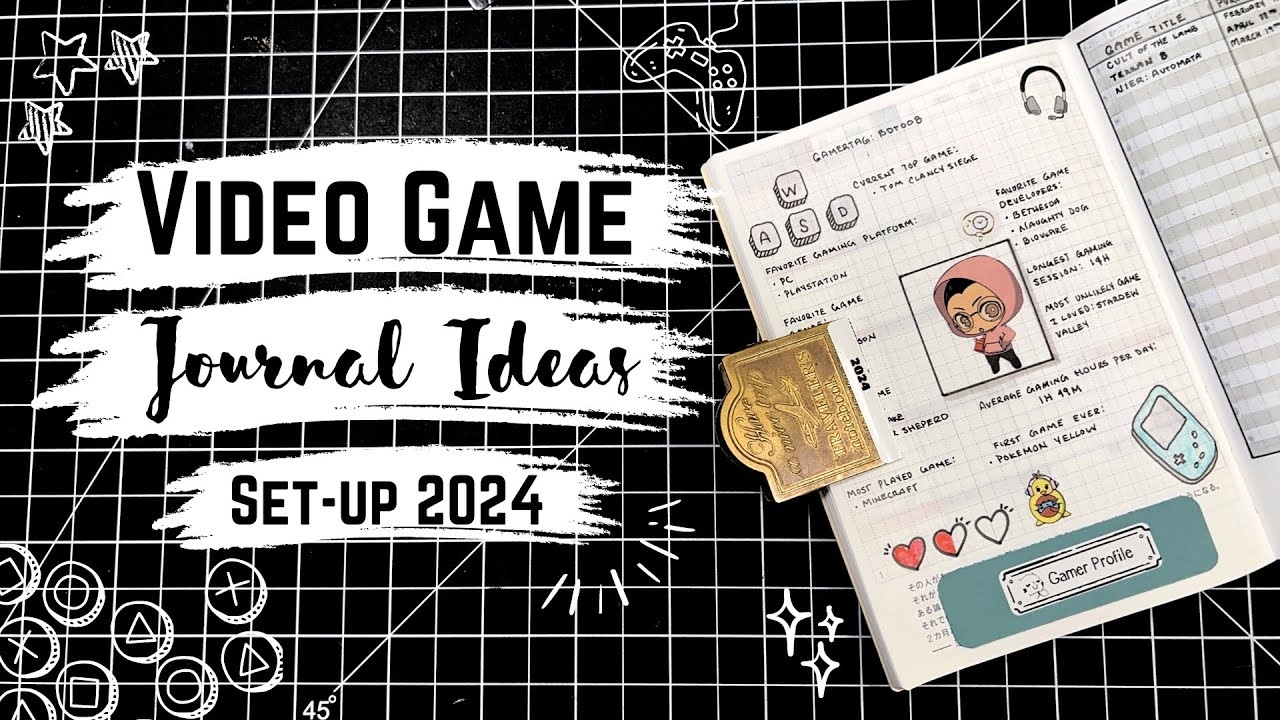
A game journal is a record of what you played, what you thought, and what you want to remember. It does not need to become another task list. The useful version is small enough to keep using and personal enough to tell you something a store page cannot.
Start with the smallest useful note
When you finish a session, write one or two sentences. What surprised you? What felt good? What made you stop? A short note written while the feeling is still fresh will usually tell you more than a polished review written weeks later.
You can rate the game on a five-star scale, but the number is only a shorthand. The sentence beside it is the part you will understand later. "The movement finally clicked after the third area" is more useful than four stars by itself.
Give every game a clear place
A backlog gets noisy when every game feels equally urgent. Keep a few simple states: playing, played, plan to play, and shelved. Shelving a game is not a failure. It is an honest description of what happened, and it leaves room to return later without pretending you are still committed to it.
For the games you genuinely want to start soon, use a next-up view or a short ordered list. Keep it short. If everything is next, nothing is.
Use lists for memory, not performance
Custom lists are useful when they answer a question you will actually ask later: games that made me laugh, short games for a busy week, co-op games to try with a friend, or titles I want to revisit. The point is not to build a perfect public canon. It is to make your own memory easier to search.
Let friends add context
A friend's review can change what you notice in a game. Follow players whose taste you understand, look at what they are rating and writing about, and reply when you have something to add. A feed works best as a handful of people you enjoy hearing from, not as another stream to keep up with.
Bring older libraries into one place
If your history is scattered across platforms, import your libraries from Steam, PlayStation Network, and Xbox Live. Where supported, achievements and trophies come along too. That gives you a starting point, but do not feel obliged to clean everything up at once. Add the notes that matter first.
The habit that lasts
The best time to journal is usually right after you stop playing, before the details flatten into a general impression. A sentence is enough. A rating is enough. Sometimes the honest entry is simply that you shelved it.
Perthro is an iPhone-first social gaming journal, free on the App Store for iOS 17.0 or later. Track what you play, keep a backlog and wishlist, write reviews, make lists, and follow friends without turning your time with games into a scorecard. Find the community at /community or get help at /support.