A classic game can be famous, influential and still close to impossible to play legally. Video game preservation is the work of keeping games playable, documented and understandable after their hardware, storefronts, licences or servers go away. It sounds like a museum problem, and partly it is. But in 2026 it's also a problem for anyone with a digital library, because a game you paid for can stop working while its icon is still on your screen.
How much of gaming history is out of print?
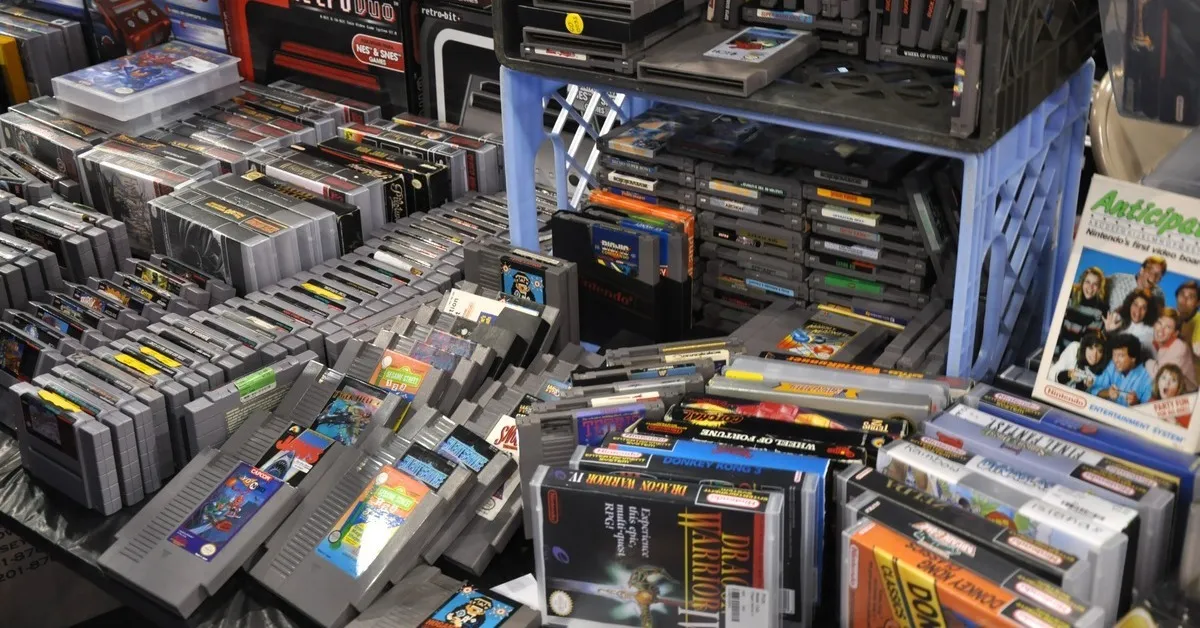
Most of it. In 2023 the Video Game History Foundation and the Software Preservation Network published a study that found 87% of classic games released in the United States were out of print. "Classic" meant released before 2010. The sample was 1,500 games, drawn at random from MobyGames, with a margin of error of plus or minus 2.5%. Only 13.27% were commercially available, a survival rate the authors compared to American silent films.
The detail is worse than the headline. Across more than 4,000 games checked for the platform deep-dives, no five-year period in the study got above 20% availability. The Commodore 64 sat at 4.5%. The PlayStation 2, which still gets plenty of reissues, reached 12%. The Game Boy family came in at 5.87% after Nintendo closed the 3DS and Wii U eShops, a closure the study estimates took around 1,000 unique games out of release in one go. The files didn't disappear. The legal way to buy them did.
Why a store listing isn't an archive
Re-releases are good. They give people a legal route to an old game without hunting down original hardware, and the careful ones pay for restoration work and include manuals, art and interviews. But a store listing is a sales arrangement, and sales follow demand. Publishers bring back the mascots and the beloved RPGs. Licensed games, regional releases, educational software, annual sports games and ordinary games that never found a cult audience don't make the cut, and those are most of what people actually played.
Commercial availability can also hang on a single contract. When the study was done, most of the Commodore 64 games you could buy legally were available through one service, Antstream Arcade. The report estimated that C64 availability would drop to 0.75% if that service went away.
Remakes add another blind spot. The study counted the original 2005 Yakuza as out of print even though Yakuza Kiwami is on sale, because Kiwami was rebuilt from the ground up. We think that's the right call. A remake changes movement, camera, art, sound and pacing; treating it as a substitute is like keeping a new film adaptation and throwing out the original. Remasters are messier (some barely touch the underlying game, others swap licensed music or introduce new bugs), which is exactly why the original release needs to stay accessible for comparison.
When the servers go dark
Delisting and shutting down are different things. A delisted game is off sale, but owners can usually still download and play it. A shutdown can go further. If a game needs a server for authentication, matchmaking or basic functions, turning that server off makes the copy on your drive useless.
Ubisoft's The Crew is the example everyone reaches for. The always-online racing game was pulled from sale in December 2023 and its servers closed on March 31, 2024, which left it unplayable. That shutdown helped start Stop Killing Games, a consumer campaign whose slogan is "They kill games. We fight back." The actual ask is more measured than the slogan. It doesn't want every official server running forever. It wants games sold to consumers left in a reasonably working state when support ends, through an offline mode, private servers, released server software or some other handoff.
That seems fair to us. Keeping a live service running indefinitely would be a real cost, especially for small studios. Planning the exit before launch is cheap by comparison. The team knows which services are essential and which licences expire, and could write down what the servers need before the engineers who understand them move on. Store pages could say which modes need remote services and what happens when support ends. "Requires online connection" describes today; buyers should also know if it means an expiry date nobody has announced.
What video game preservation actually involves
A book needs legible pages. A film needs a copy and something to play it on. A game needs the software plus the hardware behaviour it expects, the operating system, the controller, any online services, the patches that changed it after launch, and ideally the manuals, design documents and records of how people played it. The version on the disc may be quite different from what people were playing six months later, and seasonal events and temporary maps vanish even while the game is still live.
Even when institutions have a complete copy, access is restricted. US libraries and archives can preserve games under certain conditions, but in 2024 the US Copyright Office declined a proposed exemption that would have let eligible institutions give researchers remote access to out-of-print games. So a researcher still has to travel to a specific building, which rules out most students, journalists and independent historians.
The paper trail is doing better than the games themselves. In January 2025 the Video Game History Foundation opened its digital library in early access with more than 1,500 searchable out-of-print magazines, development documents, promotional material and over 100 hours of production footage from the Myst series. It's free to search. It doesn't offer playable retail games, and its FAQ points to current US copyright rules as the reason. The odd result is that you can now read a game's design documents online more easily than you can legally play the game.
What players can do
Nobody reading this can fix copyright law or keep a dead game's servers running. Players can still leave evidence, and archives eventually depend on exactly that kind of ordinary trace.
Where a platform allows it, keep local copies, patches, manuals and exported saves. Physical media helps, though plenty of modern discs still need a day-one update. Screenshots and video capture temporary spaces that won't come back. And written accounts matter more than people assume: patch notes say what changed, but a player's note says what the change felt like. A review written in launch week can record performance problems that were later fixed, a mode that was later cut, or a social ritual that faded out.
If you want to keep your own record, a few habits make it more useful:
- Note the version and platform you actually played.
- Mention anything likely to disappear: an online mode, a licensed soundtrack, a seasonal event, a community server.
- Write one concrete memory instead of a plot summary.
- Say who recommended it or who you played with.
- Update the entry if a later port or remake changes your view.
We make a game journal, Perthro, and it's worth being clear about what that is and isn't. It's not a software archive, and a journal entry can't keep a discontinued game running. What it can hold is your side of the record: the platform, the hours, the review, the list you put the game on, and the conversation with friends who played it too.
The best-known games will keep coming back on every new console, and that makes the past look closer than it is. The rest (the rented copy played over one weekend, the licensed tie-in, the online game that held a group of friends together until it shut down) survives only if someone writes it down, keeps the files, or changes the rules about who can access them.