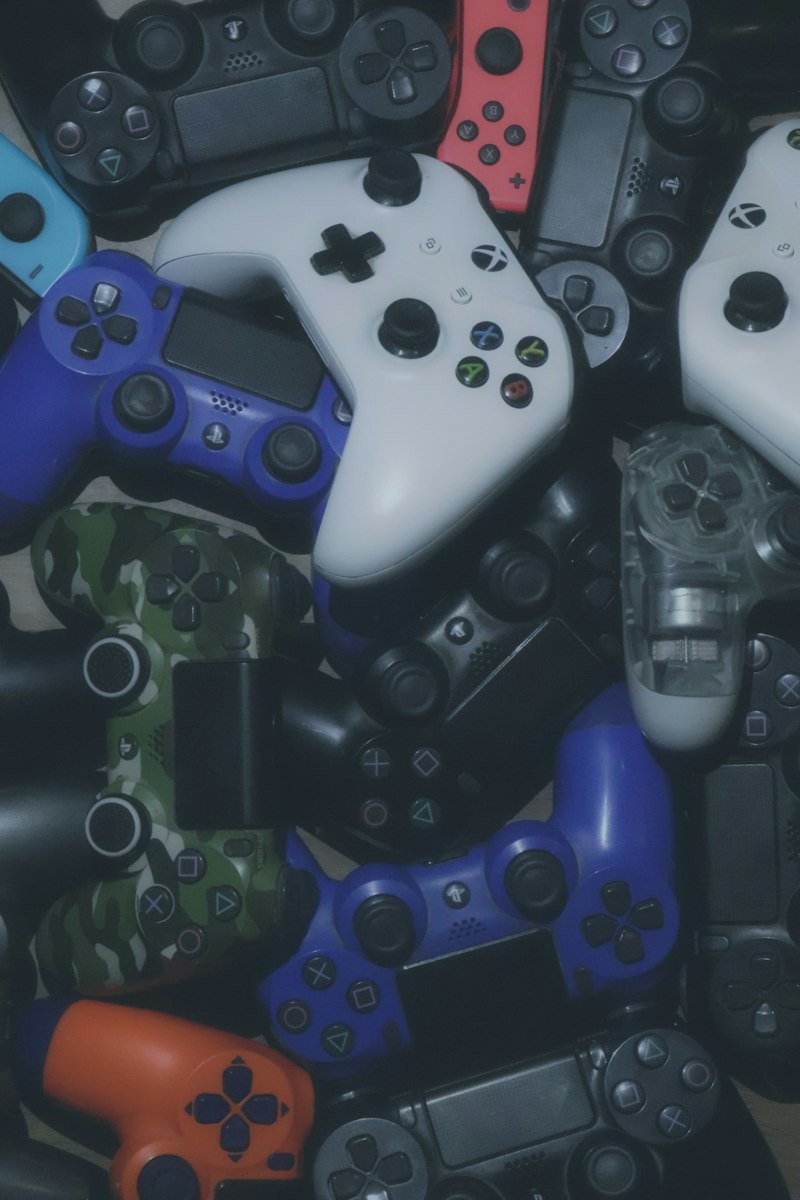
Most big games now launch on more than one platform. If you own more than one console, or a console and a gaming PC, every new release brings a small but real decision: which version do you buy?
The short answer: buy the version your friends play on; if that doesn't apply, buy the one you'll play most comfortably; and if it's still a tie, buy the one that runs best. Price and subscriptions are tie-breakers. That order matters more in 2026 than it used to, because hardware has become expensive, versions of the same game can differ a lot, and some "physical" games no longer contain the game at all. Here's how to think through each step.
PS5, Xbox, PC and Switch 2 compared
| PS5 | Xbox Series X/S | PC (Steam) | Switch 2 | |
|---|---|---|---|---|
| Hardware price (US, Sep 2026) | $599.99–$899.99 | $499.99–$799.99 | Varies; Steam Deck OLED from $789 | $499.99 |
| Portable | Via PlayStation Portal ($249.99, streams from PS5) | No | Steam Deck | Yes |
| Subscription with new games | PlayStation Plus (catalogue, no day-one first party) | Game Pass Ultimate, $22.99/month, day-one releases | PC Game Pass, $13.99/month | No |
| Sales | Regular | Regular | Frequent and deep | Less frequent |
| Mods | Curated, per game | Curated, per game | Full | No |
| Physical games | Yes (disc models) | Yes (disc models) | Rare | Yes, but some are game-key cards |
Prices rose across the board in 2026. Sony raised PS5 prices in April, Microsoft raised Xbox prices on August 1, Valve raised Steam Deck prices in May and Nintendo moved Switch 2 to $499.99 on September 1. The press linked most of these rises to memory and storage costs driven by AI data-centre demand.
1. Where are your friends playing?
If a game has any multiplayer, start here. Crossplay is common now, but there's no platform-wide rule: support is decided game by game, and often only partly.
- Battlefield 6 has crossplay across PC, PS5 and Xbox, with progress tied to your EA account.
- Monster Hunter Wilds has crossplay, but no cross-save: your hunter stays on the platform you started on.
- Elden Ring Nightreign has no cross-platform play at all, only between console generations. Its director confirmed "cross-generational play but not cross-platform play."
Even when crossplay works, parties, voice chat and friend lists often stay inside one platform. Buying the version your friends own is usually worth more than a few extra frames. If you're starting a group around a game, our guide to starting a video game club covers picking something everyone can play.

2. Where do you actually play?
Be honest about the setup you use most. If most of your gaming happens on the sofa after work, a console version is the comfortable choice even if your PC is more powerful. If you mostly play in bed, on a train or while someone else has the TV, a portable version wins.
For PC games on Steam Deck, check the game's compatibility rating. Valve defines "Verified" as a game that "passes all compatibility checks": full controller support, readable text and at least 30fps at default settings. "Playable" means it works but may need manual setup. As of January 2026, about 7,500 games were Verified and another 17,500 Playable.
3. How does each version run?
Versions of the same game can run very differently, and recent launches show it:
- Borderlands 4 on PC (September 2025) suffered from shader stutter and inconsistent frame times even on high-end hardware, according to Digital Foundry. Its Switch 2 version was delayed a week before launch, and in February 2026 Take-Two said it had decided "to pause development on that SKU."
- Oblivion Remastered on Switch 2 (August 2026) runs at 1080p docked with DLSS, but Digital Foundry found poor frame pacing, with frame times swinging between 16ms and 50ms, and reduced foliage.
Don't rely on the store page. Look for a performance analysis from around launch, and check the date: a rough PC version may be fine three months later, and a console version might gain a performance mode in a patch.
4. Is it included in something you already pay for?
Subscriptions change the maths. Since April 2026, Game Pass Ultimate costs $22.99 a month and PC Game Pass $13.99, and both include "major day one releases" from Xbox. New Call of Duty games are the exception: they now join about a year after launch. PlayStation Plus Extra and Premium ($16.99 and $19.99 a month since May 2026) offer a large catalogue of older games, but Sony doesn't put its new first-party games in on day one.
Xbox Play Anywhere is worth knowing about, too. Buy a supported game once and you can play it on Xbox console and Windows PC, with saves, add-ons and achievements carried across.
The catch with subscriptions is that games can leave. For a long game you'll come back to over months, buying it can still make sense.
5. Where will it be cheapest?
PC games tend to go on sale more often and more deeply than console games. Steam's Autumn Sale runs October 1–8, 2026, and its Winter Sale runs December 17 to January 4. Console stores have regular sales too, and physical console copies are often discounted soon after launch.
Nintendo has also changed its pricing. From May 2026, Nintendo's own Switch 2 games cost less digitally than physically: Yoshi and the Mysterious Book is $59.99 digital and $69.99 physical.
If you're happy to wait, the cheapest version is usually whichever one you buy later. If you want it on day one, price differences between platforms are usually small enough that the earlier questions matter more.
6. Where are your saves?
Cross-progression is still patchy. Some games tie progress to a publisher account so it follows you everywhere. Others, like Monster Hunter Wilds, keep each platform's saves separate. If you've put 40 hours into a previous game in a series and the sequel rewards returning players or imports saves, check which platforms that works on before you buy.
7. Physical or digital: what a game-key card means
A physical copy can be resold, lent and kept on a shelf. But on Switch 2, some physical releases are game-key cards. Nintendo's own support page says a game-key card "doesn't contain the full game data." It unlocks a download, needs an internet connection the first time and must stay in the console to play. Look for the key icon on the box.
If keeping a game playable in the long run matters to you, check what's actually on the physical release. We wrote about why game preservation can't depend on stores if you want the bigger picture.
A quick way to decide
- Multiplayer with friends? Buy where they are.
- No? Buy where you'll actually play most: sofa, desk or handheld.
- Still tied? Buy the version that runs best, according to a recent performance analysis.
- Use price, subscriptions and physical-versus-digital to break any remaining tie.
Whatever you choose, keep track of where you bought it. When your library is split across three stores, it's easy to forget you already own something. Perthro keeps your games from every platform in one place, so "where did I buy that?" always has an answer.
Sources
- PlayStation Blog: New price changes for PS5, PS5 Pro and PlayStation Portal (March 2026)
- tbreak: Xbox Series X price rises to $799.99
- VGC: Nintendo confirms Switch 2 price rise
- Xbox Wire: Xbox Game Pass update (April 2026)
- PlayStation Plus
- Xbox Play Anywhere
- Steamworks: Steam Deck compatibility review process
- GamingOnLinux: Steam Deck hits 25,000 Playable or Verified games
- Nintendo Support: About game-key cards
- Nintendo Life: Nintendo changes pricing for Switch 2 exclusives
- Shacknews: Monster Hunter Wilds cross-save
- Push Square: Elden Ring Nightreign will not have crossplay
- Kotaku: Borderlands 4 Switch 2 release paused
- Nintendo Life: Digital Foundry on Oblivion Remastered for Switch 2
- Steamworks: Upcoming Steam events