

Sunday is usually the day when the release calendar feels quieter. The big Friday launches have had a couple of days to breathe, the first review pages are settling into the aggregators, and the smaller games either start to vanish or quietly make their case.
This week is a good example. EA Sports UFC 6 is the obvious headline because it is the biggest name and the easiest keyword to chase. It also has enough reviews to form a real consensus: OpenCritic lists 26 reviews, an 81.5 average, a median of 80, and a Strong rating, with about 92 percent of critics recommending it.
The more interesting part is what sits beside it. Crushed in Time, a point-and-click comedy from Draw Me A Pixel, has 17 reviews, an 80 average, a median of 80, and a Strong rating on OpenCritic. Junkster is smaller still, sitting at 74 across seven reviews, but critics keep circling the same idea: it is a modest 3D platformer with a building hook that works better than its budget might suggest.
So, not a week of clean winners and losers. More like three games making three different arguments for your time.
EA Sports UFC 6 review consensus: stronger stories, messier systems
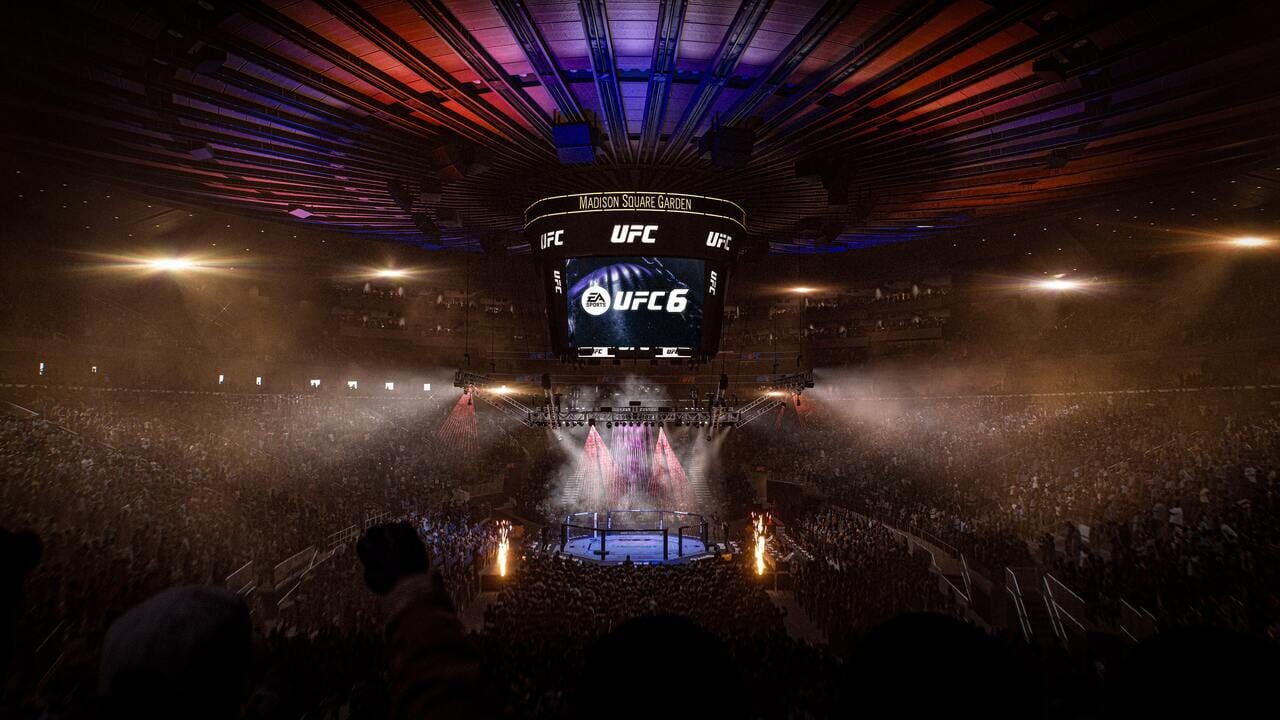
EA Sports UFC 6 launched on June 19 for PlayStation 5 and Xbox Series X/S. OpenCritic has it at 81.5 from 26 reviews, with a median score of 80. The publisher listed there is Electronic Arts, and the game is treated by critics as a real step forward, even when they are not fully sold on every new system.
The short version: reviewers like the fighting, the presentation, and the focus on fighter stories. They are less sure about Flow State and some of the extra progression dressing around the edges.
IGN's review lands right on that split. It calls Flow State "a slight misstep," but says EA Sports UFC 6's "collection of gripping and carefully crafted stories in Hall of Legends and The Legacy make this a celebration of MMA unlike any before it." The full review is more pointed about why Flow State bothers it, describing the feature as "out of place, like a Street Fighter move dropped into the octagon." That line gets at the tension inside the whole game. UFC 6 wants to honor real fighters, real stories, real damage, and the grind behind the walkout. Then it adds a flashy meter that makes the sport feel less physical and more arcade-like.
Other outlets echo the same shape. IGN Italy calls it "not the revolution that fans imagined after three years of waiting," but also "a very solid sequel that improves on almost every element of its predecessor." GameHall goes further, calling it "the best game in the franchise to date" and praising the visuals, refined striking, and more unique feeling roster. Shacknews, through OpenCritic's excerpt, says UFC 6 is its favorite game in the series so far, calling it "content-rich," "beautiful," and tight in the actual fighting.
The score range is steady rather than chaotic. Many visible reviews cluster around 80: IGN at 80, IGN Italy at 80, Loot Level Chill at 80, Shacknews at 80, and ZTGD at 80. Everyeye.it sits at 82, GameBlast at 85, The Games Machine at 86, and Gamer Social Club is a little cooler at 75. That is broad agreement with a few asterisks.
For players, the question is whether you want a sports game that leans harder into curated MMA mythology while still carrying some awkward videogame baggage. If you play these games for modes, presentation, and the feeling of being inside the sport, this looks like a strong one. If you mainly want a purer sim, Flow State may be the thing you notice first and forgive last.

Crushed in Time review consensus: clever, elastic, and a little stretched
Crushed in Time released on June 10 for PC. OpenCritic lists Draw Me A Pixel as both developer and publisher, with 17 reviews, an 80 average, and a 76 percent recommendation rate. The score line is clean enough to call it a success, but the actual reviews are more useful than the number.
This is a Sherlock Holmes and Dr. Watson point-and-click adventure that keeps breaking its own frame. The conceit is not ordinary time travel. Critics describe the duo moving through the production history of a game itself: prototypes, earlier builds, broken scenes, editor-like spaces, and the strange half-worlds that exist before a game is finished.
Hardcore Gamer's review calls Crushed in Time "a clever adventure game" with a "compelling meta narrative." It praises the way the game uses a physics-inspired "point-and-pinch" format, where the player pulls, flicks, stretches, and manipulates objects rather than simply telling Holmes to pick things up. The review likes the variety of environments and how the game uses development-stage spaces, but it flags two problems: the drama near the ending is poorly handled, and the hint system does not always cover the places where players are most likely to get stuck.
TheSixthAxis is similarly positive, scoring it 8 and calling it "a delightful new style of point & click adventure." Its review explains the tactile appeal well. You click and hold to grab part of the world, then pull and release. A door might spring open if you pull one way. An object might need to be pinged across a room. A character might have to be nudged into position while another action happens. In a genre that can still default to pixel hunting and inventory logic, that physicality matters.
TheSixthAxis also catches the downside: the same elasticity can create more trial and error than expected. Timing-based puzzles mean players may need to repeat actions or sit through repeated dialogue. The review says one late chapter outstays its welcome, which lines up with Hardcore Gamer's complaint that the ending does not land as cleanly as the setup.
COGconnected gives it 85 and calls it a simple point-and-click "pushed to its limits." Checkpoint Gaming is cooler at 70, saying the fourth-wall-breaking humor and puzzles work, while the control scheme sometimes frustrates more than it helps. GameSpew, also at 70, likes the clever premise but says the stretchy control gimmick is not always smooth.
That gives Crushed in Time a neat critical profile. It is not being praised for polish alone. It is being praised because it tries something specific, weird, and readable. Critics seem willing to forgive some rough edges because the core idea has a personality.
If there is a warning, it is this: go in wanting a comic, meta puzzle game, not a traditional Sherlock story. The Holmes and Watson frame is there, but the stronger hook is Draw Me A Pixel turning game development debris into puzzle material.
Junkster review consensus: a small 3D platformer with a practical building hook
Junkster released on June 16 for PC. OpenCritic has it at 74 from seven reviews, with a median of 80 and a Fair rating. That looks modest next to UFC 6 and Crushed in Time, but the tone of the reviews is warmer than the average suggests.
The common thread is that Junkster is not the most refined 3D platformer on the shelf, but its building system gives it an identity. Video Chums says the game blends its elements into "a lovely mix for any 3D platforming fan, especially those who love to build and solve puzzles." Its review describes gathering materials, building robots, and using those machines to cross hazards, reach optional areas, or handle enemies. The fun seems to come from practical tinkering rather than pure movement mastery.
GAMES.CH calls Junkster "an honest, well-crafted platformer" that offers more than its modest price suggests, thanks to an unusual building twist and strong visuals. Nindie Spotlight is the highest of the visible scores at 86, calling it "a really pleasant surprise" with smart 3D platforming and creative building. That is the optimistic read: not a genre landmark, but a budget-priced game that understands the fun of making a contraption and watching it solve a problem.
The lower reviews are not hostile. PSX Brasil gives it 70 and says it is overflowing with charm and comfort, while also noting that the narrative, challenge, and graphics are not exactly impressive. Gamer Social Club, also at 70, calls it well-made and genuinely enjoyable, with a comic book visual style and a building mechanic that adds a smart extra layer, even if it can become slightly tedious.
That word, tedious, is probably the one to watch. Building systems can make a platformer feel inventive, but they can also slow it down if the assembly is too fussy or the rewards are too obvious. Critics do not seem to think Junkster falls apart there. They just do not all think the hook fully overcomes the game's modest production values.
For a lot of players, that may be fine. Not every 3D platformer needs to be a grand revival. Junkster sounds more like a weekend game: pleasant, light, clever in patches, and happy to let you bolt together a strange little robot so you can hop somewhere you could not reach before.
The takeaway
EA Sports UFC 6 is the clear mainstream pick this week. The review numbers are strong, the consensus is stable, and critics agree that its story-focused modes give the series a better sense of purpose. The caveat is that some of its new systems feel more videogamey than the sport it is trying to celebrate.
Crushed in Time is the one I would keep an eye on if you like puzzle games with a strong authorial joke. Its 80 average does not fully explain why critics are talking about it. The useful part is the shared language: elastic, meta, funny, clever, sometimes frustrating. That is enough to know whether it is for you.
Junkster is the quiet one. It probably will not dominate the month, but a 74 average with several affectionate reviews can still mean a game worth writing down, especially if you like 3D platformers that trade spectacle for one sturdy idea.
This is where a calmer games journal helps. Not every review roundup needs to become a buying decision today. Sometimes it is enough to mark EA Sports UFC 6 as the safe sports pick, Crushed in Time as the weird puzzle one, and Junkster as the small maybe. Perthro is built for that kind of note: track what you are playing, what you plan to play, and what you might want to come back to when the noise dies down.