
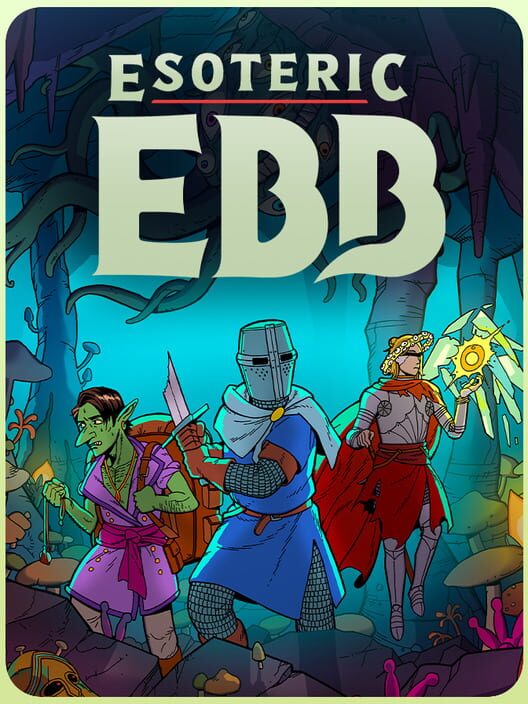
Esoteric Ebb is the kind of game that makes a review aggregate feel a little silly at first. A number is useful, sure. OpenCritic has it sitting at 88, with most scored reviews clustering around 8 to 9.5 out of 10. That tells you critics like it. It does not tell you why several of them sound faintly surprised by how much they like it.
This is a PC role-playing game from developer Christoffer Bodegård, published by Raw Fury, released on March 3, 2026. On paper, the hook is easy to describe and dangerous to oversimplify: a text-heavy fantasy detective RPG about a cleric investigating an exploded tea shop before the world's first election. The obvious shorthand is Disco Elysium meets Dungeons and Dragons. Nearly every review reaches for it because it is right there. The more interesting part is that the better reviews then move past it.
That is why Esoteric Ebb is worth a closer look now, even a few months after release. It was not one of the loudest games in the calendar. It does not have a famous studio name stapled to the front. It is also exactly the sort of game people tend to lose in the shuffle unless they make a note somewhere. For Perthro, where the whole point is keeping a calmer record of what you played, what you meant to play, and why something stuck in your head, this is the kind of critical oddity that deserves a longer entry.
Esoteric Ebb review scores at a glance
OpenCritic's page gives Esoteric Ebb an 88 overall. The spread is high but not chaotic: PC Gamer scored it 90/100, GameSpot gave it 9/10, DualShockers gave it 9/10, COGconnected gave it 90/100, TheSixthAxis gave it 9/10, Checkpoint Gaming landed at 8/10, and Eurogamer went with 4/5. That is not a split between love and hate. It is more like a set of critics agreeing on the game's quality while arguing, sometimes quietly, over how much of its mess is part of the charm.
PC Gamer's Ted Litchfield is the cleanest example of the high end. His verdict is blunt: "If you like RPGs, you owe it to yourself to play Esoteric Ebb." In the review, he calls it "the best game like Disco Elysium that anybody's made since Disco Elysium," but he is careful not to treat it as a cover version. What he seems most taken by is the game's reactivity: attributes that talk back differently depending on how you build them, dialogue fights that behave like tabletop encounters, and small choices that return much later with a joke, reward, or consequence.
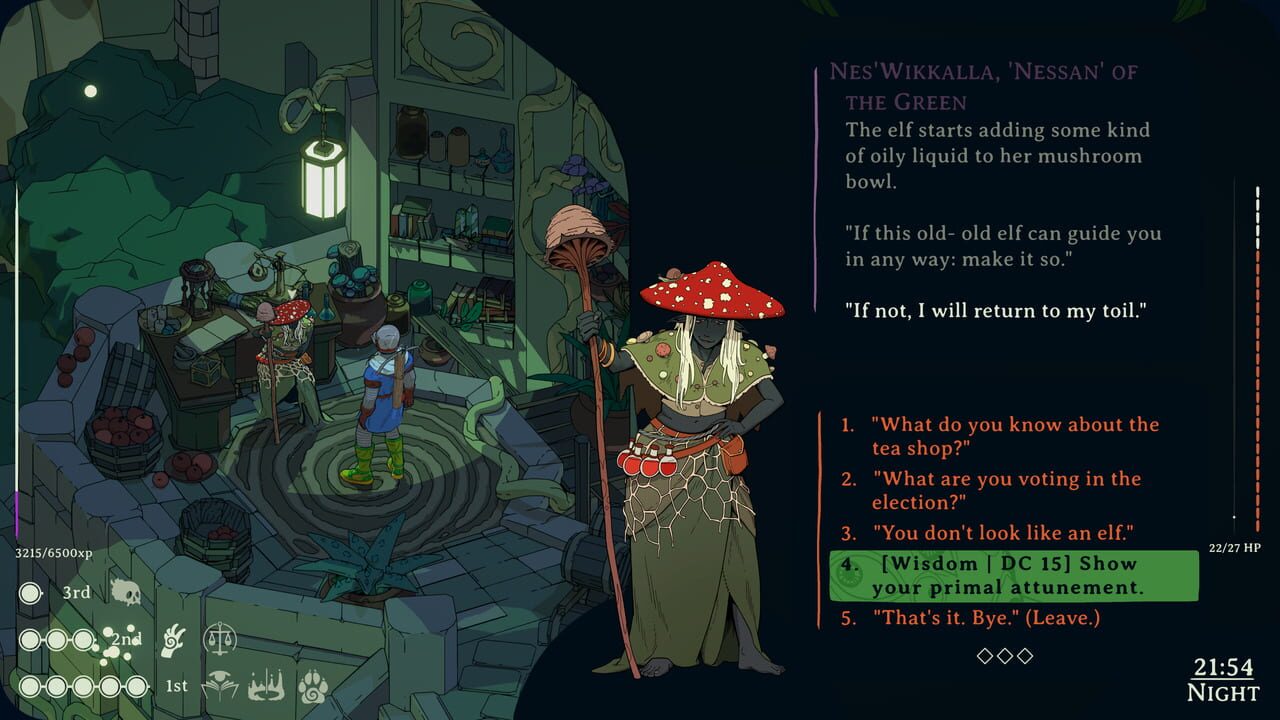
GameSpot's Moises Taveras is just as warm, calling it "positively stuffed" with good things and comparing it to a mimic: familiar in shape, but hiding teeth and depth. That line gets close to the game's appeal. Esoteric Ebb looks approachable from a distance. It has colorful fantasy art, a cleric, goblins, elections, spells, and dice checks. Then the writing starts pulling you sideways into theology, labor politics, personal embarrassment, social anxiety, and jokes that are often smarter than they need to be.
Eurogamer's Alexis Ong is warmer than cautious, but her 4/5 review is useful because it names the catch. She praises the moment-to-moment writing, the comedy, the flexible role-playing, and the feeling of playing an idiot with a job to do. She also calls out places where the writing becomes bloated or self-indulgent, including one fantasy-world joke about "the Japanese" that she argues lands badly. That matters because it keeps the consensus honest. Critics are not simply cheering a dense RPG because it has a lot of words. They are noticing when the words work, and when the game gets too pleased with itself.
What critics agree on
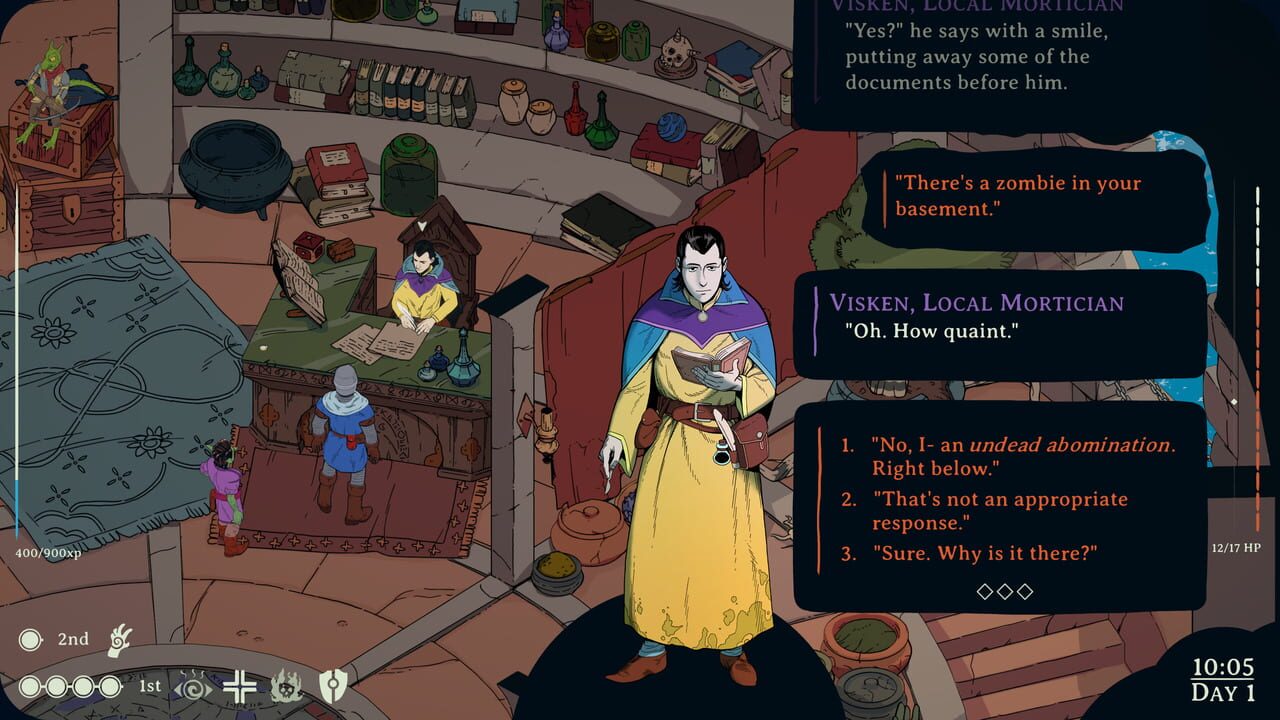
The agreement starts with the writing. Esoteric Ebb is a comedy, a mystery, a political fantasy, and a character-builder where your stats are also voices in your head. That could become exhausting fast. The reviews mostly say it does not. PC Gamer calls the game "Obsidian-Tier" in its writing and says it sits in the "99.9th percentile of videogame writing." TheSixthAxis calls it "one of the most endearing, hilarious and immersive roleplaying experiences" the reviewer has had in the medium. Gaming Nexus describes it as a "dialogue-drunk RPG" where conversations keep swinging between revelation and the ridiculous.
That phrase, dialogue-drunk, is probably the right warning label. Esoteric Ebb is not a combat-first RPG. DualShockers points out that the game is almost entirely text-based, with exploration and interaction folding into long conversations between the cleric, NPCs, and the voices tied to your attributes. If you want clean quest markers, frequent fights, and short exchanges, the praise may not translate for you. If you like RPGs where a failed roll can become a better story than a successful one, the reviews make it sound unusually generous.
The second point of agreement is reactivity. Critics keep circling back to the sense that the game has anticipated weird behavior. PC Gamer describes carrying a broken magic item for most of the game, only to find a late-game use for it as a trap. DualShockers says the game gives players "freedom to explore the world and characters," even when it refuses to hand over clean instructions. COGconnected, in its 90/100 review, calls out the number of variables that can make a first playthrough feel personal rather than merely branching.
The third agreement is that the Disco Elysium comparison is fair but incomplete. RPG Fan says it does a respectable job filling that void while bringing fresh ideas. IGN Italy, according to OpenCritic's excerpt, says it draws heavily from Disco Elysium and Planescape: Torment but is not a shallow copy. Eurogamer says it clears the hurdle of being judged against Disco Elysium by finding its own tone. That is important. "Disco-like" has already become one of those labels that can flatten a game before anyone plays it. Esoteric Ebb seems to survive the label because it understands the deeper lesson: inner voices are not the trick. The trick is making them funny, cruel, helpful, wrong, and specific.
Where the criticism lands
The complaints are not invisible. They just tend to sit beside the praise rather than replacing it.
PC Gamer mentions cluttered UI, especially on Steam Deck, along with typos, gamepad-specific glitches, and a couple of bugged feats in the review build. That is the practical caution. A text-heavy RPG lives or dies on its interface, and even small friction gets louder when you are reading, equipping items for checks, and parsing long conversations for clues.
DualShockers is more focused on guidance. Shane Limbaugh says Esoteric Ebb does not hold your hand, and that the Questing Tree can be ambiguous. For some players, that is a blessing. For others, it means taking notes, remembering conversations, and accepting that you may miss things. The review still lands at 9/10, which tells you the friction was not fatal for that critic, but it is the clearest reason someone might bounce off.
Eurogamer's critique is the most interesting because it is about taste, not usability. Ong argues that some banter crosses into tedium and that one particular bit of worldbuilding comes across as sloppy. For a game this dependent on voice, that kind of criticism cuts deeper than a bug list. It says the writing is strong enough to be judged seriously, which also means its missteps cannot hide behind the excuse of being silly.
Why Esoteric Ebb matters
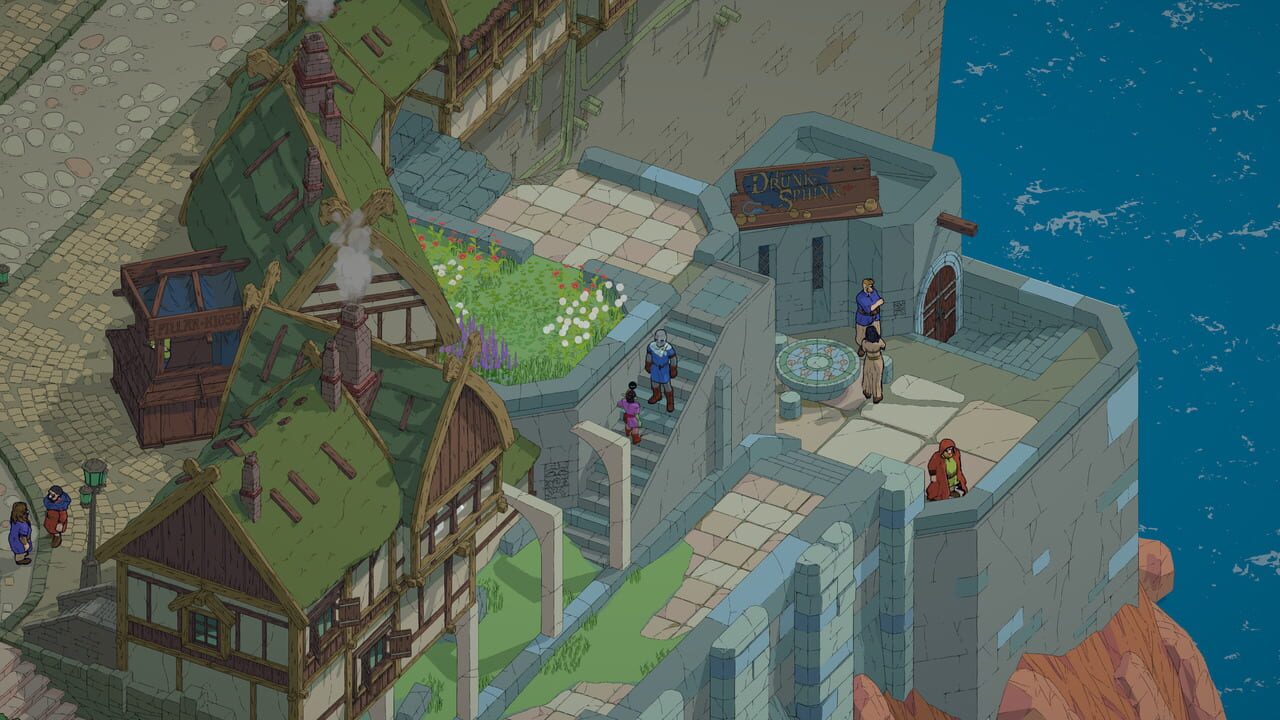
The sleeper story here is not that Esoteric Ebb secretly reviewed well. The score is public. The sleeper story is that reviewers seem to be describing a game with the confidence to be small, dense, and specific at a time when a lot of RPG talk gets pulled toward size.
Nobody is praising it for hundreds of hours of content. They are praising it for a 10 to 15 hour first playthrough that can bend around your build, your failures, and your curiosity. Nobody is saying the game reinvents Dungeons and Dragons. They are saying it understands tabletop role-playing as something stranger than tactical positioning: arguing with yourself, using a bad spell in a clever way, ruining a plan because your character is the kind of person who would ruin it.
That is a useful distinction for anyone sorting their backlog. Esoteric Ebb is not just another critically liked indie to throw onto a wishlist and forget. It is a mood commitment. You need to want words. You need to want dice. You need to be willing to let a game make you feel a bit foolish before it lets you feel clever. The reviews suggest that, if you meet it there, it gives a lot back.
There is also something nice about seeing critics reward a game that is this unabashedly writerly. The most repeated praise is not about spectacle. It is about characters, choice, jokes, consequence, and the pleasure of a world that keeps revealing stranger rules the longer you pay attention. That is harder to sell in a trailer than a new combat system. It is also exactly the kind of thing a critic can still catch better than an algorithmic storefront tag.
Should you play Esoteric Ebb?
If you loved Disco Elysium, Planescape: Torment, Citizen Sleeper, or the parts of Baldur's Gate 3 where the dice made a conversation go sideways, Esoteric Ebb belongs near the top of your list. The critic consensus is unusually clear: this is one of 2026's strongest narrative RPGs so far, with an OpenCritic score of 88 and several major outlets landing around 9/10.
If you need voice acting, tidy direction, polished controller UI, or combat with full tactical control, read the praise with care. The same qualities critics love are the ones that may wear you down. It is dense. It is talky. It asks you to listen, remember, fail, and sometimes sit with jokes that do not quite land.
Still, the throughline is hard to miss. PC Gamer says RPG fans owe it to themselves to play it. GameSpot says there is more to love than the surface suggests. Eurogamer says it finds its own terms. DualShockers says Dungeons and Dragons fans looking for something unique will not find a better game to play than Esoteric Ebb.
That is about as close as review aggregation gets to a clear nudge. Not a universal recommendation. Something better: a game with a shape, a voice, and enough critical enthusiasm behind it that the right player should probably write it down before the next release week washes over everything.