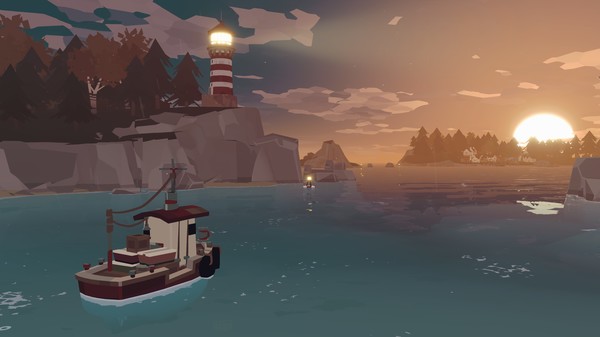
Most games hand you a problem: beat the boss, reach the exit, keep the city alive. Creative play starts when you look at the same systems and ask what else you could do with them. Make a house instead of surviving the night. Photograph the level instead of finishing it. Build a machine the designers never pictured.
That's what we mean by creative games, and it's a wider category than "building games." You're still inside someone else's rules, but you're choosing materials, testing an idea, throwing away the ugly version and trying again. Sometimes you share the result. Usually you don't, and it counts anyway.
Creative games are more than building games
Minecraft is the obvious example. Creative mode removes survival pressure, gives you unlimited blocks and lets you fly, so a survival game turns into a box of digital Lego. But building is only one kind of creative play:
- Character creators turn into portraiture.
- Livery editors in racing games teach composition and restraint.
- Level editors make you think about pacing, readability, reward and surprise.
- Photo modes turn lighting, framing and timing into the activity itself (we wrote about virtual photography separately).
- Strategy and simulation games invite self-made scenarios: families, businesses, disasters, whole invented histories.
Even rigid action games leave room. Speedrunners study geometry, animation and hidden timing windows to build routes the designers never imagined. Challenge runners set their own rules: no damage, an unfashionable weapon, skipping the best upgrade. They're making a new problem inside the old one.
The wider definition matters. If creativity only means a polished thing for an audience, most people decide they aren't creative. Games offer a less intimidating way in. You can make a crooked house, a clumsy level or a ridiculous machine, and it's still just play.
Why constraints help
A blank page gives you total freedom and almost no help. Games do the opposite: limited parts, clear physical rules, immediate feedback and an easy reset. That's a feature.
Game Builder Garage teaches game logic through visual programming and guided lessons instead of an empty code editor. Media Molecule's Dreams puts animation, music, sculpting, logic and game-making tools in one place. Minecraft reduces architecture to blocks on a grid. Each one narrows the vocabulary and then lets you write your own sentences with it.
A small parts list encourages recombination. A grid makes scale easy to grasp. A limited palette forces choices. A physics system can surprise you, and that's often where the interesting idea comes from. You think the bridge should hold. The simulation disagrees. You add a support, remove some weight, or decide the collapse was funnier than the bridge.
Failure costs almost nothing
Creative work is mostly bad first drafts, and games make them painless. A failed experiment costs a few minutes and a button press. The materials don't run out, nobody has to see it, and the feedback is concrete: the car flips, the circuit does nothing, the jump can't be read, the room feels flat. Change one thing and try again.
That loop is play, and it's also basic design: idea, build, test, revise. Games shrink the gap between thinking of something and seeing what happens, so iterating feels natural rather than like a chore.
The research here is interesting but shouldn't be oversold. A 2025 study in Frontiers in Behavioral Neuroscience compared open creative game environments with more scripted narrative ones and found they draw on imagination differently. A scoping review in The Journal of Creative Behavior covered 61 studies on game-based approaches to creativity published between 2000 and 2022. Neither supports "playing games makes you creative." Both support taking game systems seriously as places where creative behaviour can be prompted and practised.
The difference between a good creative game and one that just has lots of objects is how it helps you start. A huge parts catalogue can be paralysing. The better ones offer examples, templates, small goals, undo, and something to borrow or remix.
Making things teaches you to read games
Once you've made something in a game, you see other games differently. A level editor teaches you that an obstacle has to be readable before it can be satisfying. A city builder shows how one bottleneck ripples across several neighbourhoods. A photo mode reveals how much a scene depends on light direction and camera height.
None of this is a course in architecture or engineering. But after struggling to build a fair platforming section yourself, professionally designed levels earn more respect. It also gives you better words for criticism. You can say why something works instead of stopping at "I liked it," which helps when recommending games to friends or writing a review.
Sharing, and the pressure to become content
Communities give creative play a longer life. People publish levels, trade blueprints, tour each other's houses and teach techniques. Someone sees a clever door mechanism and adapts it; a beginner copies a small build to understand it, then changes it. Knowledge moves through examples.
There's a tension, though. Once a platform adds rankings, engagement numbers and featured slots, playful making can start to look like unpaid content production. People design for the feed instead of their own curiosity, and familiar ideas beat odd ones because they read well as thumbnails. Good creative communities protect space for unfinished, eccentric and small work. A workshop isn't a marketplace.
We'd also push back on the jump from creativity to careers: make a level, become a designer; build an audience, monetise. Those paths are real for some people, but they're a bad reason for everyone else. A virtual garden doesn't need to be published to have been worth tending. A machine that worked once and was forgotten still gave you an hour of concentration, frustration and delight.
How to get more out of creative games
- Start with one small constraint. A room with three materials. One location photographed at three times of day. A level built around a single movement. A vehicle designed for reliability, not speed.
- Keep the first version. Save the crooked bridge next to the stable one. The comparison shows your progress better than the finished result alone.
- Borrow openly. Study someone else's work, find the trick, change one condition, and credit them if you share.
- Stop before it becomes maintenance. You don't owe a sandbox a finished city or a platform a weekly upload. Leave when the idea runs out and come back when a new one arrives.
If a creative game gave you something worth remembering, write down the attempt as well as the result. A review in Perthro that says "spent three evenings on a bridge that never stood up" is a perfectly good one.