
Moving away doesn't have to end a gaming friendship. Plenty of friend groups have been playing together across cities, countries and time zones for years. The ones that last usually get four things right: a regular time that works for everyone, a game everyone can actually join, an easy way to talk, and something to play when schedules don't line up.
This guide covers each of those, with real games to play with long-distance friends, from co-op campaigns to browser party games to turn-based games you can play a move at a time. It also covers the part people forget: keeping the friendship going between sessions.
Pick a regular time that works across time zones
The hardest part of playing online games with friends far away is rarely the game. It's the calendar. A few things make it easier:
- Find the overlap first. Toronto and London are usually five hours apart, so 3 p.m. on a Saturday in Toronto is 8 p.m. in London. Weekend mornings for one friend are often weekend evenings for another. Write out each person's free hours and look for where they meet.
- Make it recurring. "Let's play sometime" rarely happens. A fixed slot, like every second Sunday at 2 p.m. Eastern, turns into a habit. Send a calendar invite with the time zone set so everyone's phone does the conversion.
- Watch the daylight saving gap. North America and Europe change clocks on different weekends in March and October and November, so the gap shifts by an hour for a week or two. Double-check the time around those weeks.
- Rotate the awkward hour. If one person always plays late at night, swap it now and then so the same friend isn't always tired.
Short sessions count. Ninety minutes every other week keeps a group together better than a four-hour session that happens twice a year. If finding the time at all is the problem, our guide on finding time to play games when life is busy has more on that.
Check cross-play and cross-progression before you buy
Long-distance friends often end up on different hardware. Two terms matter here:
- Cross-play means players on different platforms can play in the same game session, such as PS5 and PC together.
- Cross-progression means your save or unlocks follow you between platforms, so you can play on PC at home and Switch 2 on a trip.
Before anyone buys a game, check three things: which platforms support cross-play, whether it needs a separate account (many do), and whether invites work across platforms or need a friend code. Split Fiction is a good example of doing it well. It supports cross-play between PS5, Xbox Series X|S, Switch 2 and PC, and its Friend's Pass lets a friend play the whole game with you for free as long as one of you owns it. You both need an EA account to invite each other across platforms.
Voice chat options for playing with friends far away
Talking is half the point, so pick one voice setup and stick with it.
- Discord is the most common choice for mixed groups. It works on PC and phones, and it connects to PS5 and Xbox, so friends on different platforms can share one voice channel. It also makes screen sharing easy for games only one person owns.
- Platform party chat on PlayStation and Xbox is simple and reliable, but it only connects players on the same platform family.
- GameChat on Switch 2 adds voice and video chat to Nintendo's console. It was free to all Switch 2 owners until March 31, 2026, and now needs a Nintendo Switch Online membership.
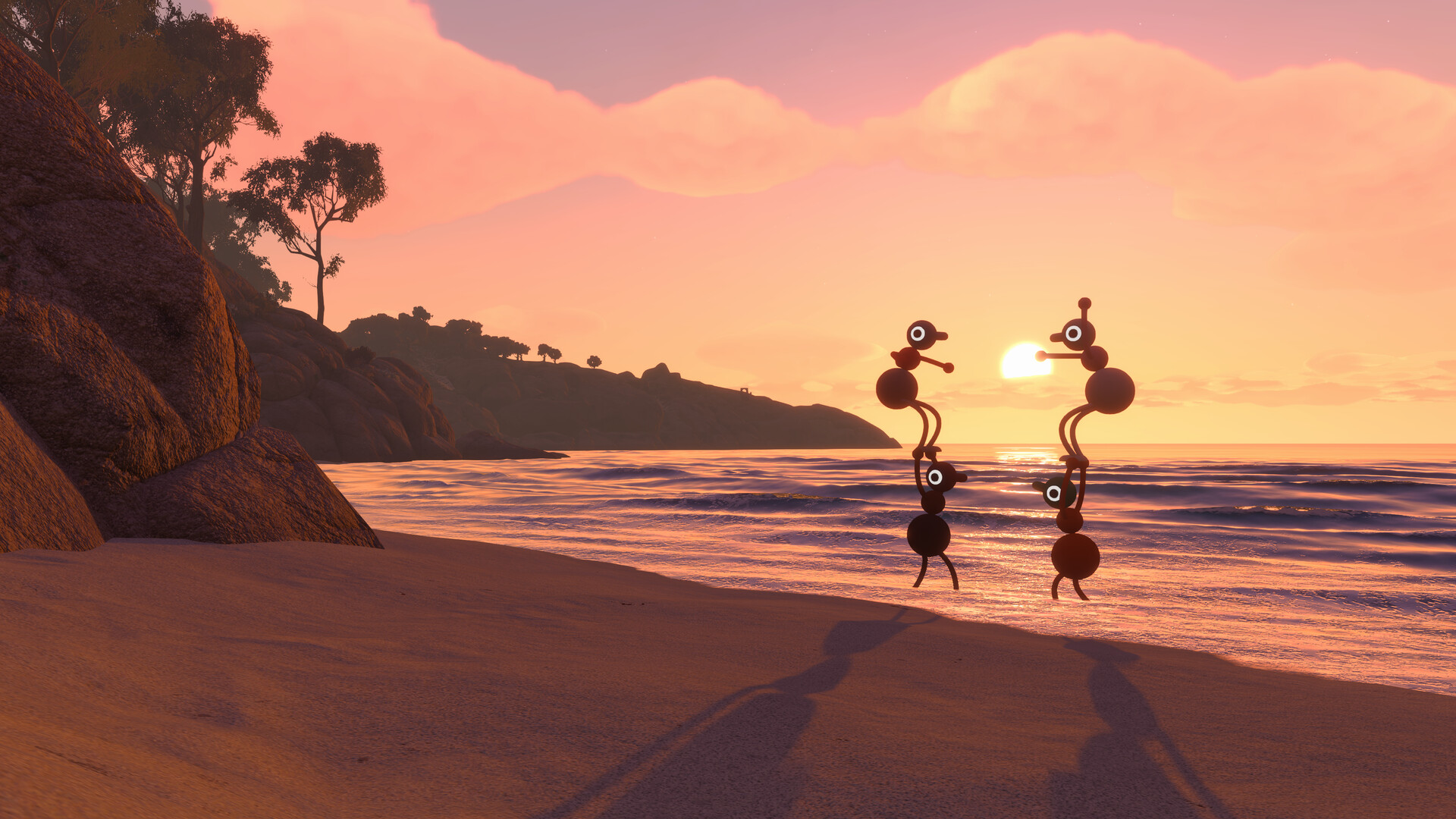
- In-game voice is sometimes the best option. Big Walk, the co-op game from House House, built its whole design around proximity chat, where friends sound quieter as they wander away. Our Big Walk review deep dive covers why critics loved it.
Whatever you use, wear headphones. Speaker echo is the fastest way to make a call miserable.
Asynchronous games for friends in different time zones
Some weeks, nobody's free at the same time. Asynchronous play keeps the thread going anyway.
Turn-based games you play a move at a time
Daily chess on Chess.com lets you take days per move, so a game can run for weeks in the background of normal life. Civilization VI's Play by Cloud mode works the same way: you take your turn when it suits you, the game saves to the cloud, and the next player gets an alert that it's their move.
Daily puzzles and shared worlds
Daily puzzles like Wordle and NYT Connections are tiny, but sharing the results grid in a group chat every morning is a surprisingly durable ritual. For something bigger, a Minecraft Realm keeps a shared world online all the time, so friends can log in, build something and leave it for the others to find.
Playing the same single-player game "together"
This is the most underrated option. Pick a single-player game you'll both play at your own pace, agree on a checkpoint (the end of chapter three, the second boss), and talk about it when you both get there. It works like a book club. You get the shared experience without needing to be online at the same time, and comparing choices in a branching game is half the fun.

Games to play with long-distance friends
Here's a starting list, sorted by how you play:
| Game | Type | Why it works long-distance |
|---|---|---|
| Split Fiction | Two-player co-op | Cross-play on PS5, Xbox, Switch 2 and PC; one copy covers both players with Friend's Pass |
| Big Walk | Co-op exploration | Up to 12 players on PC, with proximity voice built in |
| Minecraft | Shared world | Cross-play on most platforms; a Realm keeps the world online between sessions |
| Among Us | Party | Cross-play across PC, consoles and phones |
| Jackbox Party Packs | Party | Only the host owns it; everyone else joins on their phone at jackbox.tv while the host streams |
| Gartic Phone | Browser party | Free drawing-telephone game in any web browser, no installs |
| Chess.com daily chess | Async | Days per move, so time zones don't matter |
| Civilization VI (Play by Cloud) | Async strategy | Take turns whenever you can; the game tells you when it's your move |
A mix works best: one co-op or party game for scheduled nights, and one async game for the weeks in between.
Keep the friendship going between sessions
The games are the excuse. The friendship is the point, and it needs a little attention between game nights too.
A group chat for the game helps. Share screenshots, clips, a funny death, a build you're proud of. It keeps the next session on everyone's mind. It also helps to know what your friends are playing on their own. In Perthro you can see what friends are logging, rating and writing notes about, which is often how the next group game gets picked: someone sees a friend gave a co-op game five stars and asks if they want a second player.
Games can do a lot of the work of staying close. We wrote about how a game lobby becomes a third place, the regular spot where friends show up without making plans. For long-distance friends, a recurring game night can be that place. Pick a time, pick a game you can all join, and keep showing up.