
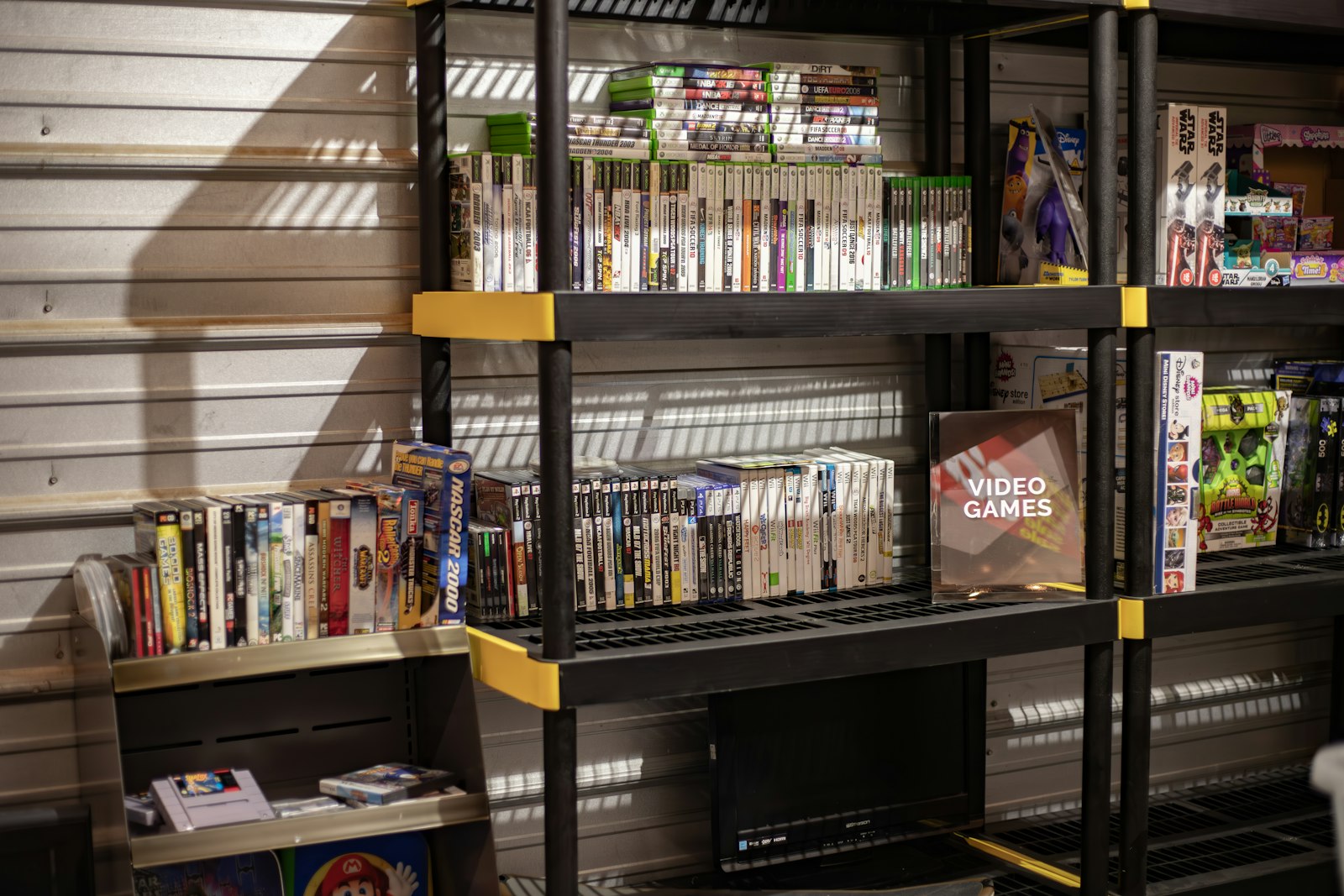
June is doing that thing again where it makes games feel infinite. Steam Next Fest opened on June 15 and runs through June 22, with free demos, developer streams, and the usual impossible wall of upcoming games. Nintendo's June slate is moving too, with Switch and Switch 2 releases scattered across the month. Release calendars are full. Wishlists are swelling. Somewhere, a player is installing a demo at midnight and telling themselves it does not count as starting another game.
That is the funny part. We usually talk about a video game backlog as if it is a pile of unpaid invoices. Too many games. Too little time. Bad discipline. Bad planning. But a backlog is not only a productivity problem. For a lot of us, it is a record of curiosity. It is a map of who we thought we might become next weekend, after work, during winter, once the big game was over, when life got quieter.
A good video game backlog app should understand that. It should help you choose what to play next, sure. But it should also let you remember why a game caught your eye in the first place.
The backlog gets loud during weeks like this
Steam Next Fest is useful because demos lower the cost of curiosity. You can try a dozen strange things without buying all of them, which is exactly the point. Valve's own event page tells players to hover over games, install playable demos, wishlist the ones they want to remember, and come back as recommendations get more personalized partway through the event.
That sounds tidy on paper. In practice, it is chaos with good intentions.
You play ten minutes of one demo because the art looks like something from a dream. You bounce off another because the camera feels wrong. You find one tiny tactics game that might become your whole personality in September. Then the week ends, your Steam library goes back to normal, and all those small impressions start leaking out of your head.
This is where a plain wishlist starts to show its limits. A wishlist can tell you what you clicked. It cannot always tell you what you felt. It will not remember that the platformer had an opening level you loved but a boss you hated. It will not remember that you wanted to show the cozy train game to a friend. It will not remember that the demo was good, but maybe not good enough for launch week.
The same thing happens outside festivals. Nintendo's June lineup includes a spread of older names, new ports, remakes, sports games, strategy games, and odd little curiosities. Game Informer's 2026 release schedule has the same shape at a larger scale: giant sequels, remasters, mobile releases, platform launches, and games that will probably move dates before anyone finishes arguing about them. The modern release calendar is not a calendar so much as weather. It rolls in. It changes the light. It makes you think you should be somewhere else.
That pressure is real, but it is also kind of silly. Nobody is actually required to keep up. Games are not homework. Still, the feeling persists because games take time. Choosing one means not choosing five others. Every wishlist click carries a tiny promise: I will come back to this.
Tracking is not the same as finishing
The worst version of a backlog app treats games like chores. It asks you to sort the unplayed, attack the oldest, clear the pile, and feel virtuous when the number goes down. That can be useful if you like systems. Some people genuinely enjoy the satisfaction of cleaning a list.
I get it. I also think it misses the better reason to track games.
Finishing a game is only one kind of relationship with it. Some games are weekend flings. Some are places you visit for years. Some are ten-hour stories you finish once and never touch again. Some are multiplayer habits that blur into friendships. Some are things you admire more than enjoy. Some sit on a wishlist for so long they become fossils of a former taste.
A game tracker should make room for that mess. It should let you say, "I am playing this," but also "I shelved this," "I want to try this later," or "I played this years ago and still think about the music." It should give structure without turning the whole thing into a performance review.
That is the spirit behind Perthro. It is an iPhone-first social gaming journal, free on the App Store, built around tracking games you are playing, have played, plan to play, or shelved. You can rate games on a five-star scale, write reviews of any length, reorder your backlog and wishlist, keep a next up view, make custom lists, follow friends, and import libraries from Steam, PlayStation Network, and Xbox Live where supported.
That feature list matters less than the posture. The point is not to shame you into finishing more. The point is to give your playing life a shape you can return to.
Why "Letterboxd for games" is almost right
People keep looking for a Letterboxd for games because Letterboxd solved a specific emotional problem for movies. It gave people a place to log what they watched, write a sentence or a miniature essay, follow friends, make lists, and turn private taste into a low-pressure social ritual.
Games need some of that. They also need different handling.
A movie usually ends in one sitting or two. A game might take three hours, thirty hours, or three years of drifting in and out. A movie log is mostly about completion. A game journal has to care about states: playing, paused, shelved, replaying, planning, curious, done enough, done forever. The word "finished" gets slippery fast.
That is why the best game tracking app is not just a database of titles. It needs memory around the title. It needs room for the half-finished RPG, the roguelike you never beat but kept loving, the demo you adored and forgot to wishlist, the co-op game that only mattered because of who was on voice chat.
The social layer matters too, but only when it stays gentle. A friend finishing a game can be a recommendation. A friend's short review can save you from buying something you would have bounced off in the first hour. Reactions and replies can turn a log entry into a conversation. But the feed should not become a scoreboard. The moment tracking becomes a contest, it loses the quiet honesty that makes it useful.
That is why I like the phrase "gaming journal" more than "backlog manager." A manager optimizes. A journal notices.
The best list is the one you actually come back to
There is a practical side here. If you are choosing a video game backlog app, look for the boring things first. Can it separate playing, played, planned, and shelved games? Can it handle a wishlist without burying it? Can you reorder that list when your mood changes? Can you write more than a star rating? Can you make custom lists for personal categories that no store page understands?
Library import matters because nobody wants to rebuild a decade of platform history by hand. Steam, PlayStation, and Xbox libraries are often scattered, and each platform only tells part of the story. Import is not magic, but it is the difference between starting with a blank notebook and starting with a rough map.
Metadata matters too. Perthro uses IGDB for game metadata, which helps keep title pages from becoming homemade spreadsheets. But metadata is only the shelf. The useful part is what you put on it: the review, the rating, the note to yourself, the list called "games for rainy Sundays" or "things I should stop pretending I will play on hard mode."
The best list is personal enough to be weird. That is how you know it is alive.
A calmer way to survive the release calendar
The release calendar will not slow down. Steam Next Fest will keep arriving with hundreds of demos. Nintendo, Sony, Microsoft, indie showcases, publisher streams, and surprise launches will keep feeding the machine. Every month will bring something that looks essential for about forty-eight hours.
The answer is not to opt out of excitement. Excitement is half the fun. The answer is to give that excitement somewhere to land before it turns into guilt.
When a demo catches you, log it. When a game looks interesting but not urgent, wishlist it. When you bounce off something, shelve it without ceremony. When you finish a game, write two honest sentences while the ending is still warm. When a friend recommends something, put it somewhere better than a message thread you will never find again.
A backlog should not be a debt ledger. It should be a living memory of attention: what caught it, what kept it, what lost it, and what might deserve another chance later.
That is a smaller promise than "finally conquer your backlog." It is also a better one. You are not trying to beat the calendar. You are trying to remember your own taste clearly enough to choose the next game with less noise.
For a medium this big, that feels like enough.