
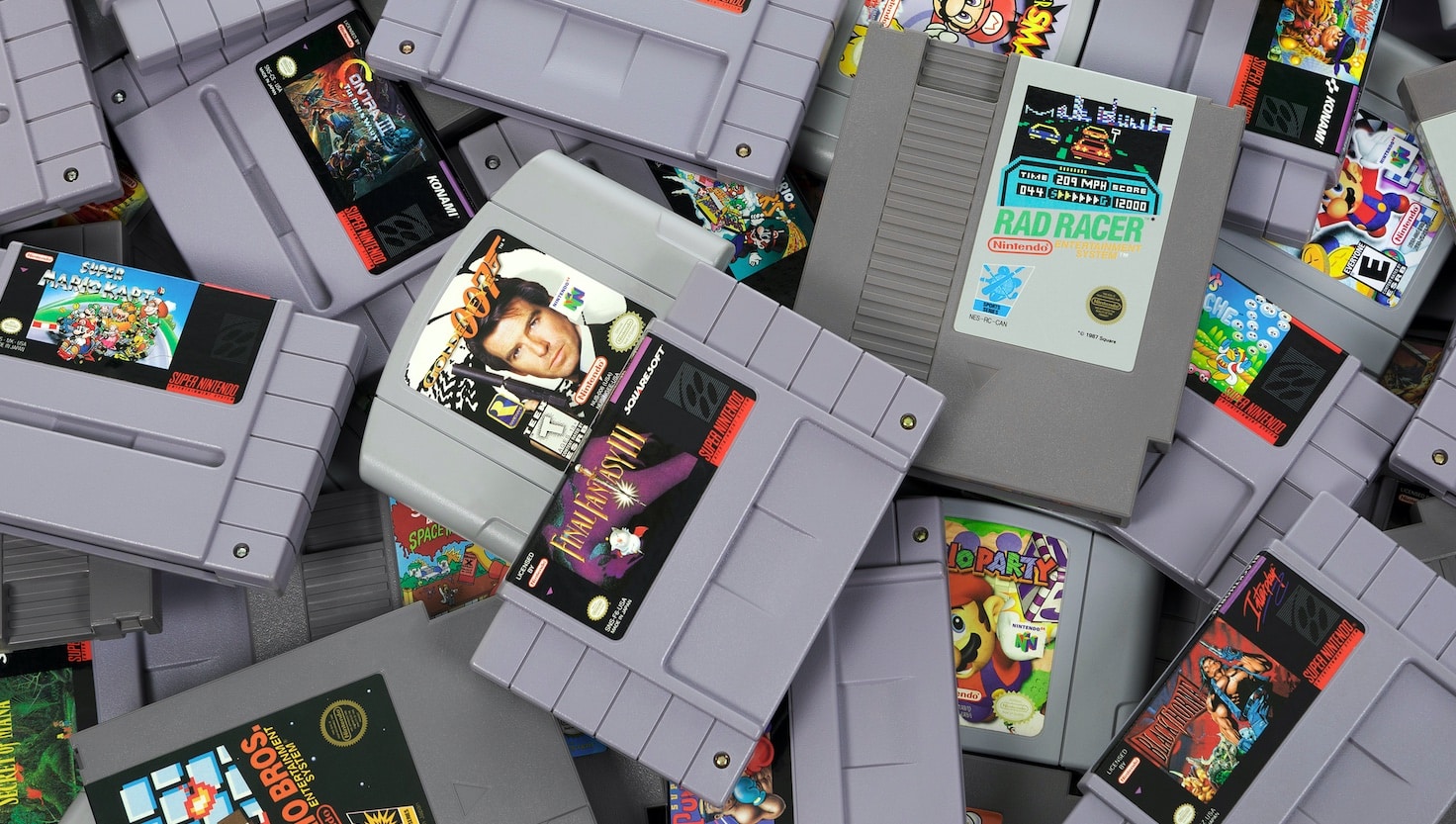
Game preservation is the work of keeping games playable, documented, and understandable after their original hardware, stores, licences, or servers disappear. That sounds like a museum problem. In 2026, it is also a consumer problem: a purchased game can vanish while its icon is still sitting on your screen.
The scale is ugly. A 2023 study by the Video Game History Foundation and Software Preservation Network found that only 13.27% of games released in the United States before 2010 remained commercially available. Put another way, roughly 87% were out of release. The study compared the situation to the survival rate of American silent films.
That number concerns old cartridges and discs, but the mechanism has changed. A cartridge can decay or become scarce. A connected game can be switched off deliberately. Its client may survive on a hard drive, yet the software can still be unusable because authentication, matchmaking, world state, or other basic functions depend on a server that no longer exists.
From delisting to disappearance
A delisted game and a dead game are different things. Delisting removes a title from sale. Existing owners may still be able to download and play it. A shutdown goes further: if essential services disappear, ownership stops meaning access.
Ubisoft's The Crew became the defining example. The always-online racing game was removed from sale in December 2023 and its servers closed on March 31, 2024. Because the game required those servers, it became unplayable. The shutdown helped spark Stop Killing Games, a consumer campaign asking publishers to provide workable end-of-life plans for games that depend on remote services.
The campaign's slogan is blunt: "They kill games. We fight back." Its proposal is more measured than the slogan. It does not demand that every official server run forever. It asks that games sold to consumers remain in a reasonably functional state when publisher support ends, whether through an offline mode, private servers, released server software, or another practical handoff.
That distinction matters. Keeping a live service running forever would impose endless costs on studios, including small ones. Designing an exit from the beginning is a different request. It treats shutdown as part of a product's lifecycle rather than an emergency nobody planned for.
Why preservation is unusually hard for games
Books can be scanned. Films can be copied and projected with the right equipment. Games are bundles of interdependent things: software, hardware behaviour, operating systems, controllers, online services, databases, licences, documentation, and communities that discover how the systems work.
Even a complete copy may not be enough. A music licence can block a rerelease. A trademark can change hands. Source code can be lost. An old console's security system can prevent lawful access. A multiplayer game's meaning may depend on dozens of people showing up at once. Preserving the executable captures only part of that history.
Patches complicate the picture further. The version pressed to a disc may differ sharply from the game people actually played six months later. Some games are rebuilt continuously, so there is no single definitive edition. Seasonal events and temporary maps disappear even while the game remains live.
This is why preservation cannot be reduced to putting ROM files in a vault. The useful unit is context: which version ran, what hardware it expected, what changed, how people played it, and what supporting material explains it.
Libraries can preserve games, but access remains constrained
Archives and libraries already collect hardware, software, magazines, design documents, marketing materials, oral histories, and source code when rights holders cooperate. Emulation can keep obsolete software usable on modern machines. None of this is casual piracy. Preservation institutions work within copyright rules that were largely written for media that does not need a login server to function.
Those rules create a strange outcome. An institution may lawfully preserve a game while being unable to offer the kind of remote access that would make the collection useful to researchers. Travelling to a physical archive is possible for some scholars and impossible for many players, students, journalists, and independent historians.
Commercial rereleases help, and good ones deserve credit. They put games back into circulation, fund technical work, and can include manuals, artwork, interviews, and version notes. They are not a complete preservation system. Publishers naturally choose titles expected to sell. Obscure games, licensed projects, regional releases, educational software, and commercial failures are precisely the material most likely to fall through the cracks.
The 13.27% availability figure makes that market failure concrete. If access depends only on a publisher seeing enough sales potential in a rerelease, most game history will remain unavailable.
The live-service era changes the argument
The preservation debate used to focus on old media and failing hardware. Connected design brings the question forward. A game released this year can already contain the conditions of its own disappearance.
Server dependence is not automatically bad. Persistent worlds, shared economies, anti-cheat systems, and large multiplayer sessions need infrastructure. The problem is opacity. Buyers often cannot tell which functions will survive a shutdown, whether a solo mode needs authentication, or whether the publisher has an end-of-life plan.
A basic disclosure would improve that. Store pages could state which modes require remote services and what happens when support ends. Studios could separate local play from online authentication where feasible. Contracts with middleware providers could account for archival use. Teams could document server requirements before the engineers who understand them move on.
None of these choices guarantees immortality. They make preservation less dependent on reverse engineering after the fact.
What players can do without pretending to be archivists
Individual players cannot solve licensing law or maintain a dead game's servers. They can still create evidence that matters.
Keep local copies where a platform allows it, along with patches, manuals, and exported saves. Physical media is useful, although many modern discs still rely on updates. Record the exact version and platform when documenting an unusual mechanic or event. Screenshots and video can capture temporary spaces that may never return.
Written accounts matter too. Patch notes tell us what changed; player notes tell us what the change felt like. A review written during launch week can preserve performance problems later fixed, social rituals that faded, or a mode removed years afterward. Friend lists, custom lists, and conversations reveal how games travelled between people rather than merely how publishers described them.
Perthro can hold part of that personal record. It is an iPhone-first social gaming journal on the App Store for iOS 17.0 or later. Players can track games across playing, played, planned, and shelved states; rate them on a five-star scale; write reviews of any length; make custom lists; and follow friends' activity. Library import is available for Steam, PlayStation Network, and Xbox Live, with achievements or trophies where supported.
That is personal history, not institutional preservation. The difference should stay clear. Still, archives eventually depend on ordinary traces: what someone played, when they encountered it, why it mattered, and what they noticed before the software changed.
Preservation should begin before shutdown
The best time to plan for a game's end is before launch. Developers know which services are essential, which licences expire, and which pieces could be made local later. Waiting until revenue falls makes every option harder and more expensive.
For publishers, an honest end-of-life policy would answer a few plain questions. Can owners still use the single-player portion? Can communities host replacement servers? Will authentication be removed? Will tools or documentation be released to a qualified archive? How much notice will players receive?
For platforms, clearer labels could turn preservation into a purchasing consideration. "Requires online connection" describes the present. Buyers also need to know whether that requirement gives the product an undefined expiry date.
For lawmakers, the hard part is protecting buyers without requiring companies to operate services indefinitely or disclose sensitive code. The middle ground is an obligation to plan, communicate, and leave sold products reasonably usable where technically feasible. The details will be contested. The current default, permanent destruction with little notice and no recourse, is not neutral.
A game is more than its final build
Preservation arguments often become technical because the technical barriers are real. But the thing at risk is cultural memory. Games contain performance, illustration, music, writing, architecture, systems design, jokes, communities, and habits of play. They document the machines we owned and the ways people spent time together.
Some will return as remasters. A smaller group will be carefully archived. Others will survive only in videos, screenshots, reviews, save files, forum posts, and the memories of people who were there. Those fragments are imperfect, but losing them would be worse.
The practical case for game preservation is simple: access should not depend entirely on whether an old product still fits a current business model. When a game reaches the end of commercial support, that should begin its afterlife, not erase it.
If you want to compare notes about games worth remembering, visit the Perthro community. For help with the app, see support.