
There is a small, familiar panic that arrives with a Friday release calendar. It is not dramatic. Nobody is making you buy anything. Nobody is standing in the doorway with a clipboard. Still, you look at the week and feel the tug: Splatoon Raiders is out on Switch 2, Avatar Legends: The Fighting Game is picking up good notices, Fading Echo is making the action-adventure crowd curious, Steam has its own endless conveyor belt, and YouTube is already looking toward August. The month keeps moving whether you are ready or not.
I used to treat that feeling as excitement. Sometimes it is. More often, it is a kind of low-grade static. The strange part of being someone who loves games now is that there is always something you are supposedly behind on, even when you are not behind on anything at all. You cannot be late to your own leisure. And yet here we are, checking release calendars like train boards.
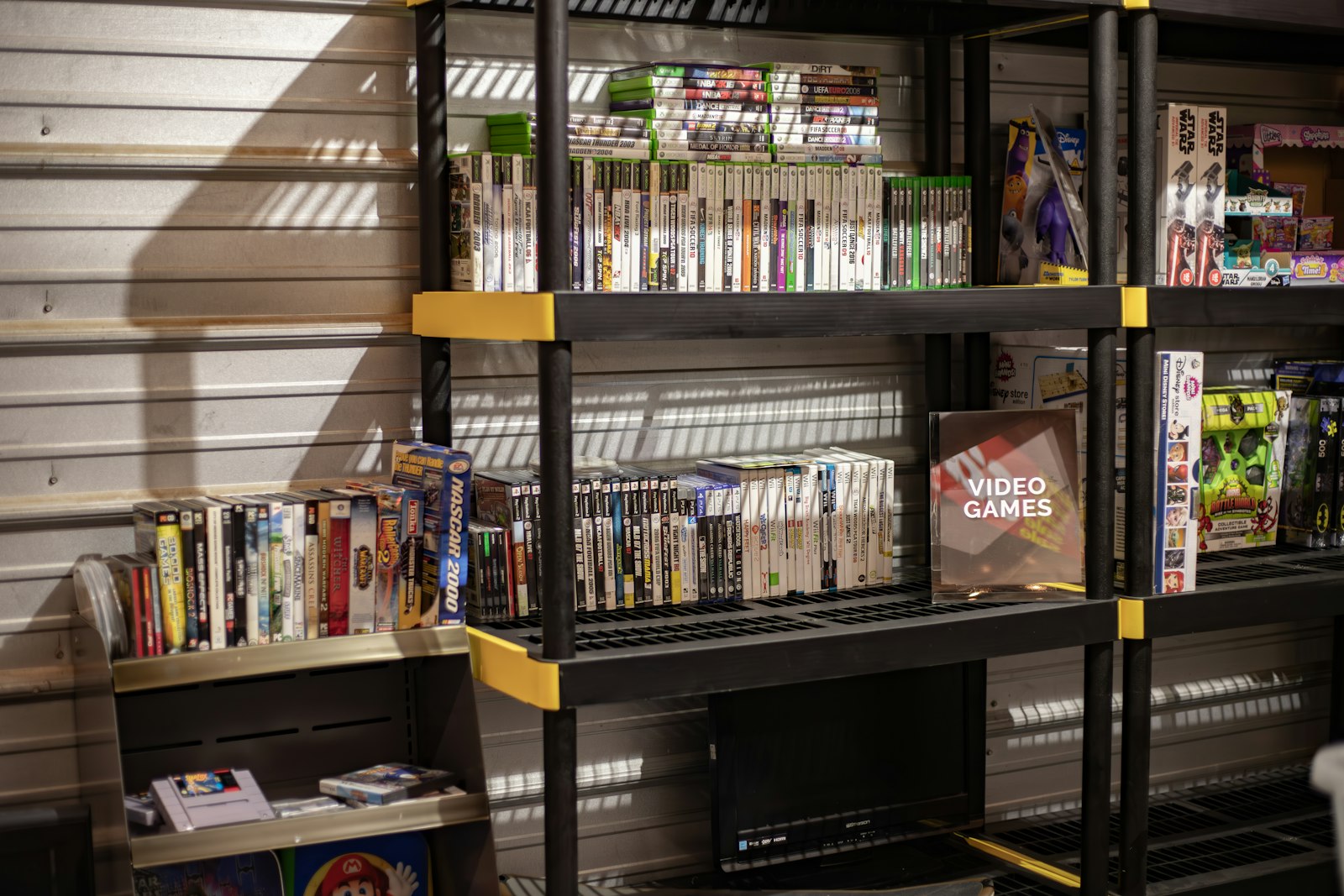
The Friday shelf
Friday has always had a little ceremony to it. When I was younger, the release day feeling meant a shop, a bus ride, a plastic case, and that weird half-hour where the game was yours but not yet installed, patched, or understood. Even digital release days kept some of that ritual for a while. You preloaded, watched a countdown, maybe messaged a friend. The game arrived as an event.
Now the event is crowded. Metacritic's current release list has July 23 packed with recognizable names: Splatoon Raiders, Avatar Legends: The Fighting Game, Disgaea Mayhem, and the Switch 2 release of Final Fantasy X/X-2 HD Remaster. Game Informer's week list points in the same direction, with Fading Echo, Tears of Metal, Dinoblade, and several smaller titles landing around the same few days. Steam's upcoming page adds another layer: Halo: Campaign Evolved and Mistfall Hunter are already sitting near the top of wishlists for the following week.
That is a lot of noise for one pocket of summer. It is also a good problem, if we are honest. A medium with too many interesting games is healthier than one waiting around for a single blockbuster to save the quarter. But abundance has a cost. The more games arrive, the easier it becomes to flatten them into status updates: added to wishlist, bought on sale, installed, tried for forty minutes, forgotten.
Somewhere along the way, the shelf became faster than the memory.
Anticipation has become its own game
A look back over the last month found a funny split. YouTube carried most of the signal. The biggest recent videos were not deep critical essays. They were forward-looking lists: gameranx on August's new games, gameranx on July's new games, IGN on the biggest games still to come in 2026, IGN on July releases, and a long cozy-games roundup for the month.
That tracks. A lot of game culture now happens before the game. We compare release dates, watch trailers, rank what is coming, predict what will stick, and build a private little queue in our heads. By the time a game actually arrives, part of the emotional work has already happened. We have imagined playing it. We have pictured the night it fits into. We have decided, loosely, what kind of player we will be when we get there.
Then the weekend comes, and we are tired.
This is the part that still catches me. The fantasy version of a new release is clean. You make tea, clear a few hours, turn off notifications, and start properly. The real version is messier. You install the game at 9:41 p.m. You adjust the brightness. You spend too long in the menu. You play the opening and realize your brain is still at work, still in email, still half listening for the laundry. The thing you were excited about is finally here, and you are not quite present enough to meet it.
That does not mean the game failed. It means timing matters more than release culture wants to admit.
Some games need to wait for you
I like the idea of a game waiting without being reduced to guilt. A wishlist can be hopeful. A backlog can be gentle. The problem starts when the list becomes an accusation.
There are games I bought at the wrong time and loved later. There are games I forced at the right time and bounced off anyway. I have started RPGs during weeks when I had no room in my head for names, systems, maps, factions, crafting, lore, or anything else that expects a little patience. I have also found comfort in tiny games that seemed almost disposable from the outside, because they arrived on the one night I needed something simple and exact.
This is why I have grown suspicious of urgency around games. Urgency belongs to patches, server sunsets, limited-time demos, and maybe a group of friends trying to play the same thing before everyone drifts. It does not belong to most single-player games. Splatoon Raiders will still be Splatoon Raiders after the review thread cools down. Fading Echo will not become less strange because you waited until September. A cozy sim does not expire because a bigger RPG showed up next week.
The industry has to sell games in windows. Players do not have to experience them that way.
That gap is where a lot of healthier play habits live. You can notice a game today and play it months later. You can save a review because the first hour did not tell you enough. You can shelve something without making a little moral drama out of it. You can admit that a game was interesting, but not for the version of you who came home exhausted on a Friday.
The record matters because memory lies
The obvious answer is to keep a list, but lists are colder than they look. A title, a platform, and a status are useful, sure. They do not always preserve the reason you cared.
That is the part I keep coming back to with Perthro. It is an iPhone-first social gaming journal, free on the App Store, and the feature list is plain on purpose: track what you are playing, have played, plan to play, or shelved; rate games on a five-star scale; write reviews of any length; keep a backlog and wishlist with reordering and a next up view; make custom lists; follow friends and see their activity if you want that social layer. Library import from Steam, PlayStation Network, and Xbox Live helps pull scattered history into one place, with achievements or trophies where supported.
The useful bit, for me, is not that this makes play more organized. Organization can become its own little trap. The useful bit is that it gives memory somewhere to land. Not just which game you added, but why. Not just that you shelved something, but whether you were bored, busy, irritated, or simply not in the mood for another open world with twelve currencies and a map full of polite chores.
Memory lies about games in a very specific way. It compresses them into outcomes. Finished, abandoned, loved, hated. The middle gets blurry. But the middle is where most of the actual playing happens: the one boss you learned by sound, the side character you cared about more than the plot, the puzzle that made you feel clever at midnight, the hour you spent doing nothing important because the movement felt good.
A decent gaming journal should make room for that. A sentence is enough. Sometimes a rating is enough. Sometimes the honest note is, "I wanted to like this more than I did." That is still useful. Maybe especially useful.
Choosing one game is not rejecting the rest
The release calendar encourages a silly kind of total awareness. You know what launched, what reviewed well, what is trending, what has a demo, what is leaving early access, what your friends are talking about, what the algorithm thinks you should care about next. It can feel like attention is a moral duty.
It is not.
Choosing one game this weekend does not mean the others failed the audition. It means you are a person with a finite evening. Maybe that game is the big one. Maybe it is the weird little thing with five Steam reviews and a bad capsule image. Maybe it is something from 2011 because the new releases made you miss a genre you used to love. That still counts as being part of games. You do not have to chase the front page to be current with your own taste.
I am trying to get better at this. To notice without grabbing. To wishlist without turning the wishlist into homework. To let games sit there until I have the right kind of quiet for them. There is a small mercy in accepting that you will miss things. Not because you failed, but because missing things is part of having a life.
The July calendar will keep filling. August will arrive with its own list videos and review threads and tiny arguments about scores. Some of those games will matter to you. Most will not. The trick is not to know everything. The trick is to remember what made you look twice, and to leave yourself a trail back to it.
That feels like enough for a Friday.